Walking on a home treadmill or compact walking pad can be a powerful way to build cardiovascular fitness, improve leg strength and burn more calories. The key is knowing when to use incline walking and when to keep the belt flat. By adjusting speed and incline smartly, you can turn almost any basic treadmill into a versatile tool for low‑impact conditioning, fat loss and stronger legs.
Incline vs flat walking: what actually changes in your body
On a flat belt, your main focus is building aerobic endurance and comfortable everyday stamina. Your joints experience lower impact than running, and muscles like the calves and hip flexors work steadily without excessive fatigue. Add incline, and the demand on the glutes, hamstrings and quadriceps increases dramatically, mimicking an uphill hike. This boosts heart rate at the same speed, increasing calorie burn and strengthening your posterior chain. For home users, alternating between flat and incline sessions is ideal: flat walking for longer, easier workouts, and incline for shorter, strength‑focused sessions that challenge the legs without needing to run.
How to use incline walking for stronger legs and glutes
To target leg strength and glute activation, incline walking is your best tool. Even a modest incline of 3–5% can turn a gentle stroll into a focused lower‑body workout, while 8–12% begins to feel like a serious hill. Keep your hands off the rails as much as possible to force your core and hip stabilisers to engage. Start with 10–20 minute incline blocks at a pace where you can still talk in short sentences. Over time, progress by either increasing the incline, slightly boosting speed, or extending the duration. At home, this approach is ideal for people who want the strength benefits of hill running but prefer a low‑impact option that is kinder on knees and ankles.
Flat walking for cardio base, recovery and longer sessions
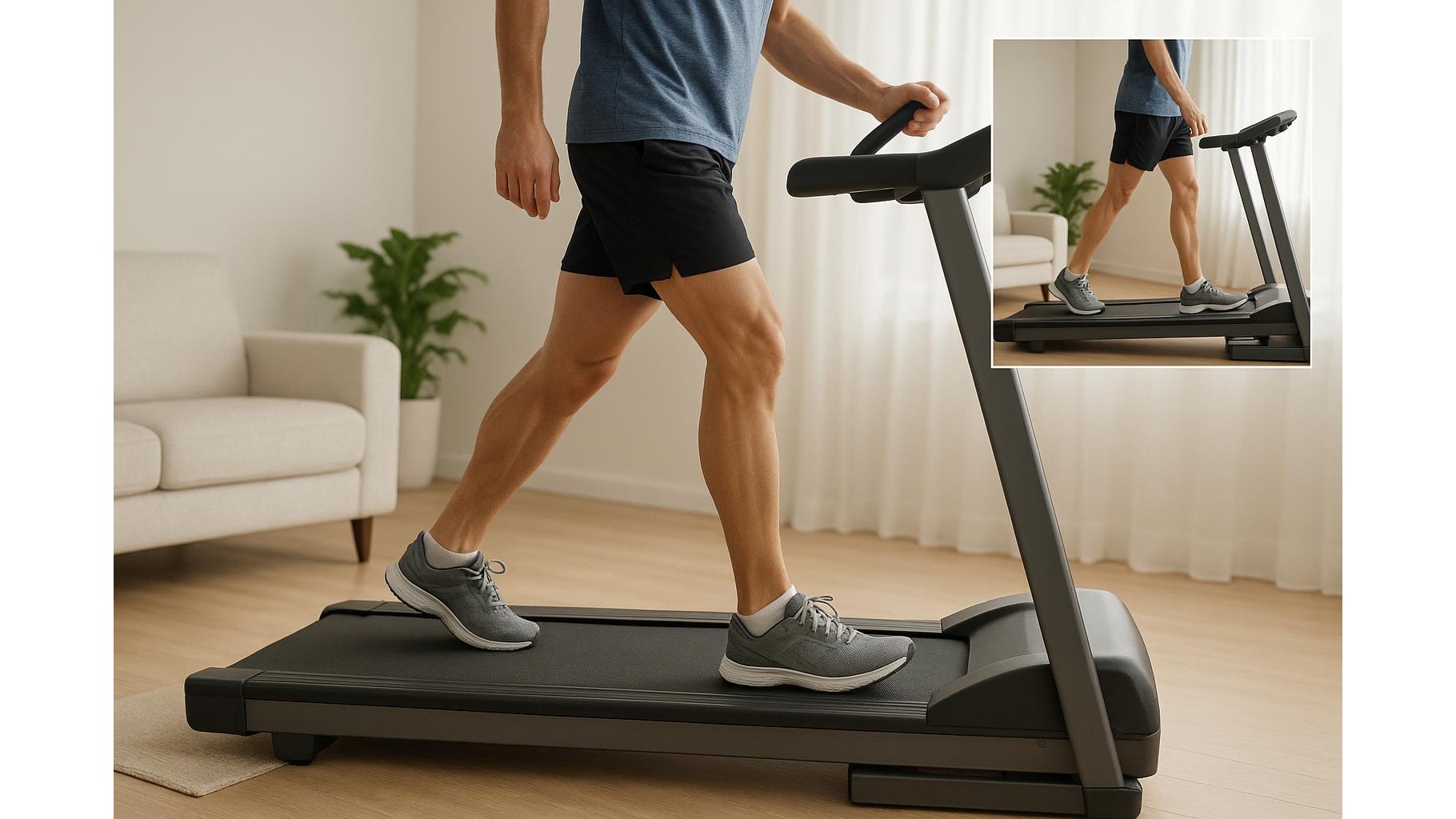
Flat walking shines when your goal is to build a solid cardio base, aid recovery or increase daily step count. Set your treadmill or walking pad to 0–1% incline and choose a comfortable pace you could maintain for 30–60 minutes. This type of steady‑state training improves your heart and lung efficiency without leaving you overly fatigued, making it easy to repeat several times per week. It also pairs well with strength training days: a short flat walk before lifting primes your muscles, while 15–20 minutes afterwards at an easy pace helps circulation and recovery. For beginners or anyone returning from a break, flat walking is the safest place to start before layering in more challenging incline work.
Designing smart home workouts that mix incline and flat
You do not need a complex programme to get the most out of home treadmill walking. A simple structure might include one mainly flat, longer session, one mixed session with alternating incline blocks, and one shorter, steeper incline workout. For example, you could walk 40 minutes flat at easy pace on one day, then on another day alternate 3 minutes at 6–8% incline with 3 minutes flat for a total of 24–30 minutes. A third day could be a 20‑minute power walk at 8–10% for more muscular challenge. Always warm up 5 minutes on flat and cool down 5 minutes at very gentle pace. This kind of weekly mix improves VO2 max, leg strength and calorie burn efficiently, even in a small home space.
Safety tips and technique for incline and flat walking at home
Good technique makes both incline and flat walking safer and more effective. Aim for a natural, upright posture, eyes forward, with your shoulders relaxed and your feet landing under your hips rather than reaching too far in front. On incline, avoid holding the front bar for long periods, as this reduces muscle engagement and can strain your wrists and shoulders. Instead, lightly touch the rails only when adjusting speed or regaining balance. Start conservatively with incline if you have sensitive knees, hips or lower back, and consider shortening your stride a little to protect your joints. Proper footwear with cushioning and support is essential, especially if you walk daily on your treadmill or walking pad.
Choosing and using any home treadmill or walking pad effectively
Even basic home treadmills and compact walking pads can support effective incline and flat walking routines, as long as you know how to use them. If your model has adjustable incline, experiment to find levels that feel challenging but controllable for 5–10 minute blocks. If it does not offer motorised incline, you can still vary difficulty through speed changes, longer durations, or by pairing flat sessions with off‑treadmill strength exercises such as bodyweight squats and lunges. Focus on consistency first: 3–5 walking sessions per week, mixing flat and incline, will deliver better fitness, stronger legs and improved cardio health than sporadic, overly intense efforts. With a smart approach, almost any home treadmill becomes a versatile tool for sustainable progress.
In summary, flat walking is ideal for longer, easier cardio, recovery and building an aerobic base, while incline walking adds intensity, leg strength and higher calorie burn without the impact of running. By combining both styles thoughtfully on your home treadmill or walking pad, you can create time‑efficient, low‑impact workouts that fit your space, schedule and fitness level, helping you steadily improve health, stamina and lower‑body strength over the long term.