Setting up a compact home power rack is one of the smartest ways to create a safe, versatile strength area without taking over your entire house. The right rack will protect you on heavy squats and bench presses, organise your plates and accessories, and offer room to expand as you get stronger. The wrong one can feel cramped, wobbly, or impossible to upgrade. This guide explains how to choose a small-footprint rack that fits your space today and still supports your training five years from now.
Measure your space and ceiling height first
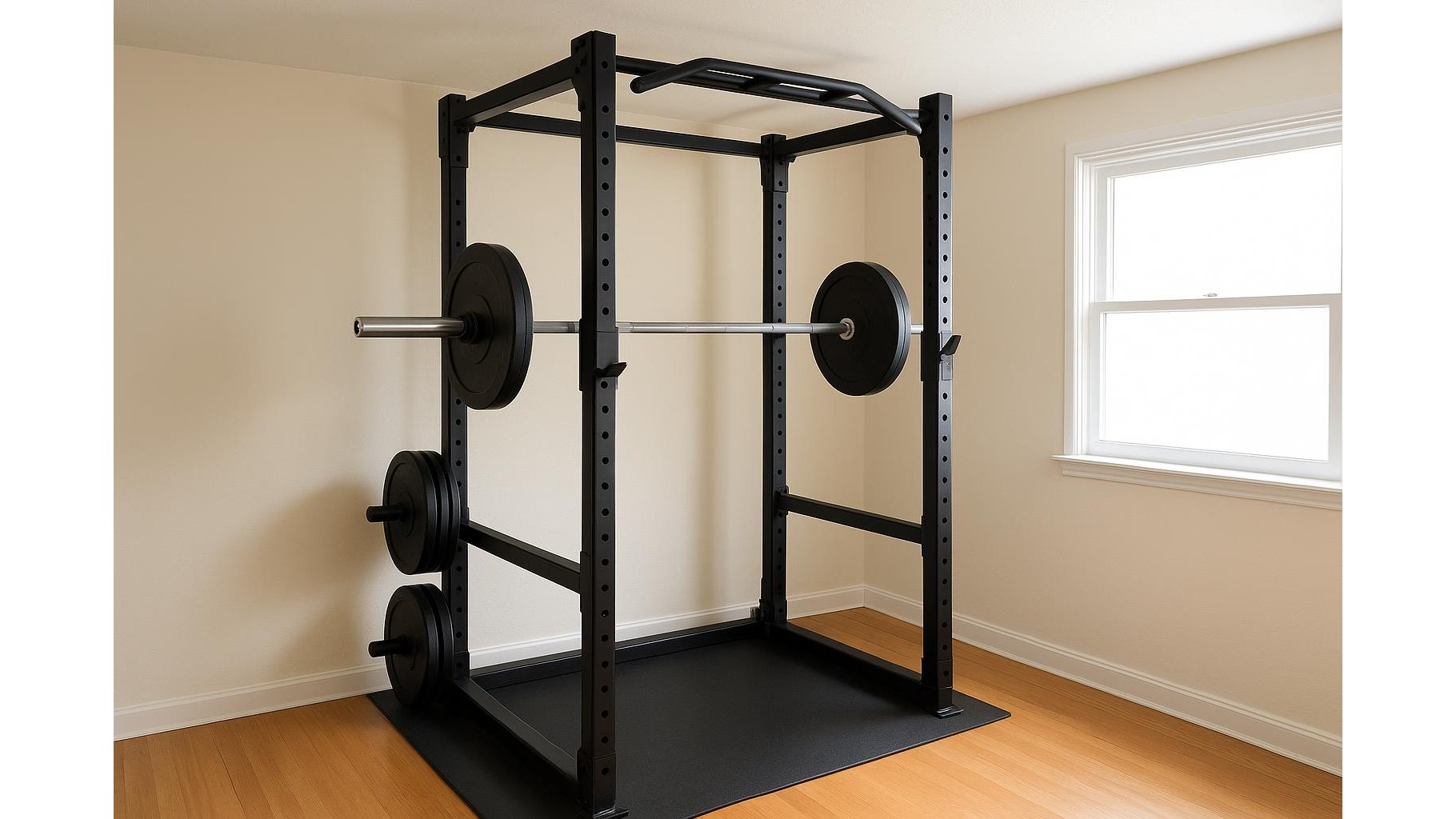
Before falling in love with any rack, measure your available floor area and ceiling height. A true small-footprint power rack usually sits in the 100–130 cm width range and 120–150 cm depth, leaving room to load the bar and move around it. Make sure you have enough clearance behind and in front of the rack for safe bar path on squats and presses, and consider doorways or radiators that might interfere. Ceiling height is crucial: you typically want at least 20–30 cm of clearance above the rack so you can perform pull-ups without hitting the ceiling. If you have a very low ceiling, prioritise racks with shorter uprights or half racks that still offer safety spotters while fitting under the height limit.
Prioritise safety: steel gauge, stability and safeties
Safety is non-negotiable. Look for racks made from heavy-duty steel (often described as 11–14 gauge) with a stable base and wide feet. More robust construction means less wobble when you re-rack a heavy squat or perform band-assisted exercises. Check that the rack includes reliable safety spotter arms or internal safety bars that can be quickly adjusted to your height for squats, bench and overhead presses. A compact rack should still allow you to lift alone with confidence. Bolt-down options offer maximum stability if you own your space, while flat-foot designs can still be extremely stable in rented homes. If reviews mention shaking, flexing uprights or safeties that are hard to adjust, treat that as a red flag.
Attachment compatibility and hole system
A power rack that can grow with your strength levels must accept a wide range of attachments. Check whether the uprights use a standard size (for example 50 x 50 mm or 60 x 60 mm) and what hole spacing and pin diameter they use. Tighter hole spacing around the bench area (sometimes called “westside spacing”) allows finer adjustments for J-hooks and safeties, improving both comfort and safety. When comparing models on Amazon, look for clear lists of compatible attachments: dip handles, landmine attachments, extra J-hooks, lat pulldown add-ons, plate storage pegs and pulley systems. A good compact rack turns a tiny corner of your room into a multi-station gym just by adding the right accessories over time.
Plan future-proof upgrades for progressive overload
As your lifts increase, you need a rack that will not cap your progress. Look for a generous weight rating that comfortably exceeds your current squat and deadlift numbers, leaving room to grow. Even in a small footprint, the rack should be ready to handle 200 kg or more if you plan serious barbell training. Check whether the manufacturer or third-party brands sell upgrade kits such as cable systems, lat towers, or pull-up bars with multiple grips. Choosing a rack with a strong ecosystem of add-ons means you can start with a simple frame, J-hooks and safeties, then gradually add pieces as your budget and training demands evolve, rather than replacing the entire structure.
Optimize for storage, organisation and real-world use
In a home gym, clutter kills motivation. A smart compact rack helps you stay organised. Prioritise integrated plate storage pegs or the option to add them later, so plates live on the rack instead of the floor. Look for barbell storage, band pegs and hooks for belts and accessories. When you browse product pages, pay attention to user photos to see how the rack fits in real homes, not just in staged studios. Think through your daily routine: can you walk around the rack easily, open nearby cupboards, or park a car if it’s in a garage? A compact rack that supports tidy storage will make workouts smoother and help your home gym feel like a permanent, purposeful space rather than a temporary compromise.
Choosing the right compact home power rack comes down to balancing space, safety and long-term flexibility. Start by measuring your room and ceiling, then focus on rock-solid construction, reliable safeties and a compatible attachment system that lets the rack evolve with you. Prioritise a higher weight rating than you currently need and look for upgrade paths like cable attachments, dip handles and plate storage. With a bit of planning, your rack will remain the heart of your home gym for years, supporting steady progress as your strength levels climb.