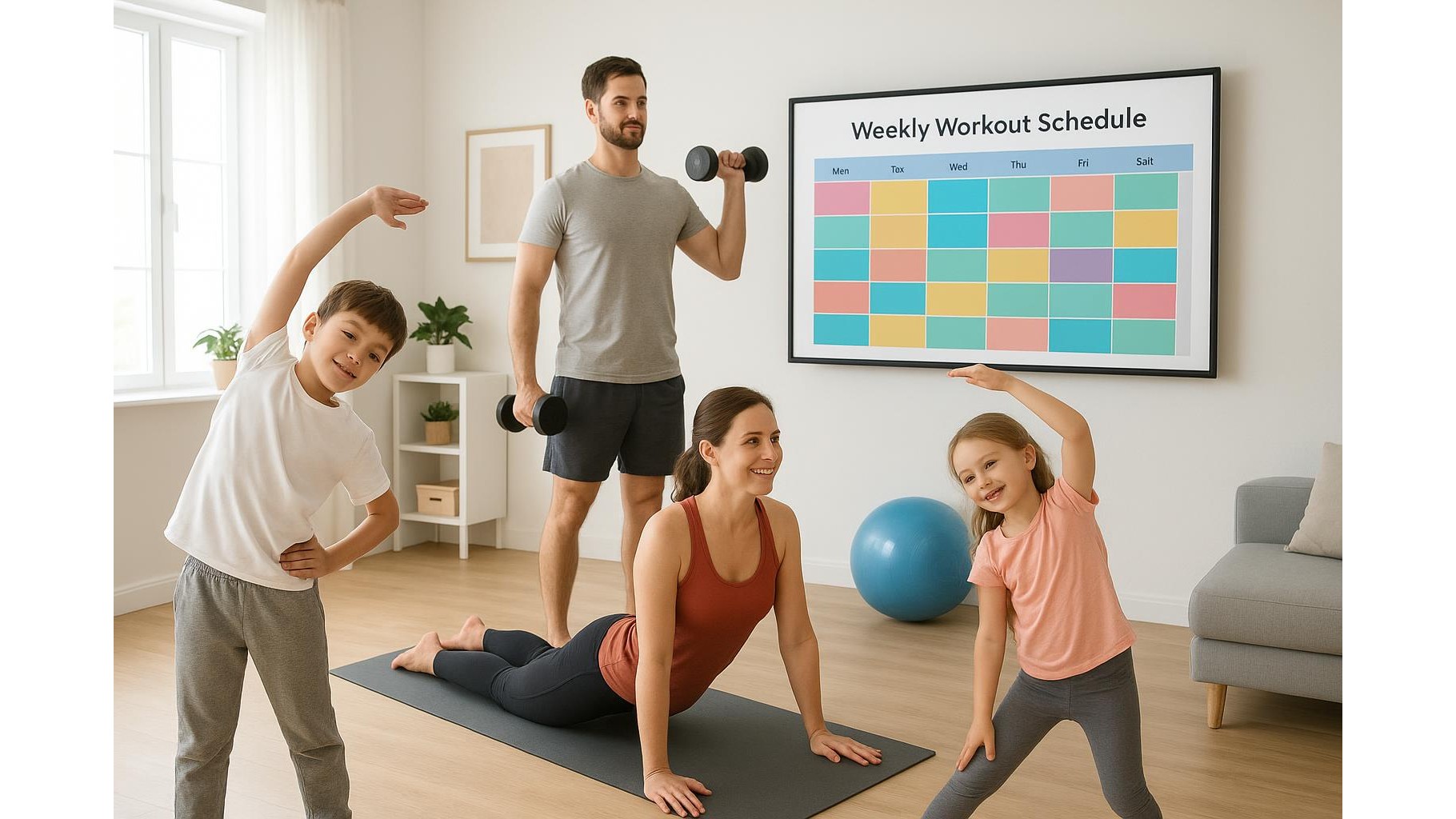
Creating a consistent home gym routine is tough when you share space, equipment and family commitments. Children’s bedtimes, work calls, homework and social plans can all clash with your training window. Using a family calendar app or shared scheduling tool turns this daily negotiation into a clear, visual plan so everyone knows exactly when the living room, garage or spare room becomes a mini fitness studio.
Why a shared calendar transforms your home gym routine
A shared digital calendar makes your home workouts visible to the whole household, instead of being vague “I’ll train later” intentions. Each person gets colour‑coded blocks for their workout slots, from strength training to yoga. This reduces arguments about who uses the space and when, and helps you protect training time like any other important appointment. Apps such as Google Calendar, Apple Calendar or Microsoft Outlook allow you to share a single “Home Gym” calendar with all family members, so new sessions and changes update instantly on everyone’s phone, tablet or laptop.
Setting up a family workout schedule that actually works
Begin by mapping out each person’s fixed commitments: work hours, school runs, clubs and regular appointments. Then use your family planner app to drop in realistic training sessions of 20–60 minutes. Aim to give every adult at least two or three protected slots per week and, where appropriate, add short movement breaks for older kids too. Be honest about energy levels – if you’re always exhausted after 9pm, don’t schedule heavy lifting then. Use recurring events for routines like “Monday 7:00–7:30 Strength” so they repeat automatically, and add reminders 10–15 minutes before start time so no‑one “forgets” their slot.
Using app features to prevent clashes and no‑shows
Most calendar apps offer powerful features that keep your home gym schedule running smoothly. Use multiple calendars (Work, Family, Home Gym) and show them together so you can spot conflicts early. Enable notifications so everyone gets a ping when it’s time to switch rooms or finish a session. Add detailed descriptions to events, such as “Upper body dumbbells + mobility” or “Quiet yoga – no music” to set expectations about noise and equipment. When plans change, update or move the event instead of cancelling it completely; this reinforces the idea that training is flexible but still non‑negotiable. For older children, let them “own” and edit some of their sessions to build autonomy and buy‑in.
Coordinating equipment, noise and shared spaces
Scheduling is not just about time; it is also about equipment sharing and managing noise in a small home. Use the calendar’s notes section to list what each session needs: resistance bands, dumbbells, exercise mat or skipping rope. This avoids last‑minute arguments over a single pair of adjustable dumbbells. If one person’s workout is high‑impact or loud, schedule it when younger kids are awake, and reserve early mornings or late evenings for quieter yoga, mobility or core sessions. Mark certain blocks as “Family workout” to encourage training together – for example, a short bodyweight circuit after dinner – turning the home gym into a shared healthy habit rather than a point of tension.
Keeping motivation and consistency high over time
The main benefit of a shared home gym calendar is consistency. Treat each workout like a meeting with yourself and your family: show up on time, and finish on time so the next person can start. Use weekly reviews to adjust the plan – maybe Sunday evening – checking what worked and what didn’t. If someone repeatedly misses their slot, move it to a more realistic time or shorten the session. Celebrate streaks by adding fun labels like “Week 4 completed” in the event title, and occasionally block out a “Deload” week with lighter, shorter sessions to prevent burnout. Over time, these scheduled, visible commitments help everybody in the household build a sustainable, conflict‑free fitness routine.
In summary, using family calendar apps to coordinate home gym time turns chaotic, improvised workouts into an organised, shared routine. By making training slots visible, assigning equipment clearly and respecting each other’s schedule, you reduce clashes and excuses while boosting motivation and accountability. With a few smart scheduling habits and regular check‑ins, your living room or garage can support the whole family’s long‑term health without daily battles over who gets to train next.