Building a consistent home workout habit is less about motivation and more about smart design. By pairing short training sessions with existing daily triggers—like your morning coffee, lunch break or evening TV time—and using lightweight habit and routine apps, you can create a simple system that nudges you to move without complex planning. In this article, we’ll see how digital routines, reminders and basic trackers can turn everyday moments into automatic fitness cues.
Why daily triggers beat motivation
Most people rely on willpower to train at home, but willpower is unreliable. Instead, you can use implementation intentions: “After I do X, I will do Y.” For example, “After I make coffee, I’ll do a 5‑minute mobility flow,” or “After I close my laptop at 6pm, I’ll do 10 minutes of resistance work.” Lightweight habit apps make this easier because they let you attach simple reminders to times of day or routines instead of vague goals. The key is to keep the action small and repeatable so the brain starts to automatically connect the trigger (coffee, lunch, end of work) with the workout block.
Choosing simple, visual habit apps
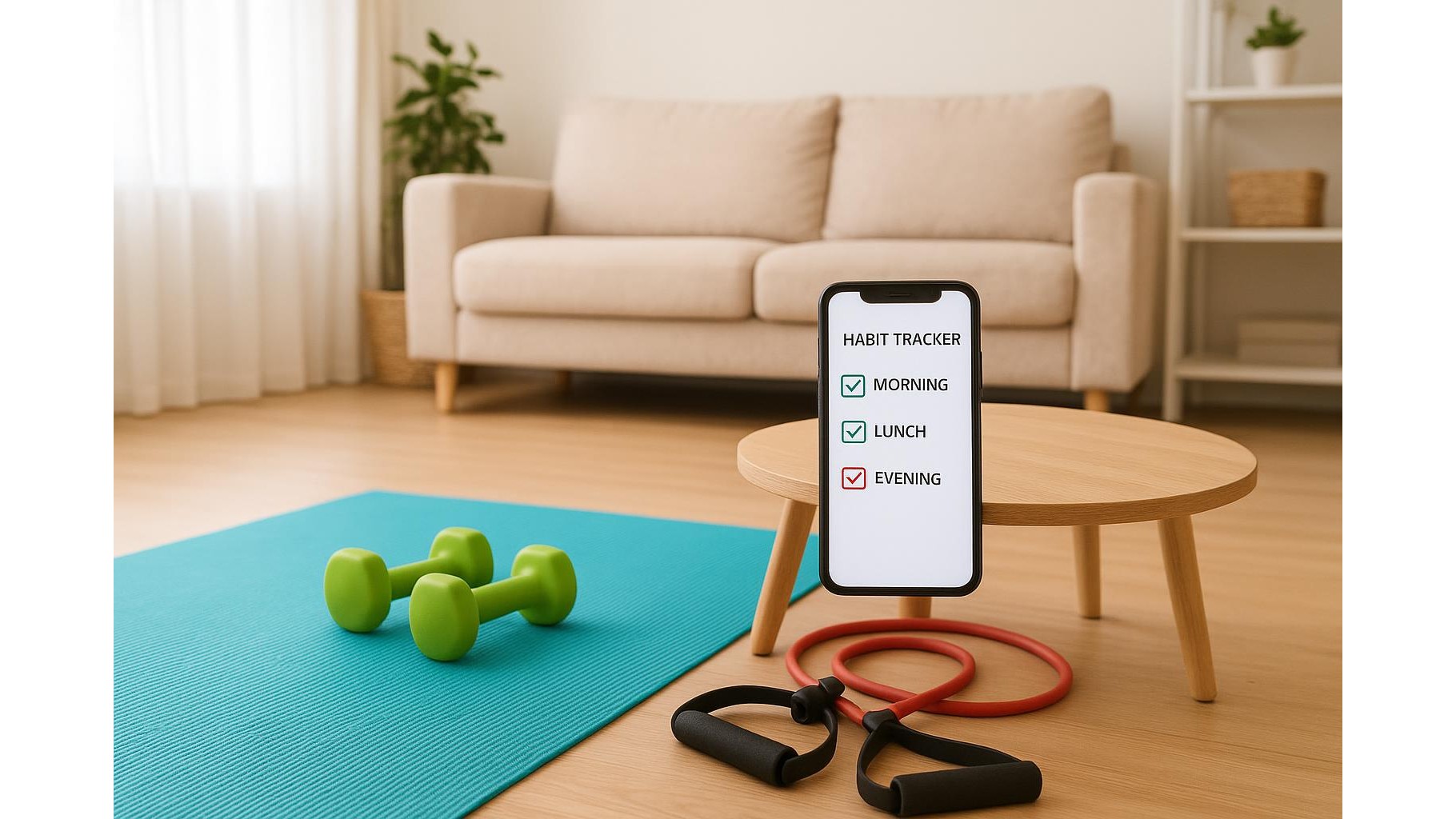
You don’t need a complex training platform to support your home gym habit; often, a clean, visual habit tracker works better. Look for apps that offer a clear daily checklist, streaks and gentle notifications rather than endless features. A classic example is a basic calendar‑style app where you tick off your “Morning Mobility” or “Lunch Walk” habits each day. The goal is to make completion highly visible and satisfying. Having a quick glance at a month of coloured checkmarks is often enough to keep you on track, especially when sessions are short and linked to consistent daily events.
Designing tiny, trigger‑based home workouts
Once your app is ready, design super‑short home workouts that fit naturally around your triggers. After your morning coffee, you might do a 5‑minute routine of cat‑camel, hip circles and band pull‑aparts. At lunch, you could add a 10‑minute circuit of bodyweight squats, push‑ups and planks. In the evening, pair TV time with light dumbbell or band work. The secret is to set a minimum that feels “too easy to skip,” then log it in your routine app with a clear name like “Coffee Mobility” or “Lunch Strength.” This makes the link between the daily trigger and the activity unmistakable when the notification pops up.
Pairing apps with simple home equipment
To keep friction low, match your digital routines with easy‑to‑grab gear placed near your trigger zones. Keep a set of dumbbells by the sofa, a yoga mat near the desk and resistance bands by the coffee machine. Each item becomes a physical cue that reinforces what your habit app is telling you. For example, if your routine app reminds you “End‑of‑work Stretch” at 6pm, your mat already laid out in the next room reduces decision‑making. Lightweight apps handle the mental load (what and when), while simple equipment makes the “how” effortless. This combination is powerful for staying consistent in a small home gym setup.
Reviewing your streaks and adjusting routines
A big advantage of routine apps is how easily you can review your streaks and refine your plan. Once a week, open your habit tracker and look at which triggers are working. Maybe morning coffee workouts are rock solid, but after‑dinner sessions keep getting skipped. Instead of blaming motivation, adjust the trigger: move that workout to your lunch break or right after shutting down your laptop. Use simple metrics like days completed, longest streak and which time slots feel easiest. Over time, you’ll discover a personal rhythm where triggers, notifications and home equipment line up smoothly with your energy levels.
When you combine simple habit apps, clear daily triggers and accessible home workout gear, consistency stops feeling like a battle. Your phone quietly nudges you, your environment supports action and your sessions are short enough to fit into real life. Instead of chasing the perfect program, you’re building a sustainable system that runs in the background. Start with one trigger and one tiny workout, log it in your routine app, and let the power of repetition turn home training into an automatic part of your day.