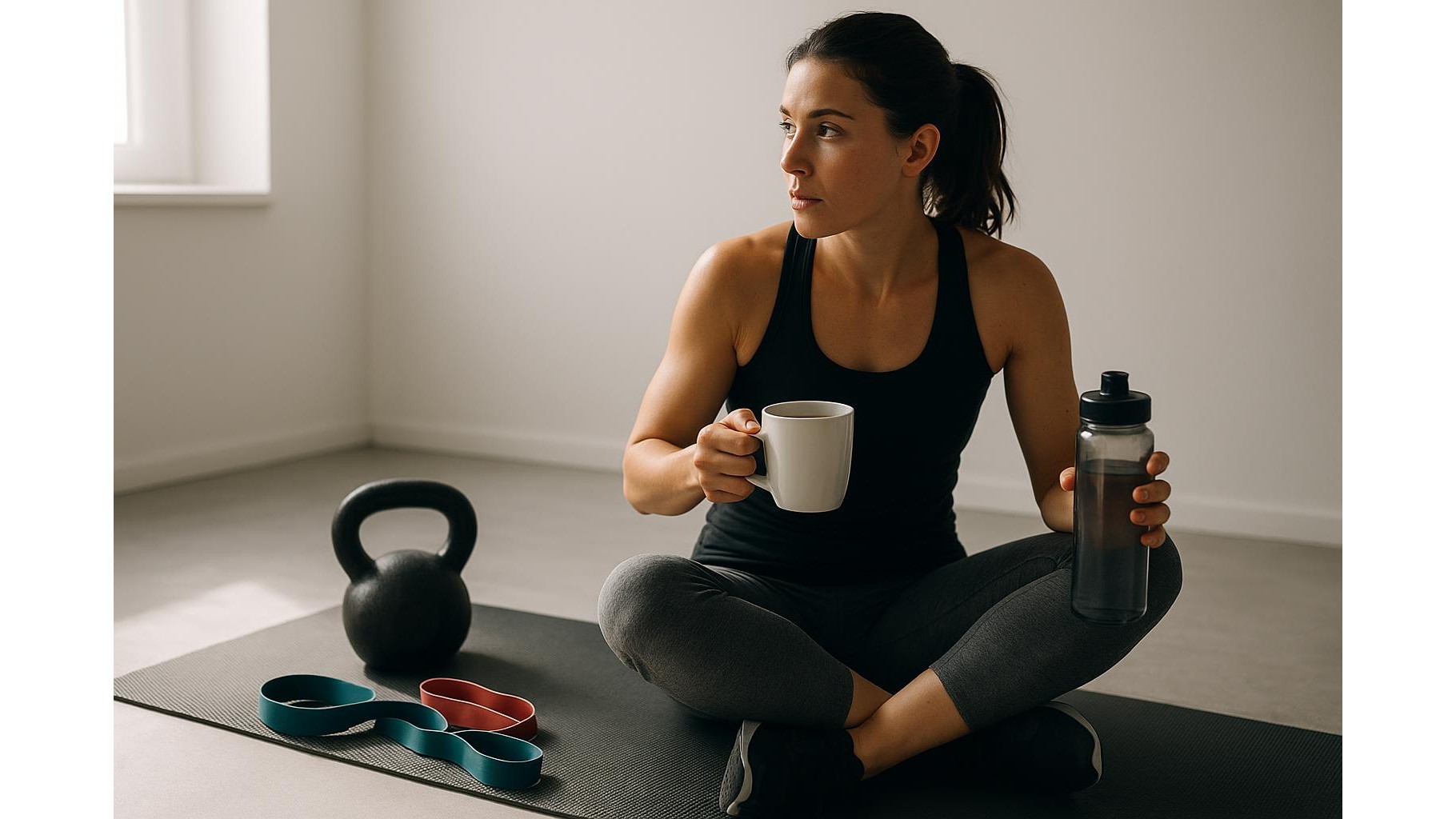
Caffeine is one of the most researched and effective performance enhancers available, and it is especially popular among people training in a home gym. Used correctly, it can improve focus, perceived energy and resistance to fatigue. Used poorly, it can disrupt sleep, increase anxiety and create dependence. This guide explains how to time and dose caffeine for home workouts, how to manage tolerance and side effects, and which lower-stim alternatives you can use if you are sensitive.
How caffeine works for strength and cardio at home
Caffeine primarily works by blocking adenosine receptors in the brain, reducing feelings of tiredness and increasing alertness. For strength training and HIIT workouts in a home gym, this often translates into better concentration, higher training volume and slightly improved power output. Research typically shows benefits in the range of 2–12% depending on exercise type and individual response. For moderate-intensity cardio (such as treadmill, indoor cycling or rowing), caffeine can make the same workload feel easier, which lets you sustain effort longer. However, these benefits come with trade‑offs: elevated heart rate, potential jitters and, in some, a rebound energy crash. Understanding these mechanisms helps you decide whether caffeine is appropriate for your specific training goals, schedule and health status.
[hio_placeholder type=”cta” id=”telegram”/]
Ideal timing and dosage for home workouts
Most studies suggest taking caffeine about 45–60 minutes before training, which is when blood levels typically peak. Effective evidence-based doses range from 3–6 mg per kg of body weight (210–420 mg for a 70 kg person). For many home lifters, however, a practical range of 100–200 mg is enough to feel clear benefits without excessive stimulation, especially when training after work. Beginners or sensitive individuals should start as low as 50–100 mg and only increase if they tolerate it well. Avoid taking caffeine within 6–8 hours of bedtime, as even moderate doses can impair sleep quality and recovery. When reading labels on coffee, energy drinks or pre-workout powders, always check the total caffeine per serving and remember that some sources, like strong coffee, can vary widely in actual content.
Tolerance, cycling and managing daily intake
Regular caffeine use leads to tolerance, meaning the same dose gives fewer benefits over time. If you rely on large amounts just to feel “normal” before a workout, performance gains from extra caffeine are likely minimal. A good strategy is to keep daily intake under about 3 mg/kg on non-training days and reserve higher doses for your hardest sessions. Some athletes benefit from a caffeine deload every 4–8 weeks: reducing intake for 7–14 days, or even going caffeine-free, to resensitize the body. During these phases, you may feel more tired and headachy for a few days, so schedule them away from key performance goals. Also, audit hidden sources of caffeine—tea, cola, dark chocolate, certain pain medications—so your total daily load stays within a sensible range that supports both performance and recovery.
Side effects, risks and who should be cautious
While caffeine is generally safe for healthy adults at moderate doses (up to about 400 mg per day for most people), some experience side effects even at lower levels. Common issues include jitters, anxiety, racing heart, gastrointestinal discomfort and sleep disturbances. These can be amplified during intense home HIIT sessions that already elevate heart rate. People with cardiovascular conditions, arrhythmias, uncontrolled hypertension or significant anxiety disorders should speak with a healthcare professional before using caffeine as an ergogenic aid. Pregnant or breastfeeding individuals are usually advised to limit caffeine and follow medical guidance. Remember that more is not better: doses above 6 mg/kg rarely give extra performance benefits but greatly increase the risk of unpleasant effects. If you notice your sleep, mood or recovery worsening, scaling back your pre-workout caffeine is a smart first step.
Lower-stim and non-stim alternatives for sensitive athletes
If you are caffeine-sensitive, train in the evening, or simply prefer a calmer focus, several strategies can support your home workouts without heavy stimulation. Many “pump” or non-stim pre-workouts rely on ingredients like citrulline malate, beta-alanine or electrolytes to enhance blood flow, buffering capacity and hydration without central nervous system stimulation. Outside of supplements, a combination of proper pre-workout nutrition (carbohydrates and some protein 60–90 minutes before training), hydration, and a short dynamic warm-up can significantly improve perceived energy. Some people also respond well to low-dose theanine alongside very small amounts of caffeine (for example 50–75 mg), which can smooth out jitters and provide a more stable state of alertness. Ultimately, the best “pre-workout” is a foundation of sleep, diet and consistent training, with stimulants used only as an optional layer on top.
In summary, caffeine can be a powerful ally for home workouts when used intelligently: timed about an hour before training, dosed conservatively, and kept within a healthy daily limit. By understanding tolerance, watching for side effects and considering lower-stim alternatives when needed, you can support performance without undermining sleep, recovery or long-term health. Treat caffeine as a targeted tool, not a crutch, and build your home training around sustainable habits first.