
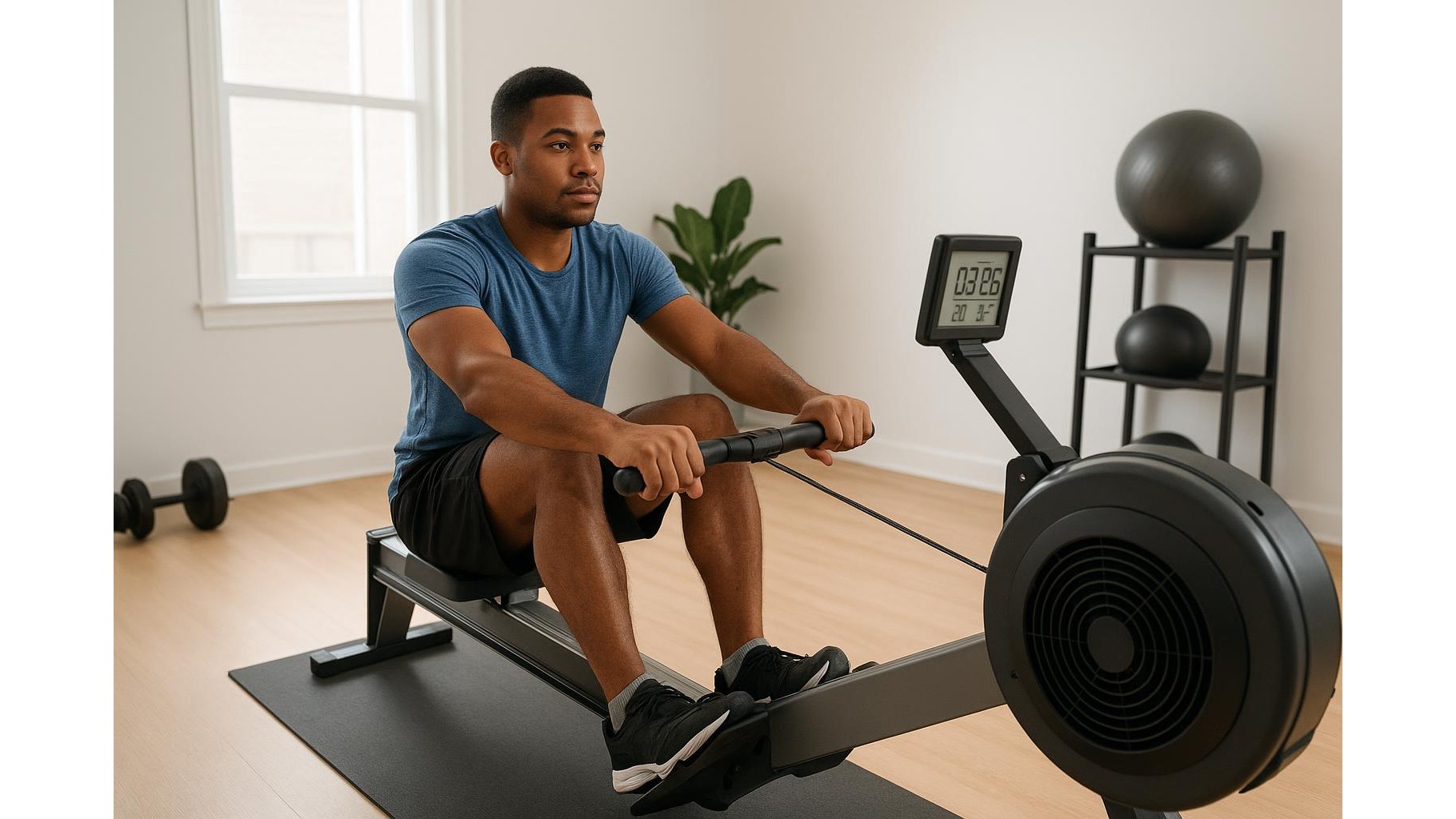
If you want effective low-impact cardio at home without pounding your joints, a rowing machine is hard to beat. In just 25 minutes you can combine fat-burning intervals, endurance work and full‑body strength. The key is to structure your session with the right warm-up, work-to-rest ratios, stroke rate and intensity so you build fitness safely as a beginner and avoid burning out.
Why rowing intervals are ideal for beginners at home
Rowing works your legs, core and upper body in one smooth, low-impact movement, making it perfect if you train in a small home space or want to protect your knees and ankles. Intervals let you alternate short bouts of higher-effort rowing with easier recovery, so your heart rate climbs into a productive cardio zone without feeling overwhelming. A simple home-friendly set-up is a compact rower with a basic display that shows time, strokes per minute (SPM) and distance, plus a fan or magnetic resistance so you can easily adjust intensity as your fitness improves.
How to warm up for a 25-minute rowing session
A good warm-up protects you from injury and makes intervals feel smoother. Start with 3–5 minutes of easy rowing at a very light pace, aiming for around 18–20 SPM, focusing on long, relaxed strokes. Keep resistance low so you can groove technique: push with the legs, hinge slightly at the hips, then pull with the arms; on the way back, extend the arms first, hinge forward, then bend the knees. After this, add 2–3 short “pick-ups”: 20–30 seconds at a slightly faster stroke rate (22–24 SPM) followed by 30–40 seconds very easy. This gradually elevates your heart rate and prepares your muscles for work without exhausting you before the main intervals.
Simple 25-minute interval structure for fat loss
For weight loss, you want enough intensity to challenge your cardiovascular system, but not so hard that you cannot complete the workout. A beginner-friendly 25-minute structure could be: 5 minutes warm-up; 14 minutes of intervals; 6 minutes cool-down. In the interval block, try 7 rounds of 40 seconds work / 40 seconds easy. During the 40-second work phase, row at about 70–80% effort, aiming for 22–26 SPM and breathing hard but still in control. In the 40-second easy phase, drop to 16–18 SPM and a very light effort. This 1:1 work-to-rest ratio keeps the workout approachable while still boosting calorie burn and helping you build consistency.
Stroke rate and intensity cues you can actually feel
Instead of obsessing over exact numbers, use simple effort cues that you can feel. On easy rowing, you should be able to talk in full sentences and feel like you could continue for 20+ minutes. On your work intervals, talking should be limited to short phrases, and your breathing should be noticeably heavier, but you should not be gasping. Keep the stroke rate moderate and focus on strong leg drive rather than frantic, short strokes. A good beginner target range is 20–24 SPM for moderate work and 16–18 SPM for recovery. If your technique starts to break down or you feel dizzy, reduce the resistance and extend your recovery until you feel steady again.
Endurance-focused intervals for building stamina
Once the basic 40/40 structure feels manageable, you can introduce intervals that develop aerobic endurance while staying joint-friendly. Try a 25-minute session of 5 minutes warm-up, then 3 rounds of 3 minutes steady / 2 minutes easy, followed by a 4-minute cool-down. In the 3-minute steady blocks, aim for 65–75% effort and about 20–24 SPM, holding a pace you could maintain for 15–20 minutes but that still feels like work. In the 2-minute easy blocks, drop the stroke rate and intensity to truly recover. This style of interval builds your ability to stay in a productive cardio zone for longer periods, which supports both fat burning and everyday stamina.
Cool-down, frequency and progression tips
Finish every 25-minute session with at least 4–6 minutes of very light rowing and a few gentle stretches for your hamstrings, hip flexors, and upper back. Aim for 2–4 sessions per week, leaving at least one rest or light-movement day in between if you are new to exercise. Progress gradually by first adding rounds to your intervals, then slightly increasing stroke rate or resistance, and only later shortening rest periods. The goal is a sustainable habit: consistent, enjoyable home rowing workouts will deliver better long-term weight loss and endurance gains than occasional all-out efforts.
With a clear warm-up, simple interval structure, realistic stroke rate targets and easy intensity cues, you can turn 25 minutes on a home rowing machine into a highly effective, beginner-friendly cardio routine that supports fat loss, heart health and full-body strength.









