Building a first serious home gym often starts with one purchase: a compact barbell and plate bundle. Choosing well means you can train the main lifts safely (squat, deadlift, bench, overhead press) even in tight spaces, without wasting money on gimmicks. This guide walks you through bar length, knurling, sleeve diameter, plate types, weight progression and basic safety, so you can pick a starter set that will grow with you from beginner to intermediate.
Measure your space before choosing bar length
Before falling in love with a bundle, measure your training area. A full-size Olympic bar is about 220 cm long, which can be awkward in small UK flats. A better option for many is a compact 6 ft–7 ft barbell with standard plates, as long as it still gives you enough sleeve length to load weight. Check the product specs for overall length and the distance between sleeves (the part you grip). For pressing in a rack, you need enough internal width to clear the uprights; for deadlifts, you need space so the plates don’t bang into walls or furniture. Always allow clearance on both sides of the bar plus room to walk around it safely.
Focus on bar diameter, knurling and load capacity
A good starter bar doesn’t have to be elite, but a few features matter. Look for a bar with a 25–28 mm shaft diameter, which is comfortable for most hands and makes pulling from the floor easier than a very thick bar. The knurling (the rough textured grip) should be medium: aggressive enough that your hands don’t slip when deadlifting, but not so sharp that it tears your skin during high-rep training. Check the stated load rating: for beginners and intermediates, a bar rated to at least 150–200 kg is usually enough. If you plan to progress on squats and deadlifts, avoid ultra-cheap spinlock bars with very low capacity; they may bend and feel unstable, especially when you move the bar quickly on rows or cleans.
Choose the right plate type for noise, floor and progression
The plates you pick will dictate how quiet and floor-friendly your setup is. Cast iron plates are compact and cost-effective, ideal if you have very limited space and don’t mind some noise. Rubber-coated plates or urethane plates reduce clanging and protect both the plates and the floor, great for flats or shared houses. If you want to deadlift from standard height and occasionally drop the bar (on a platform), consider bumper plates, which are thicker and designed to absorb impact. For a smart starter bundle, aim for a mix of heavier plates (10–20 kg) and smaller increments (1.25–2.5 kg) so you can make gradual weight jumps instead of being stuck with big leaps that stall progress.
Plan your starting weight range and future progression
Think about which lifts you’ll train most and your current strength level. A compact bundle totaling 50–80 kg (including the bar) is enough for many beginners, especially for upper body training. However, lower body lifts progress quickly; if you intend to focus on squats and deadlifts, consider a bundle that can reach 100 kg or more over time, even if you don’t buy all the plates at once. Prioritise sets that include or allow purchase of small change plates (0.5–1.25 kg) to fine-tune progression. This lets you keep adding weight consistently without jumping from, say, 40 kg to 50 kg in one go. A well-chosen compact set should let you train effectively now and still serve you as you transition into intermediate programming.
Safety, collars and flooring for a compact home gym
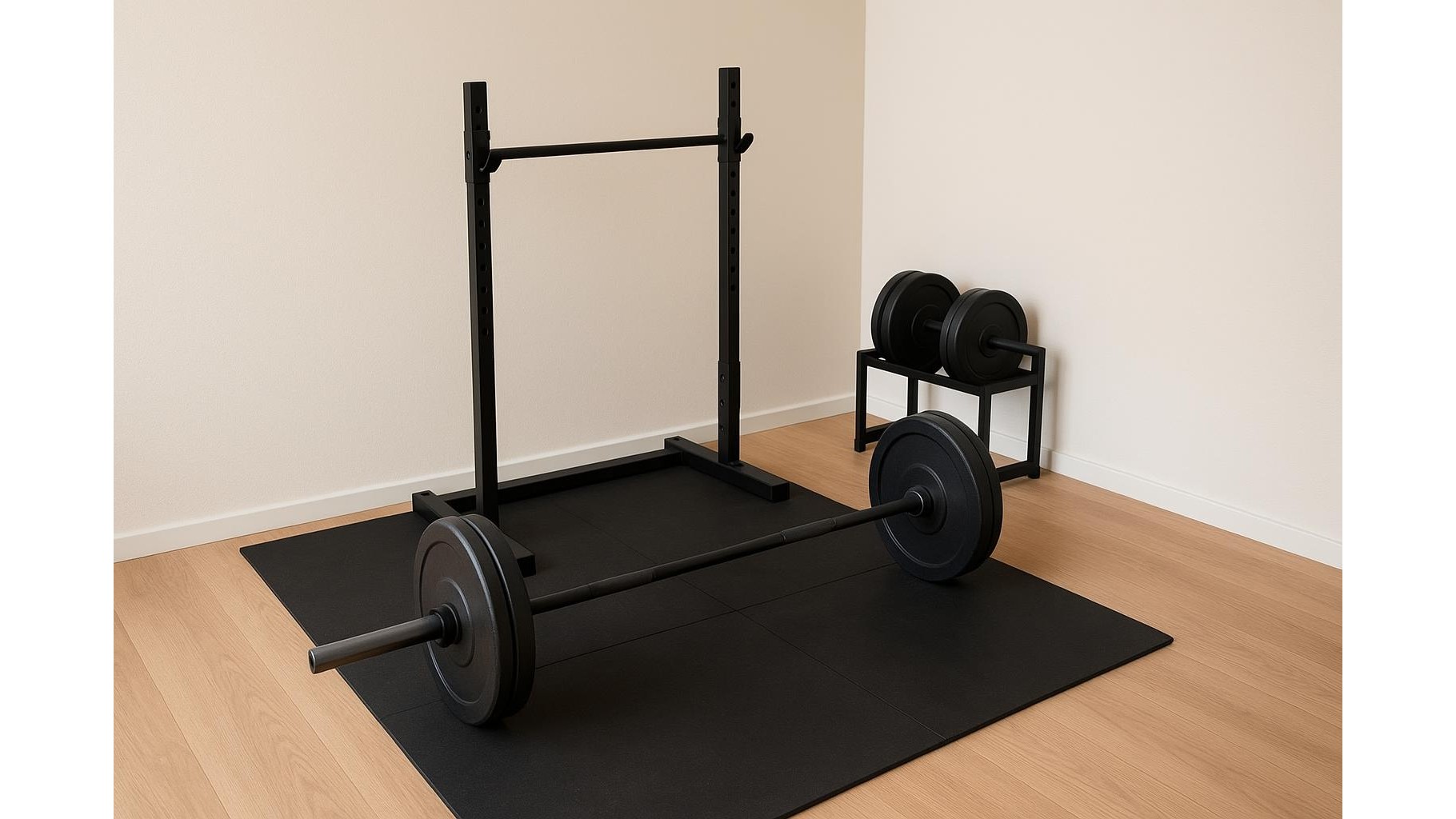
Even in a tight space, safety must come first. Always use collars to secure plates so they don’t slide off the bar during presses or rows. If your floor is not concrete, invest in a basic matting solution: dense rubber tiles or gym mats help protect both floor and plates and reduce noise. Avoid lifting heavy loads on soft carpet, which can feel unstable. Make sure you can perform key movements with a clear, unobstructed path for the bar; clear low furniture, lamps and shelves from the bar path. For heavier squats and bench work, pairing your barbell and plate bundle with a sturdy rack and safety pins or spotter arms is essential, especially if you train alone at home.
Choosing the right compact barbell and plate bundle means matching bar length, knurling, plate style and total weight to your actual space and goals. Measure your room, decide how heavy you realistically plan to lift in the next couple of years, and favour medium knurling, solid load capacity and plates that suit your noise and flooring constraints. A thoughtful starter setup will feel good in your hands, fit your home without stress and support steady strength progression, turning a small corner of your living space into a reliable, long-term training zone.