
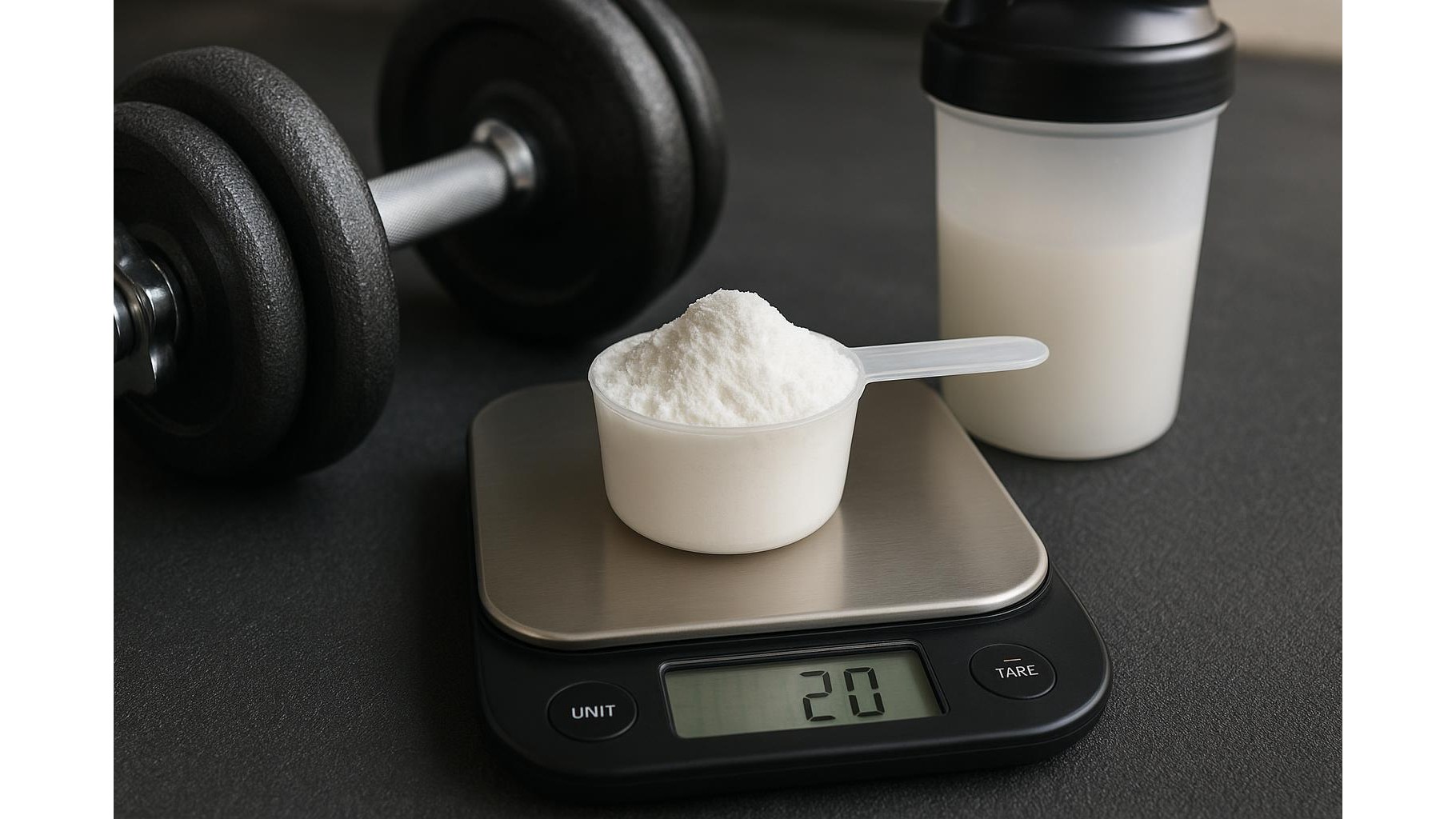
Training hard in a home gym often means pushing long sets, short rests and minimalist equipment to the limit. At some point, burning muscles and fading power cut your sets short, even when your motivation is still high. This is where beta-alanine comes in. As a simple amino-acid supplement that boosts your muscles’ buffering capacity, it can help you squeeze more quality reps out of tough sets, especially in the 1–4 minute effort range that many home lifters live in.
How beta-alanine actually works in your muscles
Beta-alanine is a building block for carnosine, a compound stored in muscle that helps buffer the hydrogen ions that accumulate during hard efforts and contribute to the familiar burning sensation. By supplementing beta-alanine, you increase muscle carnosine levels over weeks, improving your capacity to sustain high-intensity work before performance drops. This effect is most relevant for sets and circuits lasting roughly 60–240 seconds: think high-rep squats, EMOMs, kettlebell complexes and dense dumbbell work that are common in a home gym. It won’t replace good programming or recovery, but it can slightly shift the fatigue curve in your favour.
Who can realistically benefit in a home gym
Beta-alanine is most useful for home lifters who already have their training fundamentals in place: consistent sessions, progressive overload and decent sleep and nutrition. You are most likely to benefit if your sessions include higher-rep sets (8–20+), short rest intervals, metabolic conditioning or sport-style intervals (e.g., rowing, air bike, burpees). For pure low-rep powerlifting with long rests, the effect is smaller. It can also help hybrid trainees who mix strength and conditioning in the same home session, since many of their efforts sit in that 1–4 minute window where buffering supplements shine. Beginners do not need it; more volume, skill practice and basic protein intake come first.
Dosing basics and timing around workouts
The evidence-based daily dose for beta-alanine is around 3.2–6.4 g per day. For most home lifters, 3.2–4 g is a practical sweet spot. Unlike caffeine, beta-alanine does not need to be taken right before training to work; what matters is consistent daily intake for weeks. Muscular carnosine builds gradually, with meaningful changes after about 4 weeks and maximal levels around 8–12 weeks. To reduce side effects, split the dose into 2–4 smaller servings across the day, ideally with meals. You can take it on rest days too – skipping days may slow the build-up of carnosine and slightly reduce the benefits over time.
The tingling sensation and other side effects
The most well-known side effect is paresthesia, a harmless tingling or flushing sensation in the skin, especially face and hands. This is dose-dependent and usually shows up when taking 1.6 g or more at once. Splitting the daily dose (for example, 800–1,000 mg taken three or four times per day) significantly reduces this. Sustained-release formulations also tend to produce less tingling. Current research suggests beta-alanine is generally safe for healthy adults when used at recommended doses over typical cycles of several months, but anyone with medical conditions or taking medication should speak with a healthcare professional before starting.
Stacking beta-alanine with other basic supplements
For the typical home trainee, beta-alanine sits behind creatine, sufficient protein and adequate sleep in the priority list. Once those are covered, it can be a logical addition if your training style matches its strengths. Many home lifters combine beta-alanine with a simple creatine monohydrate supplement and black coffee pre-workout to cover buffering, phosphocreatine support and central stimulation. There is no need for complicated blends: single-ingredient powders make it easy to control doses and track how you respond. Remember that beta-alanine is not a magic bullet; its role is to add a few extra quality reps or seconds of effort, which over months can support better strength-endurance and work capacity.
Making buffering supplements work for you
For home lifters who love hard sets, short rests and brutally honest garage sessions, beta-alanine can genuinely make sense. When used consistently at 3.2–4 g per day, it raises muscle carnosine and improves your ability to sustain mid-length high-intensity efforts. Side effects like tingling are usually mild and manageable by splitting the dose. Focus first on solid programming, nutrition and sleep, then consider beta-alanine as a targeted tool to extend your top-end effort during tough sets. Treated as a long-term performance aid rather than a pre-workout “rush”, it can be a valuable, evidence-based addition to a minimalist home gym supplement stack.









