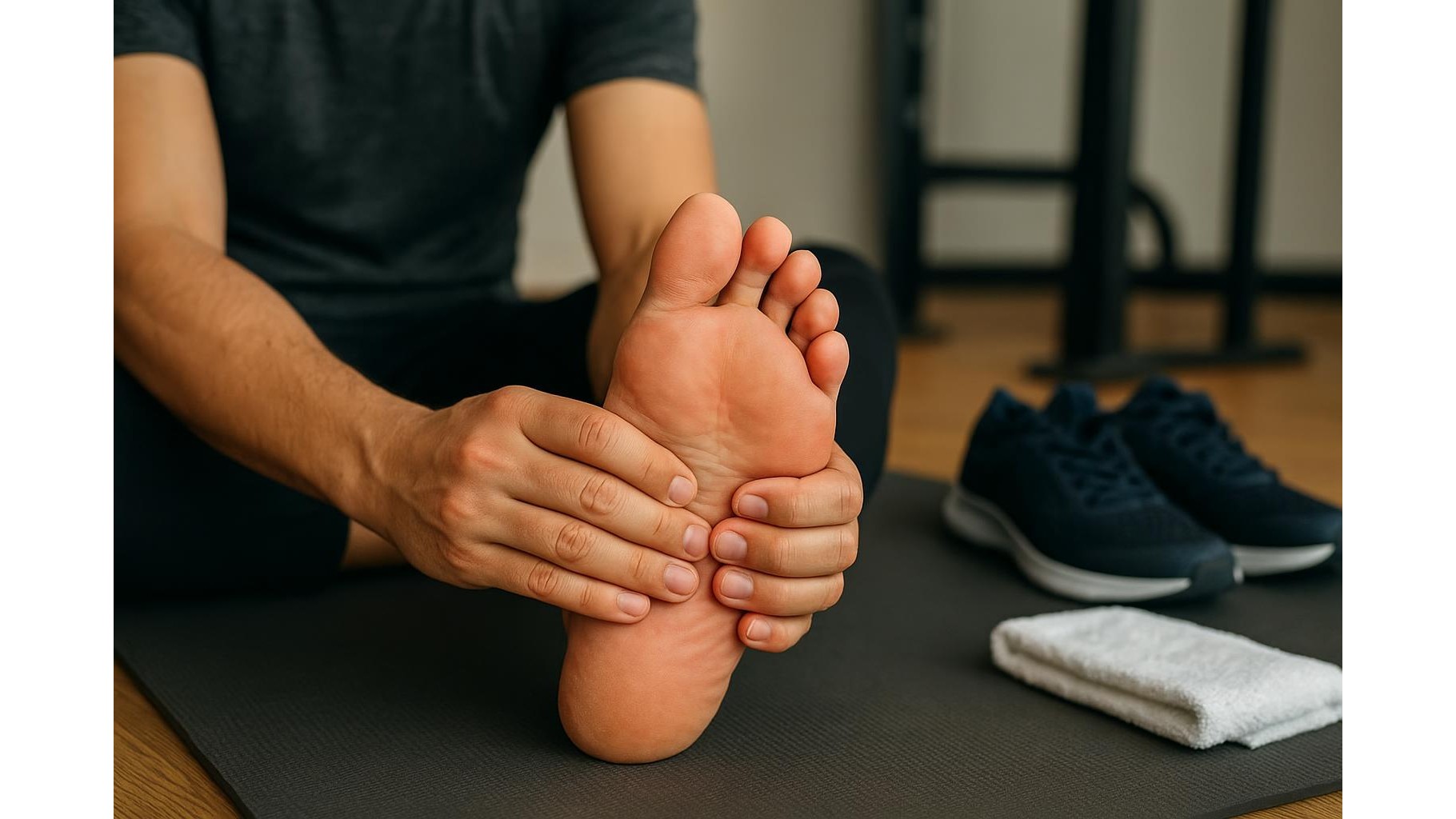
Training at home often means logging extra time on hard floors, minimal footwear and improvised workout spaces. Your feet take the brunt of this. Caring for your soles, arches and toes is essential if you want to keep lifting, running on the spot or jumping without nagging aches. With a few simple routines and smart gear choices, you can protect your feet, improve performance and prevent many common overuse injuries.
Daily foot prep before your home workout
Before you hit your home gym, spend 3–5 minutes on a quick foot warm-up. Start by standing and slowly rolling through your feet from heel to toe for 20–30 reps, then switch to gentle ankle circles in both directions. Add a short calf stretch by leaning into a wall, keeping one heel flat, to reduce tension through the Achilles and plantar fascia. Finally, practice spreading your toes and gripping the floor lightly, as if trying to “shorten” your foot. This activates the small intrinsic foot muscles that support your arch, improving stability for squats, deadlifts and lunges.
Simple mobility and strength drills for soles, arches and toes
Consistent mobility work keeps your feet resilient. Sit on a chair and cross one ankle over the opposite knee; gently move each toe up and down for 10–15 reps to restore motion to stiff joints. Next, place a small towel on the floor and use your toes to scrunch it toward you, then push it away; this strengthens your arches and improves grip in barefoot training. Finish with single-leg balance holds on one foot for 30–45 seconds, progressing to closing your eyes or performing light upper-body movements. These simple drills improve proprioception, helping you land softly during jumps and maintain better control during heavy lifts at home.
Skin care: calluses, blisters and nail maintenance
Home athletes often ignore basic foot skin care until pain appears. After showers, dry thoroughly between toes to reduce the risk of fungus, then apply a light, non-greasy moisturiser to heels and balls of the feet to prevent painful cracking. Manage calluses with a gentle file once or twice a week, avoiding aggressive scraping that can cause soreness. Keep nails trimmed straight across and not too short to reduce the chance of ingrown toenails, especially if you do a lot of jumping or bodyweight cardio. If you notice recurrent blisters in the same spot, reassess your socks and training shoes rather than simply covering them with plasters; repeated friction is a warning sign that something in your setup needs attention.
Choosing the right shoes and insoles for home training
Your home workout shoes should match your main activities. For strength training, a stable, relatively flat shoe with minimal cushioning helps you feel the floor and keeps your ankles from wobbling under load. For high-impact cardio such as HIIT or skipping, look for reliable shock absorption in the heel and forefoot to protect your joints. Rotate or replace shoes when the tread is visibly worn, the midsole feels flat or you notice new aches in your shins, knees or arches. Many home athletes benefit from supportive insoles to fine-tune arch support; if you feel your feet collapsing inward during squats or lunges, or you develop plantar fascia tightness, it may be time to consider upgrading your in-shoe support rather than just training barefoot on hard surfaces.
Smart habits to prevent overuse and pain
Protecting your feet is less about complex fixes and more about consistent habits. Alternate between higher-impact and lower-impact home sessions to give your feet and calves recovery time. Use an exercise mat or a slightly softer surface for high-rep jumping drills to reduce stress on your heels and arches. After training, spend a few minutes elevating your legs to reduce swelling and perform gentle calf and plantar stretches. Listen to early warning signs such as morning heel pain, persistent arch soreness or tingling toes; scale back impact and increase mobility and recovery work when they appear. Building these routines into your weekly plan keeps your feet ready to support every rep, step and jump in your home gym.
Healthy, well-cared-for feet are the foundation of pain-free home training. By adding a short warm-up, regular mobility drills, simple skin care practices and smarter choices about shoes and insoles, you can dramatically reduce the risk of blisters, plantar fasciitis and other common issues. Treat your feet like the critical training tools they are, and your whole body will benefit with better stability, stronger lifts and more comfortable home workouts.