
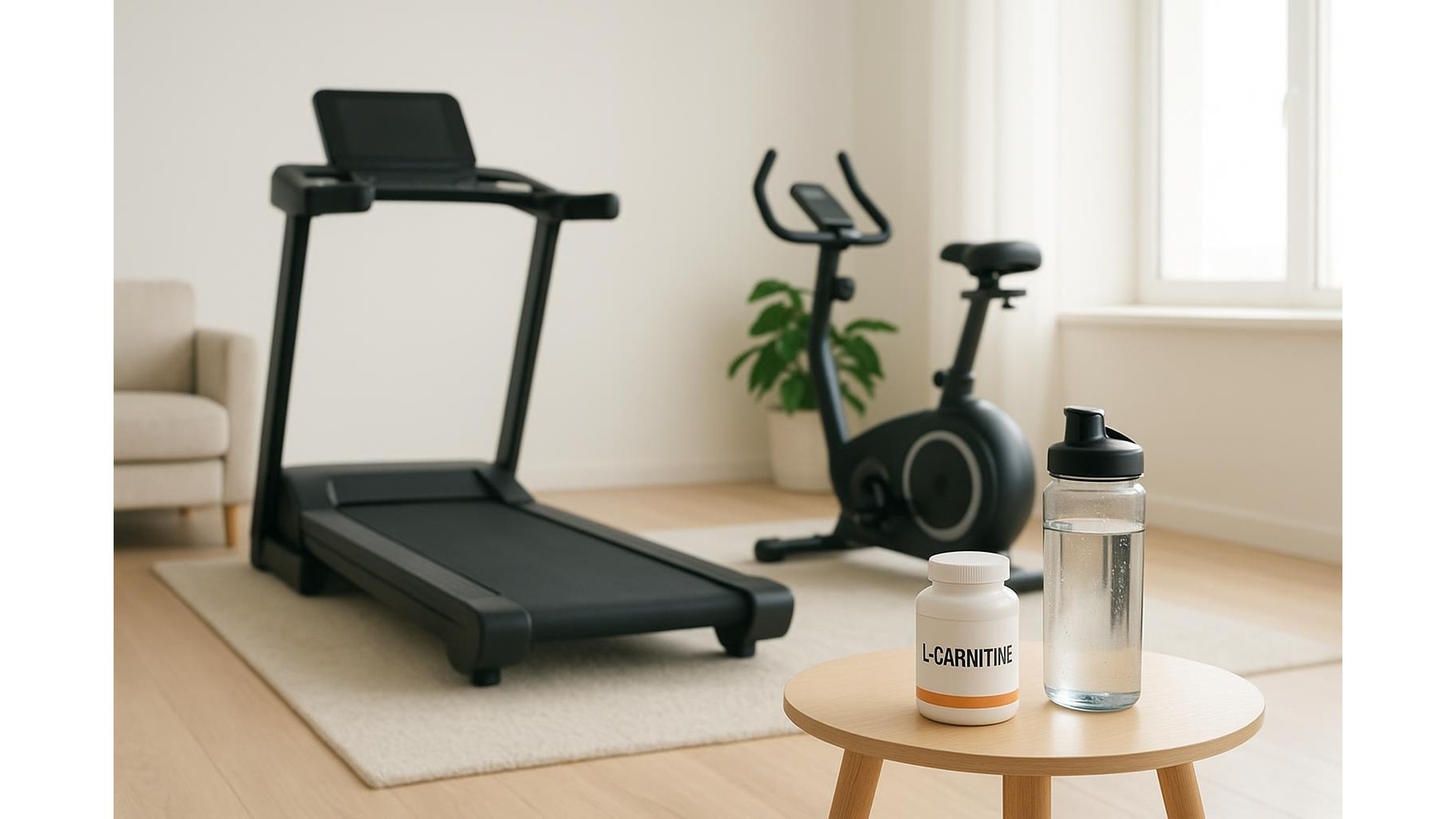
When you start doing regular home cardio – from treadmill walks to HIIT on a stationary bike – it’s tempting to add a fat‑burning supplement to speed things up. L‑carnitine is one of the most marketed options, often sold as a magic booster for fat loss and endurance. But what does the science actually say, and when can it realistically support your training instead of just draining your wallet?
What L‑carnitine is and what it actually does
L‑carnitine is a compound your body produces from the amino acids lysine and methionine. Its main role is to help transport fatty acids into the mitochondria, where they can be burned for energy. In theory, more L‑carnitine means more fat burning; in practice, research shows it is not that simple. Most healthy people are not deficient in L‑carnitine, and your body tightly regulates how much it absorbs. For home trainees, this means L‑carnitine is not a magic switch for fat loss, but a potentially useful support in specific situations, such as long cardio sessions or when your diet and training are already very dialled in.
L‑carnitine and fat loss: cutting through the hype
Many labels promise that L‑carnitine will melt fat during your cardio workouts. Human studies, however, show only modest or inconsistent effects on weight loss. Any benefit tends to appear over months, not weeks, and only when combined with a calorie deficit and regular exercise. In other words, if your nutrition is not under control, L‑carnitine will not compensate. For a home trainee doing daily step sessions on a treadmill or elliptical, L‑carnitine may provide a small additional push at best, but the primary drivers of fat loss will still be calories, protein intake, sleep and training volume.
Endurance, recovery and when L‑carnitine may help
Where L‑carnitine shows more promise is in endurance, recovery and muscle soreness. Some studies suggest that consistent supplementation can reduce muscle damage markers after training and slightly improve performance in longer efforts. If your home routine includes 40–60 minute steady‑state cardio sessions or long indoor cycling workouts, this might translate into feeling less beat‑up and being able to maintain intensity across the week. The effect is subtle, not dramatic, and you usually need to take it daily for weeks before any benefit appears. For short, all‑out HIIT circuits, the difference is likely to be even smaller.
Liquid, capsules or powders for your home routine?
Most home trainees will choose between capsules and powder forms of L‑carnitine. Capsules are convenient, easy to dose and simple to store in a home gym drawer. Powders can be mixed into a pre‑cardio drink and may offer better value per gram, but often come with added flavourings or sweeteners. Some products combine L‑carnitine with caffeine or other stimulants; these can feel more energising but are not necessarily more effective for fat loss and may disrupt sleep if you train late at home. Whichever form you pick, remember that consistency and overall lifestyle will matter far more than the specific format or fancy marketing claims on the label.
How to decide if L‑carnitine fits your home cardio days
Before you add L‑carnitine to your supplement stack, check the basics: is your nutrition aligned with your goal, are you progressing your cardio workload, and are you sleeping enough? If the answer is yes and you want to experiment, L‑carnitine can be a reasonable, low‑risk trial, especially if you do longer sessions or feel excessively sore after workouts. Give it at least 4–6 weeks of consistent use and track objective markers such as session duration, perceived exertion and recovery. If you notice no difference, it is likely just marketing for you, and your money is better invested in quality food or equipment that makes your home gym experience more sustainable.
In summary, L‑carnitine is a physiologically interesting supplement but not a miracle solution for fat loss or performance. For most people training at home, it ranks behind nutrition, programmed cardio and recovery habits in importance. It may offer a small edge in endurance and soreness management for well‑structured routines, but it will not turn casual sessions into a shredded physique. Treat L‑carnitine as a fine‑tuning tool, not a foundation, and base your decisions on how it actually affects your home cardio days rather than on bold promises on the bottle.









