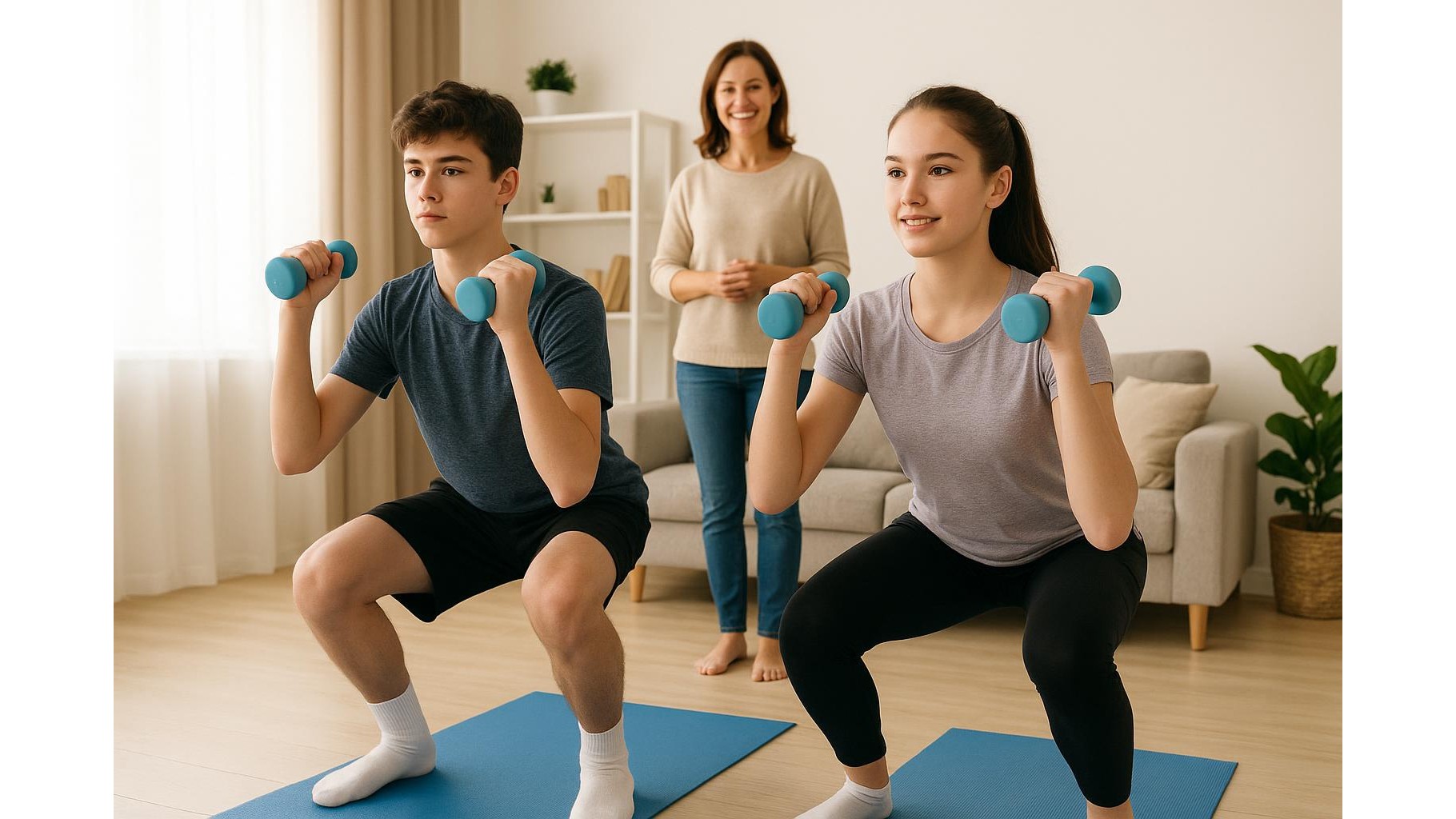
Starting a home workout routine for teens does not need to be complicated or risky. With a pair of light dumbbells, a bit of floor space, and clear guidance, teenagers can build strength, posture, and confidence in just 30 minutes. This beginner-friendly, full body dumbbell workout is designed to be safe, scalable, and easy to follow at home, with simple form cues and tips parents can use to supervise.
Setting up a safe home workout space
Before any dumbbell workout for teens, make sure the training area is safe. Clear the floor from toys, cables, and loose rugs to avoid trips. Teens should wear supportive trainers and comfortable clothing that does not restrict movement. Keep a bottle of water nearby and remind them to move smoothly, never rushing reps. A short warm-up of 3–5 minutes (march in place, arm circles, gentle bodyweight squats) prepares muscles and joints. Parents can watch the first few sessions, checking that their teen lifts with control, stops if something hurts in a sharp way, and can still breathe and talk while exercising.
The 30-minute full body dumbbell structure
This 30-minute full body plan is built around simple movements that train legs, chest, back, shoulders, and core. Aim for 2–3 sessions per week on non-consecutive days. A basic structure looks like this:
- Warm-up: 3–5 minutes of light cardio and mobility
- Main circuit: 6 exercises, 40 seconds work / 20 seconds rest
- Rounds: 3 rounds, with 1–2 minutes rest between rounds
- Cool-down: 3–5 minutes of stretching for legs, chest, and shoulders
Teens should start with very light dumbbells they can control easily, focusing on form, not on lifting heavy. If the last 5 seconds of each work period feel challenging but still technically clean, the weight is appropriate. Parents can encourage a steady pace and remind teens to exhale on the effort phase of each lift.
Exercise selection: simple moves that build strength
Choose basic, joint-friendly exercises to cover the whole body. A sample circuit for teens might include:
- Dumbbell goblet squat: strengthens legs and glutes while teaching good posture
- Dumbbell floor press: works chest and triceps in a stable, lying position
- One-arm dumbbell row: trains upper back and improves shoulder alignment
- Dumbbell Romanian deadlift: targets hamstrings and glutes with a hip hinge pattern
- Dumbbell overhead press (seated if needed): builds shoulder strength and stability
- Dumbbell dead bug or weighted crunch: engages the core safely
For each move, think “slow and smooth.” Knees should follow the toes in squats, the back stays straight in rows and deadlifts, and the core stays gently braced, as if preparing to be tickled. If technique breaks down, reduce the weight or shorten the work interval to 30 seconds.
Form cues and breathing tips for teens
Good form is what makes a teen dumbbell workout at home both effective and safe. A few simple cues help: keep the chest “proud” rather than collapsing forward, imagine zipping up the abs before lifting, and grip the dumbbells firmly but without squeezing as hard as possible. Teens should avoid holding their breath; instead, they exhale as they push, pull, or stand up, and inhale as they lower the weight. Parents can watch from the side to check that the lower back does not round and that knees do not cave inward during squats and deadlifts. Remind teens that mild muscle fatigue is normal, but sharp pain or joint discomfort is a signal to stop and adjust.
Progression, safety, and involving parents
The key to long-term progress is gradual overload. Teens can first add reps or extend each work interval from 30 to 40 seconds before increasing weight. When the routine feels easy for two weeks, consider using slightly heavier dumbbells while keeping perfect form. Parents should set clear training days, celebrate consistency, and ensure there is at least one full rest day between strength sessions. Sleep, hydration, and a balanced diet matter as much as the workout itself. Make it a positive experience, not a punishment: music, tracking improvements, and training alongside a family member can turn this home dumbbell workout into a fun habit.
This beginner-friendly 30-minute dumbbell workout for teens offers a structured, accessible way to build strength and confidence at home. With a safe setup, simple full-body exercises, clear form cues, and steady progression, teenagers can train effectively using light weights while parents supervise and support. Treated as a long-term routine rather than a quick fix, it helps lay the foundation for a healthy, active lifestyle.