If you love overhead presses, handstand work or snatches, your shoulders take a beating. The good news: you don’t need a full physio clinic to keep them healthy. With a single resistance band and a few minutes of focused mobility and strength drills, you can build more resilient shoulders, improve your position overhead and keep training hard at home, even in a very small space.
Why overhead lifters need banded shoulder care
Overhead lifting demands a lot: thoracic extension, scapular control, and strong, stable rotator cuffs. When these pieces are missing, you get pinchy shoulders, cranky elbows and stalled progress. A simple resistance band lets you train the small stabilising muscles with very joint-friendly tension. You can vary load by stepping farther from the anchor point and adjust angles easily, which is ideal for home athletes without big equipment. Think of this routine as your daily insurance policy for pressing strength.
[pure_placeholder type=”cta” id=”telegram”/]
Band dislocates and wall slides for easy mobility
Start by opening up the front of the shoulders and chest. Grab a light loop resistance band and perform band dislocates: hold the band wide, arms straight, and slowly bring it from hips to overhead to behind you, then reverse. Keep ribcage down and move only at the shoulders. Follow with wall slides: stand with your back and forearms against a wall, slide arms up overhead while keeping contact. These drills restore overhead range, encourage better scapular movement and prep your joints for the strength work to come.
External rotations to bulletproof the rotator cuff
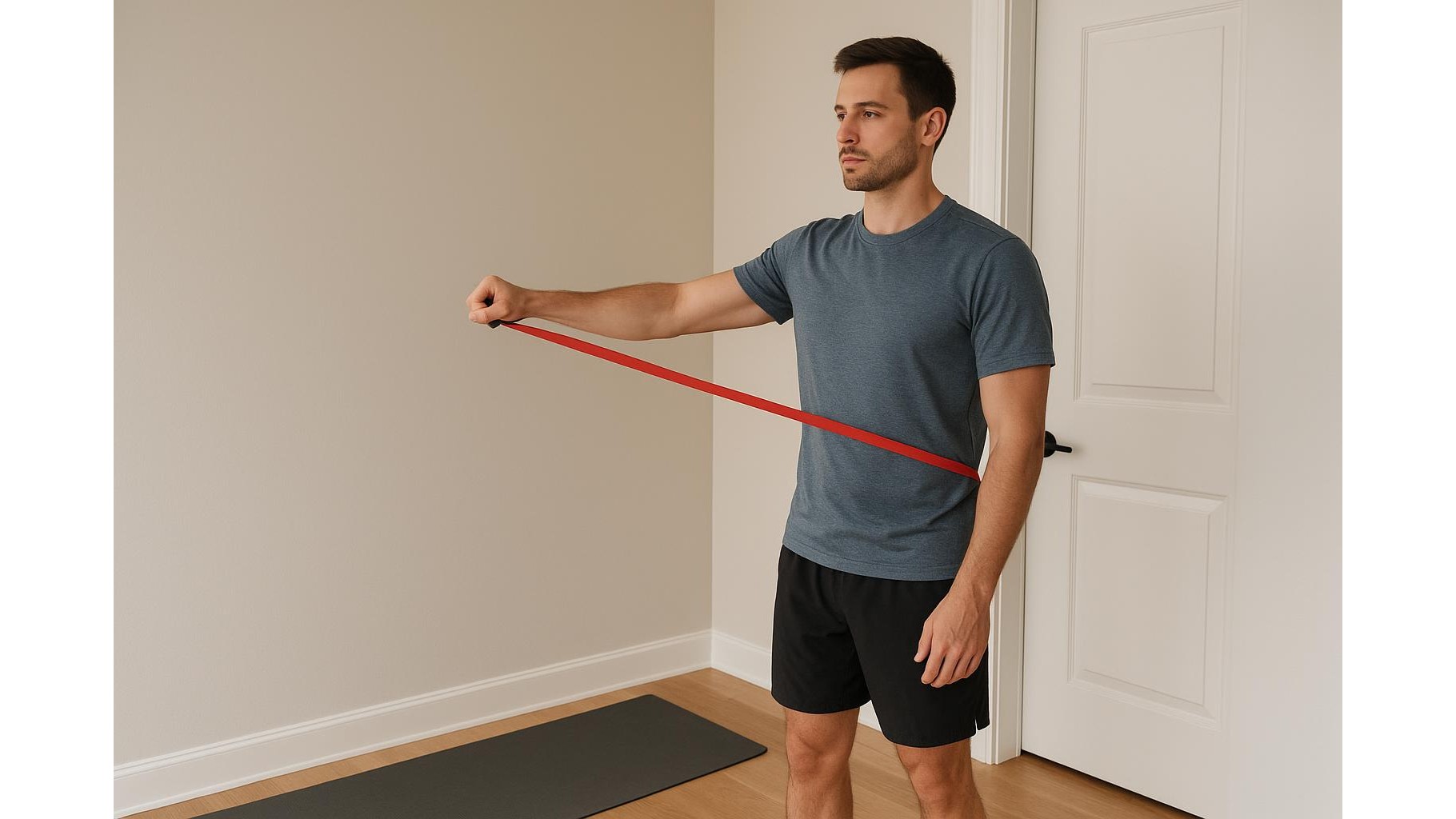
The rotator cuff keeps the head of the humerus centred in the socket when you press. To train it, anchor your band to a door handle or railing. For external rotations, stand side-on, elbow tucked at 90° by your ribs, and rotate your forearm away from your body, controlling the return. Do 2–3 sets of 12–15 reps per side with slow tempo. You should feel a gentle burn at the back of the shoulder, not pain in the front. This low-load, high-control work is perfect for home sessions and massively improves overhead stability.
Scapular control: band pull-aparts and face pulls
Strong, well-positioned shoulder blades are the foundation of safe overhead lifting. Banded pull-aparts are a staple: hold the band at chest height, arms straight, and pull it apart by squeezing shoulder blades together, not shrugging. Then hit face pulls: anchor the band at eye level, pull towards your nose with elbows high and wide, finishing in a strong external rotation. These drills strengthen the mid-back and rear delts, helping you avoid the rounded, internally rotated posture that sabotages pressing mechanics and invites shoulder discomfort.
Overhead carries and stabilization with a band
You can also use a resistance band to simulate overhead carries and stability work in a tiny space. Stand on the band, press it overhead with one or both arms, and hold while walking in place or performing slow marches. Focus on ribs down, glutes tight and biceps in line with ears. The constant band tension teaches you to actively own the overhead position instead of passively hanging on your joints. For single-arm holds, your core and obliques work overtime, building the anti-rotation strength you need for heavy presses.
Putting it together: a simple at-home shoulder routine
Combine these drills into a 10–15 minute pre-lifting or off-day routine: 1) band dislocates and wall slides for mobility, 2) external rotations for the rotator cuff, 3) pull-aparts and face pulls for scapular strength, and 4) overhead band holds for stability. Aim for 2–4 sets of 10–15 controlled reps each, 3–5 times per week. Adjust band tension so the last few reps feel challenging but never painful. With just a light resistance band, a small patch of floor and consistency, you can keep your shoulders healthy, stable and ready for heavy overhead work at home.
Consistent, low-cost shoulder care at home really is possible. By using a simple resistance band to target mobility, cuff strength and scapular control, you build a stronger foundation for all your overhead lifts. This short routine slots easily before your home workouts or on rest days, and over time it can mean fewer aches, better positions and more confident pressing.