Turning your living room or garage into an effective home gym does not require fancy software or complicated apps. With a simple browser and a basic interval timer, you can run highly structured EMOM, Tabata and circuit sessions that feel almost like training in a coached class. In this guide, we walk through how to use free timer websites on your laptop, tablet or TV, and how to complement them with compact physical timers to stay focused, pace your efforts and log repeatable workouts over time.
Choosing the right interval timer setup at home
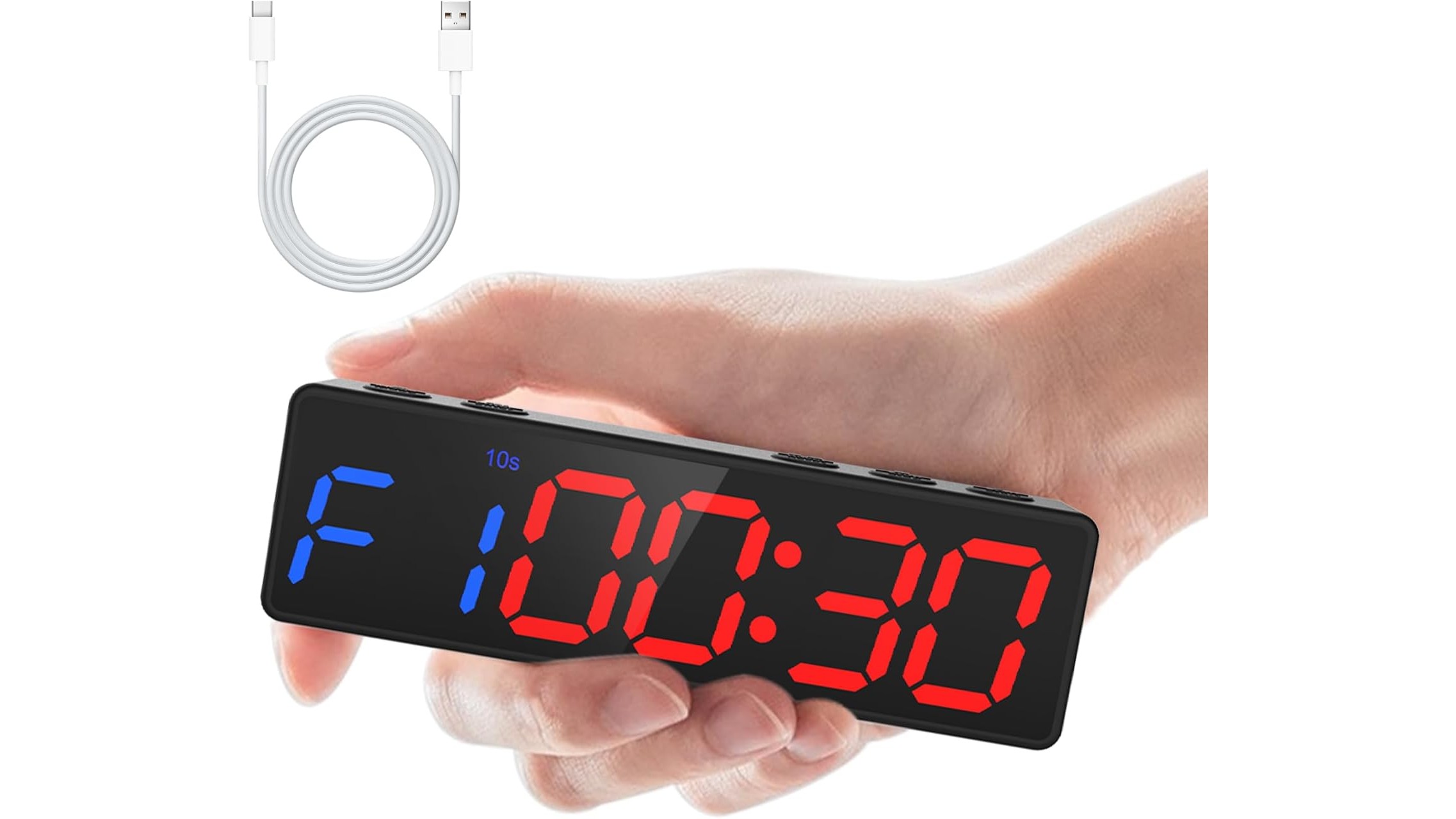
The heart of a structured interval workout is a clear audio‑visual cue that tells you when to start, stop and rest. Basic interval timer websites do this perfectly: you simply open your browser, pick a format like Tabata or EMOM, set work and rest durations, then press start. For extra clarity, many home athletes like to pair browser timers with a small physical clock they can place near their rack or mat. A compact option is the Magnetic Gym Timer Clock for Home Gym, which offers dedicated modes for MIIT, HIIT, TABATA, EMOM and more, plus a bright LED display visible from across the room. Combining a big‑screen browser timer with a portable magnetic clock gives you redundancy, flexibility and clear pacing wherever you train.
Setting up EMOM sessions with browser timers
An EMOM (Every Minute On the Minute) session is one of the easiest formats to run with a browser‑based timer. Choose any free online interval timer, select a custom interval and set a 60‑second cycle. Define your total number of rounds (for example, 20 minutes for 20 rounds) and use a short pre‑countdown so you can get into position. When the clock beeps, start your reps; when you finish, rest until the next minute starts. To simplify repeated use, save your EMOM presets in the website if that option exists, or bookmark individual URLs with parameters set for your favourite templates (e.g. 10‑minute EMOM of burpees, 16‑minute EMOM of swings and squats). This way you build a personal library of structured sessions that you can launch in a single click.
Running Tabata and HIIT blocks without losing focus
Tabata workouts use 20 seconds of work and 10 seconds of rest, usually for 8 rounds, and are ideal for intense but time‑efficient home cardio. On most interval timer sites you simply select Tabata mode or manually set 0:20 work / 0:10 rest and 8 cycles. To stay focused, choose exercises that require minimal setup changes—think air squats, mountain climbers, kettlebell swings or shadow boxing. If you prefer not to rely on your laptop sound, you can mirror the same structure on a dedicated timer like the REACHER Gym Timer Clock, which has preset Tabata, EMOM and stopwatch modes plus adjustable volume and a strong magnetic spine. This lets you keep your eyes on your movement while still responding instantly to each beep.
Designing circuits and custom presets for consistency
Beyond fixed EMOM and Tabata schemes, basic interval timer tools are perfect for full‑body circuit training. Set work intervals (for example, 40 seconds) followed by rest (20 seconds) and choose the number of stations or rounds. Many timer sites let you label intervals or colour‑code them, which helps when rotating through exercises like push‑ups, rows, lunges and core moves. If you train regularly, invest a few minutes in saving custom presets both in your browser timer and on your physical timer. The Magnetic Gym Timer Clock for Home Gym includes multiple custom slots and 12 professional modes, so you can store different routines (strength EMOMs, conditioning circuits, boxing rounds) and access them quickly. Consistent timing removes decision‑making fatigue and makes it easier to track progress from week to week.
Practical tips to keep your home workouts on track
To get the most out of browser‑based workout timers, treat them like a virtual coach. Position your laptop, tablet or smart TV where you can see the countdown without craning your neck. Use headphones or external speakers if the beeps are too quiet. For early‑morning or late‑night sessions, lower the brightness and volume or rely more on a compact timer like the REACHER Gym Timer Clock, whose strong magnet lets you attach it to a rack or radiator at eye level. Before each session, write your exercises and reps on a notepad or whiteboard so you are not guessing between intervals. Finally, set a short warm‑up interval block and a cool‑down timer to ensure you move, stretch and breathe before and after the main set, making your home training safer and more sustainable.
Using simple interval timer websites together with compact, magnetic gym timers transforms your home space into a structured training environment. Whether you prefer punchy Tabata blocks, steady EMOM strength work or longer conditioning circuits, the right timing tools keep you honest, focused and consistent. Save your favourite presets, lay out your exercises in advance and let the clock handle the structure—so you can put all your energy into moving well and getting fitter session after session.