Building a home gym in a small space means choosing tools that are effective, safe and easy to store. A compact ab roller combined with simple core trainer accessories can deliver intense workouts without dominating your living room. In this guide we’ll see how to select the right gear, protect your floors and progress from beginner to advanced without risking your lower back or shoulders.
Why a compact ab roller belongs in every home gym
A quality ab roller challenges the entire core – abs, obliques, lower back and even lats – using a simple roll-out motion. For home gyms, compact wheels are ideal because they store easily in a drawer and work in tight spaces. Look for a model with a wide wheel for stability and soft, non-slip handles that stay comfortable even when your hands get sweaty. A compact roller also lets you adjust range of motion: beginners can start with short rolls from the knees, while advanced users can work up to full roll-outs from the toes.
Key safety and comfort features to prioritise
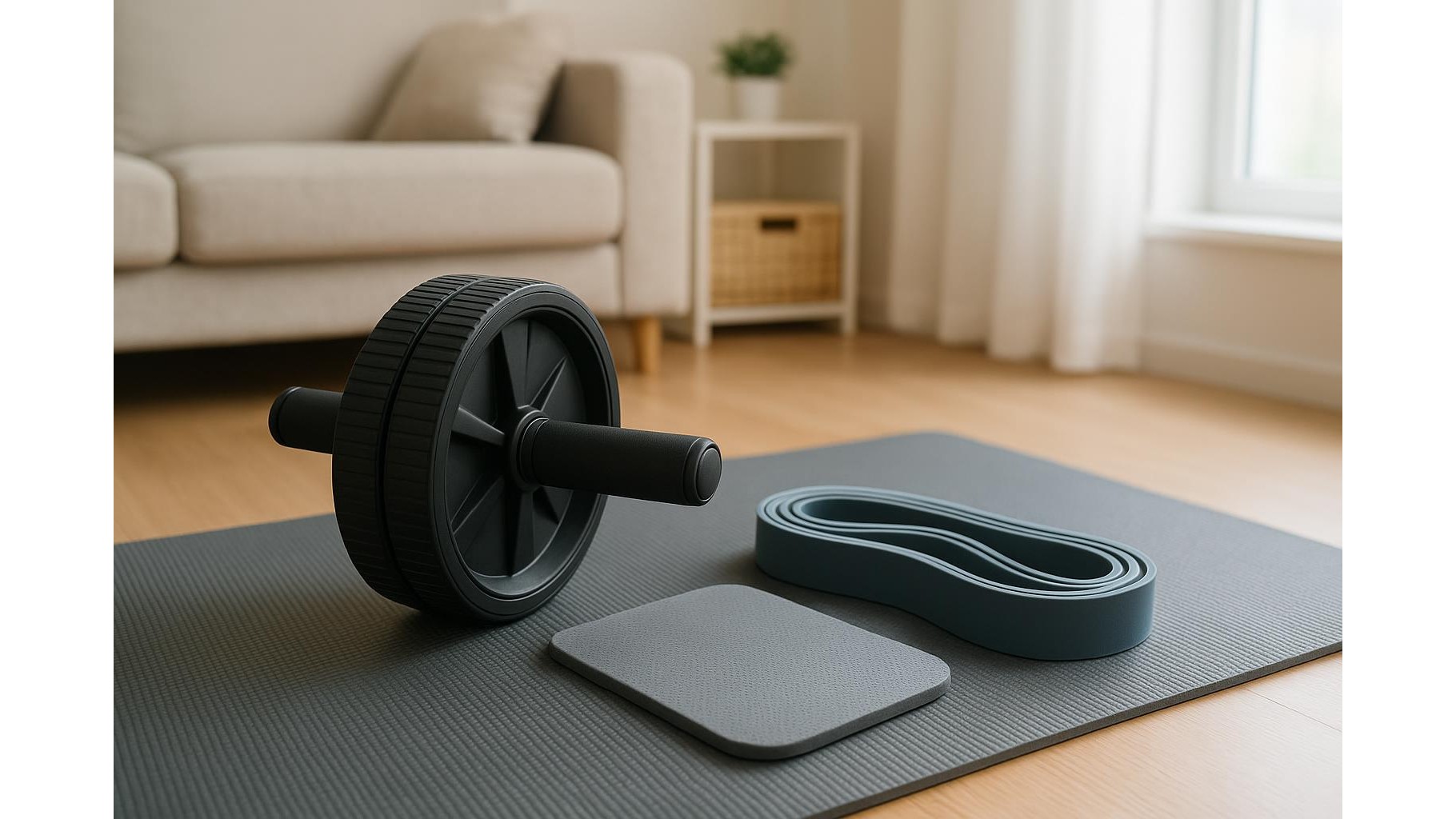
When choosing your ab wheel, prioritise joint protection. Cushioned or ergonomic hand grips reduce strain on the wrists, while a slightly textured wheel improves grip on the floor and helps prevent slipping. Check the maximum user weight and choose a solid, well-rated product rather than the cheapest option. If you have sensitive knees or train on hard floors, pair your roller with a thick knee pad or small exercise mat so you can focus on your form, not on pain. For extra control, some users prefer rollers with a dual-wheel design, which offers more lateral stability than a very narrow wheel.
Complementary core trainer tools that stay compact
To build a balanced home core routine, add one or two compact core trainer tools alongside your ab roller. Resistance bands with door anchors are perfect for anti-rotation work like Pallof presses, helping you build stability that protects your spine during roll-outs. Sliders or gliding discs take up almost no space and allow mountain climbers, pikes and body saws that mimic the ab roller pattern with less load, ideal for beginners. A small balance pad or unstable cushion can turn standard planks and bird-dogs into more demanding stability drills without adding heavy equipment to your home.
How to protect your floor and keep noise under control
Hard wheels on delicate floors can leave marks or create a lot of noise, which is a problem in flats or late-night workouts. To avoid this, use your ab roller on a yoga mat or thin protective flooring. Make sure the wheel surface is non-marking and easy to wipe clean, especially if you train on light-coloured laminate or tiles. If you live in an apartment, train on a rug or thicker mat to dampen sound as you roll. Storing your roller and small core tools in a box or basket keeps your space tidy and prevents accidental scuffs from loose equipment rolling around.
Beginner-friendly progressions for safe results
Jumping straight into full ab roll-outs from the toes is a recipe for strained backs and sore shoulders. Start by mastering basic planks and dead-bug variations, then move to short roll-outs from the knees where your hips stay tucked and your ribs pulled down. As you get stronger, gradually increase how far you roll and how long you hold the extended position. Pair the roller with anti-rotation band work and bird-dogs to strengthen the deeper stabilisers that keep your spine safe. Focus on quality reps, smooth breathing and stop each set before your form breaks, even if the wheel feels easy at first.
Choosing a compact ab roller and a couple of smart core trainer tools can transform a small home space into an effective training area. Prioritise stability, joint comfort and floor protection, then follow a gradual progression that respects your current level. With the right gear and smart programming, you can build a strong, resilient core at home without bulky machines or complicated setups.