
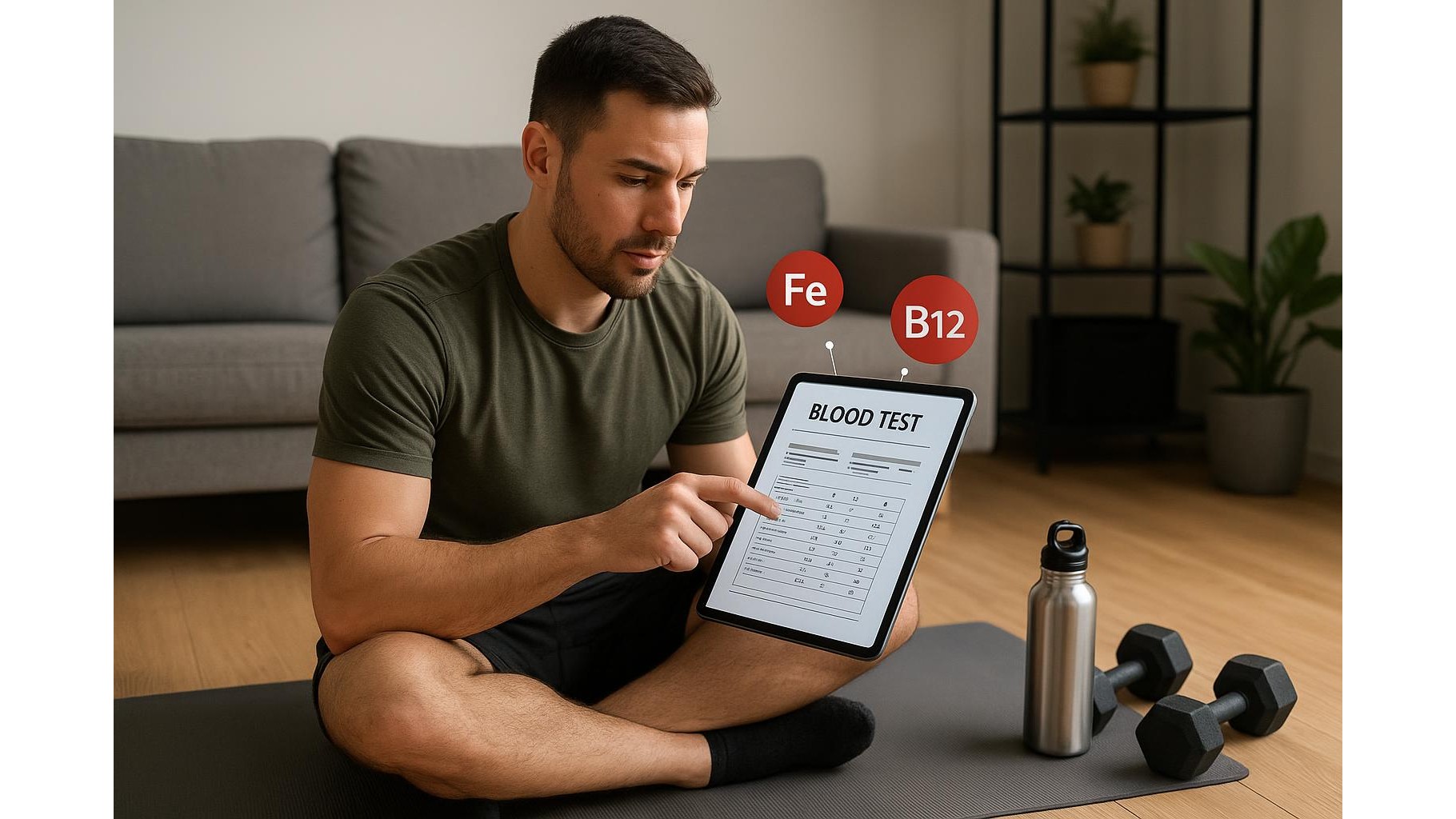
Training at home is convenient, but it can also hide silent problems like low iron or vitamin B12. These two nutrients are central for energy production, oxygen transport and nervous system function. When they drop, performance, motivation and recovery often suffer. In this article we look at the basics of iron and B12 for home athletes, how to recognise possible deficiency, which tests matter, and when a supplement may actually make sense instead of being just another pill in your drawer.
Why iron matters for your home workouts
Iron is a key component of haemoglobin, the protein that carries oxygen in your blood, and of myoglobin, which stores oxygen in your muscles. If your iron stores are low, less oxygen reaches your working muscles and even moderate sessions on the exercise bike or with resistance bands can feel disproportionately hard. Typical symptoms of iron deficiency include fatigue, shortness of breath on exertion, pale skin, headaches and reduced capacity to increase training volume. Home athletes who follow heavy training plans, menstruating women, and people following plant-based diets are at higher risk. However, these symptoms are not specific, which is why self-diagnosis is unreliable and blood testing is essential before making changes.
Understanding vitamin B12 and energy
Vitamin B12 supports red blood cell formation and normal function of the nervous system. When B12 is low, you might experience tiredness, brain fog, tingling or numbness in hands and feet, and reduced coordination – all of which can affect your form and safety during home workouts. B12 deficiency is more common in vegans and vegetarians, older adults and people with digestive conditions or who take certain medications that reduce absorption. Because B12 is involved in energy metabolism, many athletes assume that more is always better, but if your levels are normal, extra B12 will not create “super energy”. Again, evidence-based use means testing and discussing results with a health professional, not chasing quick fixes.
Key blood tests: what to ask for
When you suspect low iron or B12, the first step is to request a proper blood panel from your doctor. For iron status, important markers include haemoglobin, ferritin (your iron stores), transferrin saturation and sometimes CRP to rule out inflammation that can distort ferritin readings. For vitamin B12, total serum B12 is a starting point, but your doctor may also check methylmalonic acid (MMA) or holotranscobalamin for a clearer picture of functional deficiency. Interpreting these values depends on context: your training load, diet, medical history and symptoms all matter. Avoid starting supplements just before testing, as they can skew results and make it harder to understand your true baseline status.
When a supplement makes sense (and when it does not)
Supplements for home athletes can be useful, but only when guided by evidence. An iron supplement is usually considered when tests show low ferritin, especially if accompanied by low haemoglobin and symptoms such as persistent fatigue or drops in performance. Because iron tablets can cause side effects like constipation or stomach upset, and excess iron may be harmful, dosage and duration should be supervised by a doctor or dietitian. Similarly, vitamin B12 supplements can be helpful for people with confirmed low B12 or absorption problems, or for those on strictly plant-based diets without fortified foods. For everyone else, focusing on a balanced diet, including iron-rich foods (such as lean meat, legumes, fortified cereals) and B12 sources (animal products or fortified alternatives), plus overall energy intake, is usually more impactful than taking random pills.
Practical tips to support iron and B12 at home
To protect your iron and B12 status while training at home, start with daily habits. Include a source of iron at most meals and pair plant sources (like lentils or beans) with vitamin C-rich foods, such as peppers or citrus, to boost absorption. Try to separate coffee and tea from iron-rich meals, as they can reduce uptake. If you are vegan or vegetarian, plan regular sources of vitamin B12 through fortified plant milks, nutritional yeast or, when recommended, an appropriate supplement. Keep a simple training log noting energy, perceived exertion and recovery: a sudden, unexplained drop in performance or increased need for rest may justify a conversation with a professional. The goal is not to chase perfection, but to support consistent, enjoyable training.
For home athletes, understanding the basics of iron and vitamin B12 is a smart way to protect energy, performance and long-term health. Rather than guessing or copying other people’s supplement stacks, focus on recognising potential signs of deficiency, getting the right lab tests, and seeking professional advice before you start any new supplement. A targeted, evidence-based approach beats trial-and-error – and helps ensure that your home gym efforts translate into sustainable progress instead of unexplained fatigue.









