Building a safe, efficient home gym is not only about barbells, benches and resistance bands. Your choice of sports socks has a direct impact on stability, hygiene and joint comfort during strength, cardio and mobility sessions. The right balance of cushioning, compression and grip can reduce slips on hard floors, limit blisters and support your arches under heavy loads, turning every session into smoother, more confident training.
Why technical socks matter in a home gym
In a home gym you often train on mixed surfaces: tiles, laminate, rugs or rubber mats. Standard cotton socks tend to slide, soak up sweat and lose their shape. Technical training socks use blends of synthetic fibres (like nylon, polyester and elastane) engineered to wick moisture away, maintain elasticity and provide targeted reinforcement under the heel and forefoot. This helps you keep a solid base for squats, lunges or kettlebell work, even when your floor is less than ideal. Look for designs marketed for gym training, cross training or Pilates and yoga, as they usually combine breathability with strategic grip patterns for better traction.
Cushioning: protecting feet and joints under load
For strength and mixed conditioning, a key feature is zoned cushioning. Extra padding under the heel and ball of the foot absorbs impact during jump squats, burpees or treadmill sprints, while maintaining a relatively thin profile at the midfoot so you still feel connected to the ground during deadlifts or presses. Seek socks that mention reinforced heel and toe, impact protection or terry cushioning panels. In a home context, where you may train daily with less rotation of shoes, this extra protection reduces pressure points, limits calluses and helps keep your feet comfortable through longer circuits and time‑under‑tension sets.
Compression: support, recovery and fit
Compression socks are not just for runners. Light to moderate compression around the arch and ankle can stabilise the foot during unilateral moves like split squats or step‑ups, decreasing the feeling of wobble on improvised platforms such as chairs or low stools. Graduated compression up the calf can also assist blood flow, helping to reduce post‑workout fatigue if you are on your feet for multiple short sessions across the day. When browsing options, pay attention to descriptions such as arch support band, compression fit or graduated compression. A secure, hug‑like fit also prevents the sock from bunching inside the shoe, which is crucial for repeat sets of skipping, rowing or indoor cycling.
Grip and stability for barefoot-style training
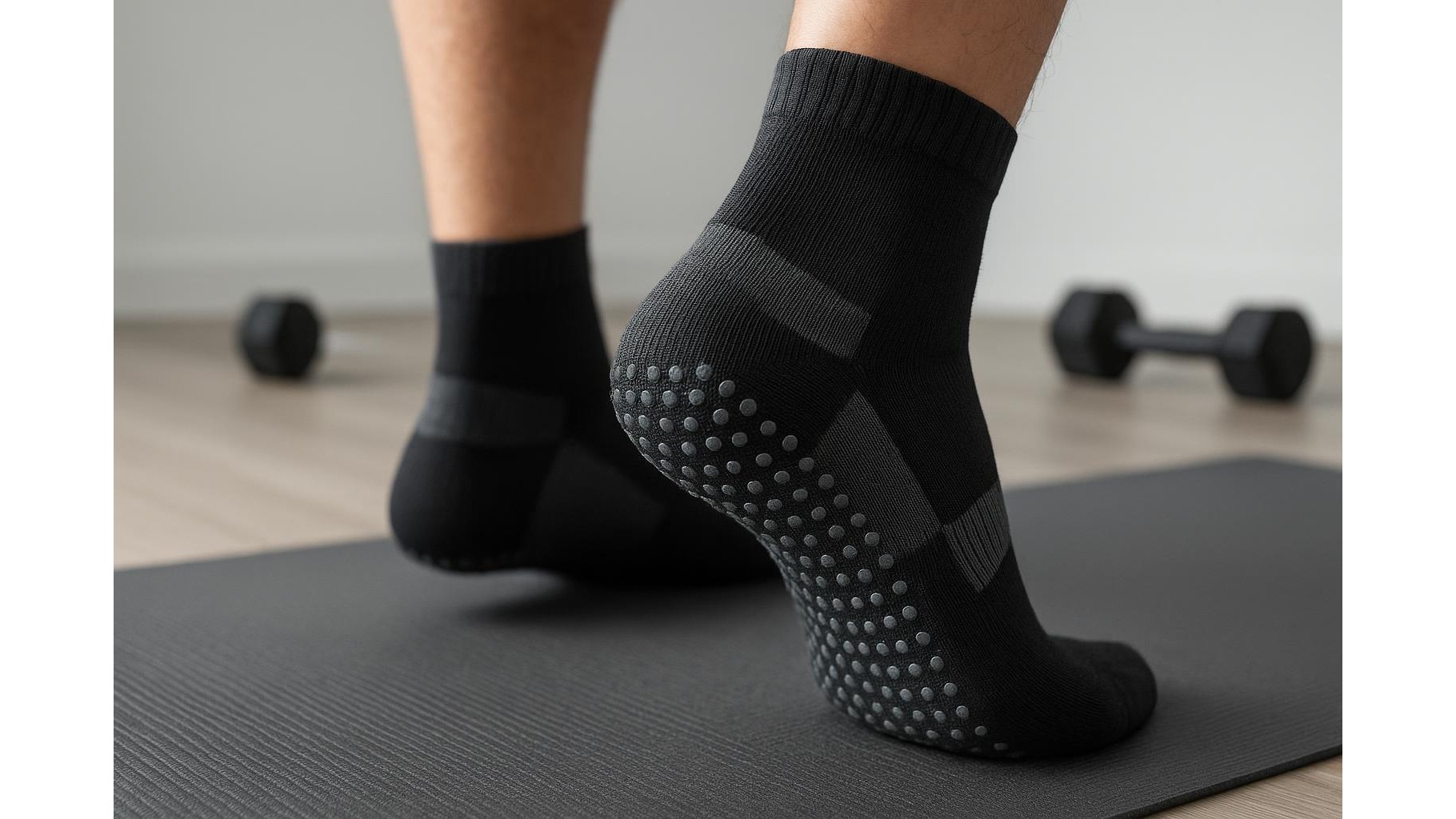
One of the biggest advantages of home training is the freedom to go barefoot or nearly barefoot. However, smooth floors can be slippery, especially when you sweat. Grip socks with silicone dots or rubberised patterns on the sole give you floor contact similar to bare feet, with extra traction and a hygiene barrier. This is ideal for yoga, Pilates, bodyweight strength and mobility flows where you need to root your feet into the mat for balance. Look for descriptions like “non‑slip sole”, “anti‑skid grip” or “studio socks”. In a home gym shared with family, these socks also minimise the risk of slipping on scattered toys or cables as you move between exercises.
Hygiene, durability and practical buying tips
Because home gyms often double as living spaces, hygiene is crucial. Prioritise socks made from moisture‑wicking, quick‑dry fabrics; some models incorporate antimicrobial treatments to reduce odour‑causing bacteria, which is useful if your training corner has limited ventilation. Check for flat or seamless toes to prevent rubbing, and reinforced areas on the heel and ball of the foot for long‑term durability. It is worth building a small rotation: for example, thinner, grippy socks for mobility and yoga, and cushioned, lightly compressive socks for strength and cardio. Buying in multipacks with clear size charts helps you maintain a clean, dry pair for every session and stretch your budget over time.
Ultimately, the best home gym sports socks are those that match your training style and environment. By focusing on three pillars—cushioning to absorb impact, compression to support and stabilise, and grip to prevent slips—you turn a simple accessory into a performance tool. Combine breathable fabrics, a secure fit and appropriate traction for your flooring, and your feet will stay safer, fresher and more comfortable from warm‑up to cool‑down, allowing you to focus fully on progressing your strength, cardio and mobility at home.