Building a compact weightlifting platform for your home gym floor is one of the best upgrades you can make if you train with a barbell in a flat or small house. The right platform will protect your floor, cut down on vibration and impact noise, and keep the bar stable, even if you only have a tight corner to train in. This guide walks you through what to look for and how to decide between buying ready‑made tiles and building your own DIY platform.
Why a compact lifting platform matters in small spaces
If you lift in an apartment or a small garage, you probably worry about noise, neighbours and floor damage. A compact platform concentrates shock absorption right where the bar lands, so you don’t need a full Olympic-sized setup. Instead of covering the whole room, you can combine a small platform with regular rubber mats. Look for solutions that use high‑density rubber and wood or plywood: this combination spreads the load, reduces bounce and gives your feet a firm surface. Even a 1.2 m x 1.2 m area (roughly 4′ x 4′) can be enough for deadlifts and power cleans at home.
Key features to look for in a ready‑made platform
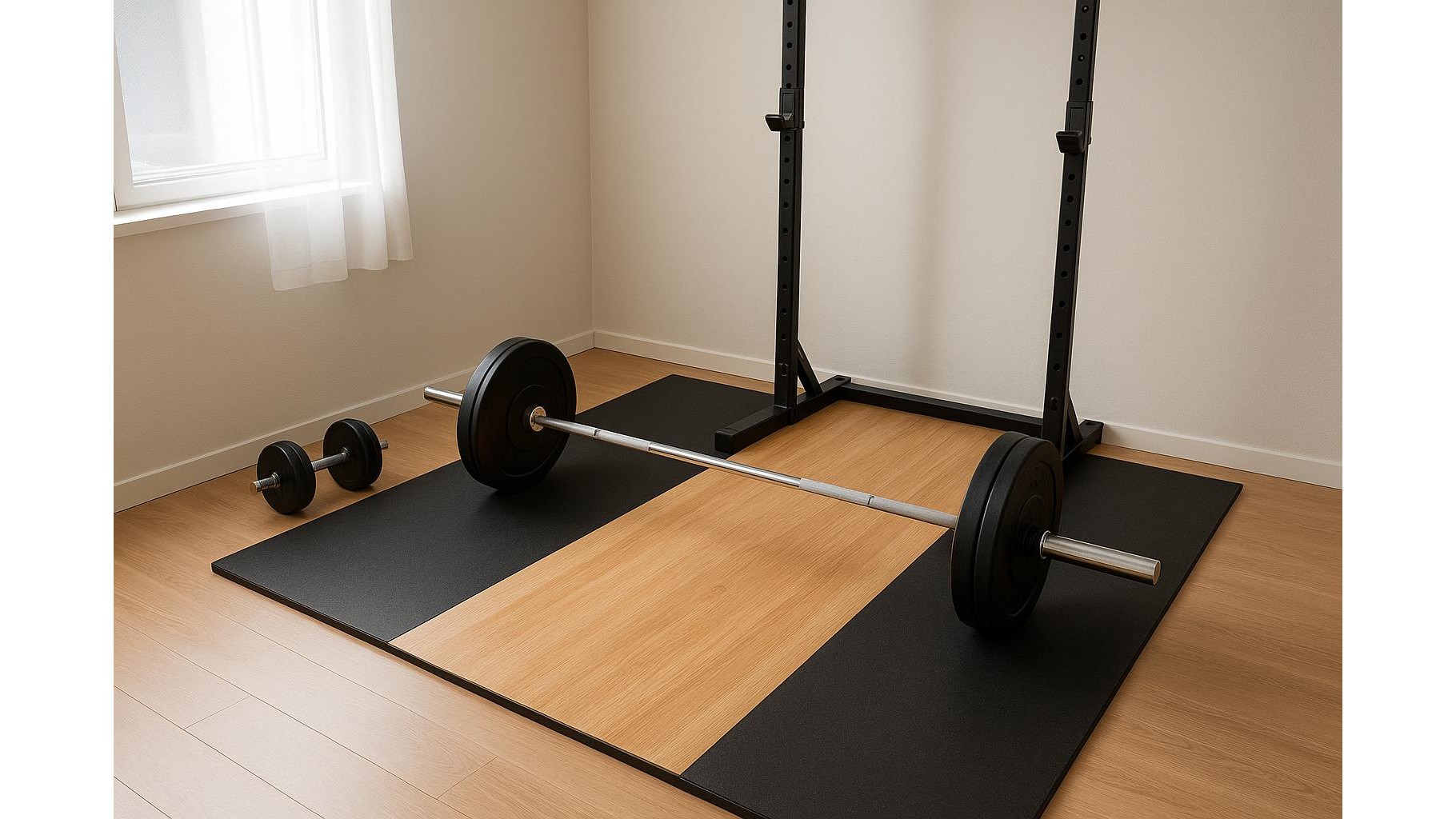
When buying pre‑made components, prioritise dense rubber tiles that lock together securely. For example, interlocking gym tiles similar to those used in commercial boxes offer a good balance of protection and size. Choose tiles at least 20–30 mm thick for serious barbell work, with a textured, non‑slip surface. Make sure they are marketed for weightlifting, not just yoga or light fitness, so they can handle dropped barbells. Many home lifters pair a small central wood sheet with rubber tiles around it, creating a mini deadlift platform that fits in a spare room or hallway without being permanent.
How to DIY‑build a small lifting platform
If you are handy with basic tools, a DIY weightlifting platform can be cheap and highly effective. A common approach is to stack two layers of plywood or OSB for stiffness, then add a third top layer: rubber on the sides where the plates land and a wood strip in the middle where you stand. Cut the boards so the final footprint fits your exact training corner, for example 120 x 180 cm. Screw or glue the layers together to minimise flex and creaking. You can place the finished platform over existing rubber gym mats to further reduce noise and protect delicate floors like laminate or tiles.
Noise, vibration and neighbour‑friendly training
In flats, noise control is as important as floor protection. A compact platform works best when combined with additional dampening: thicker rubber where the plates land, soft underlay or existing mats underneath, and controlled lifting technique (no unnecessary dropping). Avoid hollow platforms that act like drums; instead, build or choose designs that are solid and well‑supported. If noise is a major concern, favour slower, controlled negatives and set the bar down rather than dropping from overhead. This lets you keep training heavy without becoming the most hated neighbour in the building.
Planning your layout and long‑term use
Before you buy or build, measure your space and mark out where the barbell, rack and platform will sit. Ensure you have enough clearance at the ends of the bar so you can load plates safely, even in a narrow room. A compact platform should be moveable if you might relocate or reconfigure your home gym, so think about weight and whether it can be split into sections. Finally, consider future needs: if you may add Olympic lifts or heavier deadlifts later, choose materials and thickness that can grow with you rather than going ultra‑thin just to save a few centimetres today.
A well‑designed compact weightlifting platform can turn almost any corner into a stable, safe home gym. By focusing on dense rubber, solid wood layers and a footprint tailored to your room, you will protect your floor, keep noise under control and enjoy more confident lifting sessions. Whether you invest in quality tiles or build a DIY platform, taking the time to plan now will give you a durable training base that supports years of progress.