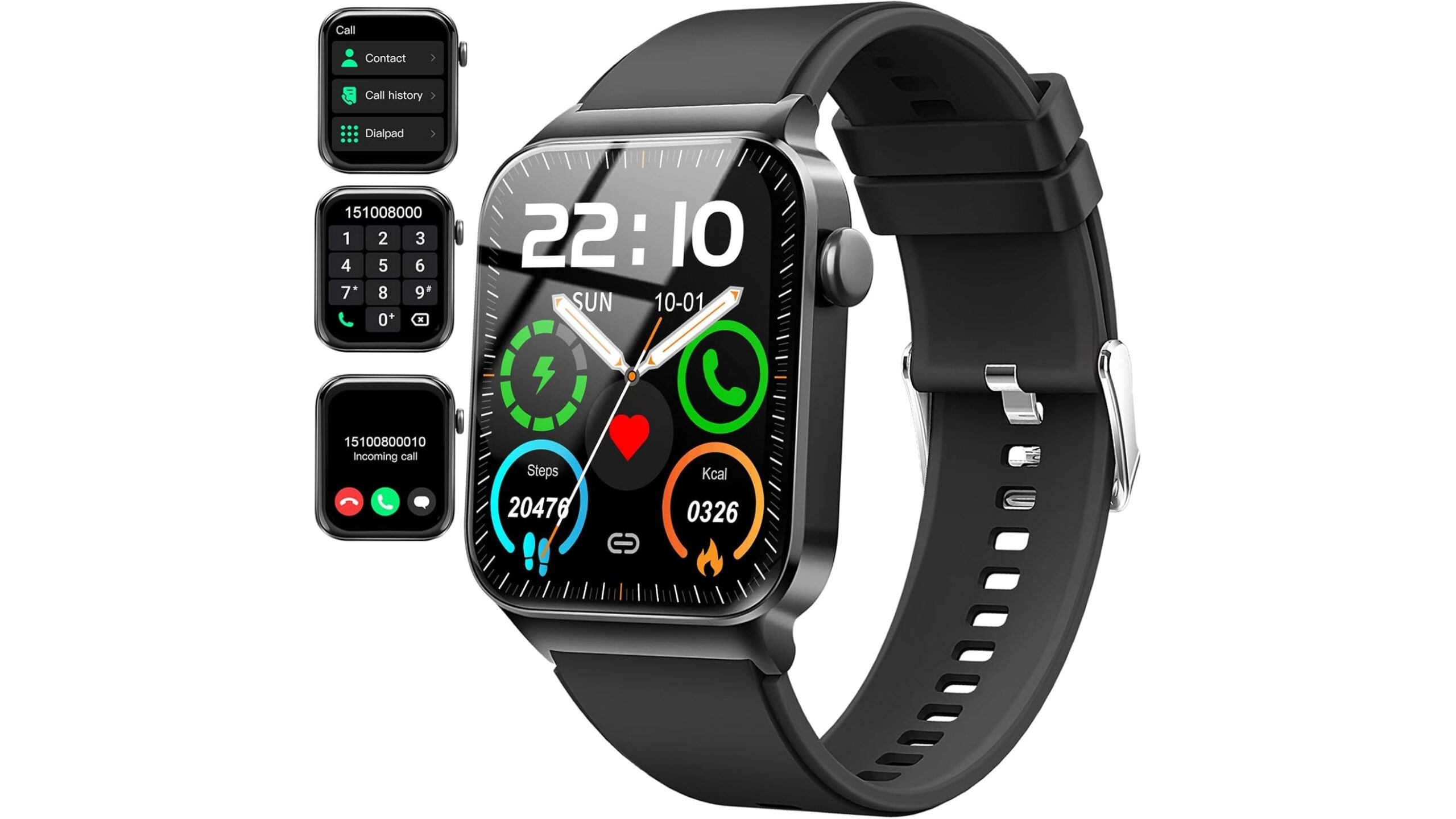
Building an effective home workout routine is much easier when your wrist is doing some of the thinking for you. Modern smartwatches come packed with training tools that can act like a mini coach: they guide your heart rate zones, structure intervals, remind you to move and log your progress automatically. Devices like the Fitness Tracker, Smart Watch for Women Men with 24/7 Heart Rate/Blood Pressure/Blood Oxygen Monitor and the 2026 Smart Watch for Men Women, 1.85″ Smart Watches Answer/Make Calls turn basic living-room sessions into structured fitness training—without needing extra apps or pricey coaching plans.
Turn heart rate zones into your home training engine
Most people exercise at random intensities, which leads to plateaus and frustration. A smartwatch with 24/7 heart rate monitoring, like the RLQA Fitness Tracker, can automatically estimate your heart rate zones (easy, moderate, hard) and show them in real time on its bright touchscreen. For a simple cardio session at home—such as marching on the spot, step-ups or low-impact dance—aim to stay in a moderate zone where you can still talk but feel your breathing increase. For fat-loss or general fitness, you might target 20–30 minutes in this zone, using the watch’s continuous HR tracking to avoid drifting too easy or too hard. Over time, review the watch’s HR and calorie graphs to see if you’re spending more time in your desired training zone and gradually increasing total active minutes.
Build custom intervals without extra apps
Interval training is one of the most efficient ways to improve fitness in a small space, and you don’t need a separate timer app. Both the RLQA Fitness Tracker and the Matast 2026 Smart Watch include sports modes, stopwatch and timer functions you can repurpose as a flexible interval coach. For example, create a 20-minute circuit: 40 seconds of bodyweight squats, 20 seconds rest; 40 seconds push-ups or incline push-ups on a bench, 20 seconds rest; 40 seconds glute bridges, 20 seconds rest. Use the watch’s custom timer and vibration alerts to signal work/rest periods, and track steps, distance (if you’re moving around) and heart rate to ensure each interval lands in the right intensity zone. Because these watches store your previous sessions, you can repeat and slightly upgrade the same interval workout every week.
Use reminders and alerts to stay consistent at home
Home training often fails not because workouts are bad, but because they are easy to skip. Smartwatches shine here thanks to movement reminders, sedentary alerts and smart notifications. On the Matast 2026 Smart Watch, you can set sedentary reminders that nudge you to stand, stretch or perform a quick 5-minute mobility flow every hour. The RLQA tracker adds stress and sleep tracking, which can inform when to opt for a gentle yoga or breathing session instead of a hard HIIT workout. Combine calendar alerts with your watch’s alarm or vibration so that “gym time” appears like a regular appointment on your wrist. This transforms your smartwatch into a subtle accountability partner, especially useful if your home is full of distractions and competing priorities.
Leverage training profiles and sport modes for structure
Many people only ever use the default “walking” mode on their watch, but the built-in sport modes are effectively ready-made training profiles for your home workouts. The RLQA Fitness Tracker offers 100+ sports modes, from yoga and cycling to generic free training, while the Matast 2026 Smart Watch supports treadmill, skipping rope and other options. Pick a mode that best matches your session: “yoga” for mobility work, “free training” for strength circuits, “treadmill” for indoor cardio. Each profile tailors the metrics it highlights—such as calories, duration, HR or pace—so your watch shows the most relevant information mid-workout. Over weeks, compare total time and calories per profile to confirm you’re balancing strength, cardio and recovery sessions in your home programme.
Sleep, recovery and all-day tracking as your hidden coach
A powerful but overlooked benefit of these smartwatches is how they monitor sleep, blood oxygen and daily activity. The RLQA tracker breaks your night into deep and light sleep phases, while the Matast watch tracks SpO2, heart rate and movement overnight. Poor recovery? The next day, your watch’s data might suggest swapping a tough strength circuit for light stretching, walking laps around the living room or a core routine. Both devices log steps, calories and active minutes so you can treat the whole day as one long, low-intensity workout instead of relying only on a single 30-minute session. Used this way, your smartwatch is not just a gadget that counts reps; it becomes a holistic coach nudging you toward smarter training and better lifestyle habits at home.
Smartwatches like the RLQA Fitness Tracker and the Matast 2026 Smart Watch offer more than notifications and step counts. By using their heart rate zones, interval timers, reminders and training profiles, you can design structured, progressive home workouts without any extra apps or equipment. Start simple—pick a sport mode, set a timer, watch your heart rate—then build from there. Over time, these small, data-informed tweaks turn your watch into a reliable mini coach that keeps your training consistent and results-focused from the comfort of your living room.