Starting a home fitness journey, it’s tempting to buy a basket full of supplements promised to boost muscle, burn fat and speed recovery. In reality, a beginner’s supplement stack can stay very small. Training consistency, sleep and a balanced diet deliver most of your progress; supplements are just the finishing touches. This guide looks at a few evidence‑based supplements that can genuinely help, and highlights trendy products you can usually skip when you’re just starting out.
Protein powders: convenient, not magical
For most beginners, a simple whey protein powder is the most practical supplement to consider. Protein supports muscle repair and growth, but you do not need anything exotic: any reputable whey or plant‑based alternative that provides around 20–25 g of protein per serving will do the job. Think of protein powder as a convenient food, not a shortcut to size. If you already hit your daily protein target (roughly 1.6–2.2 g per kg of bodyweight) through whole foods like chicken, eggs, dairy, tofu and legumes, you may not even need a shake. However, for busy home trainees who often miss protein at breakfast or after workouts, a basic powder is a low‑stress way to stay on track without resorting to ultra‑processed snacks.
Creatine monohydrate: small scoop, big evidence
Creatine monohydrate is one of the most researched sports supplements and a strong candidate for your minimalist stack. It can improve strength, high‑intensity performance and lean mass gains, especially when combined with progressive resistance training in your home gym. Look for a plain, unflavoured creatine monohydrate powder; you do not need fancy buffered or liquid versions. A typical dose is 3–5 g per day, taken at any time, with or without a loading phase. Staying well hydrated is important, and some people experience mild stomach discomfort at higher doses, which can usually be solved by splitting the dose. Despite myths, creatine is generally safe for healthy individuals and does not require complex “cycles” or stacks when you are just starting out.
Vitamin D and basic health support
Many home trainees work out indoors and spend large parts of the day at a desk. In this context, vitamin D is often more valuable than another exotic pre‑workout. Adequate vitamin D status supports bone health, immune function and may influence muscle performance. Depending on your location, sun exposure and diet, a low‑dose vitamin D3 supplement can be a smart addition, ideally discussed with a healthcare professional and, where possible, guided by blood tests. Alongside vitamin D, a modest multivitamin can help cover small dietary gaps, but it’s not a license to eat poorly. The priority should still be a diet rich in fruits, vegetables, whole grains and healthy fats rather than chasing endless micronutrient pills.
Pre‑workouts, BCAAs and fat burners: usually unnecessary
Scrolling fitness social media, you might think you need a colourful pre‑workout, separate BCAAs, pump boosters and a powerful fat burner to make progress. For beginners training at home, these are rarely worth the cost. Most pre‑workouts are just expensive caffeine plus flavourings; a normal cup of coffee taken 30–45 minutes before training provides a similar effect. If your total daily protein intake is adequate, BCAAs add very little, and money is often better spent on whole foods or a complete protein powder. As for fat burners, they do not replace a calorie deficit created by diet and activity, and can carry unnecessary stimulant loads. Focus instead on consistent training, step count and sustainable nutrition habits before considering any niche products.
How to build a smart beginner stack
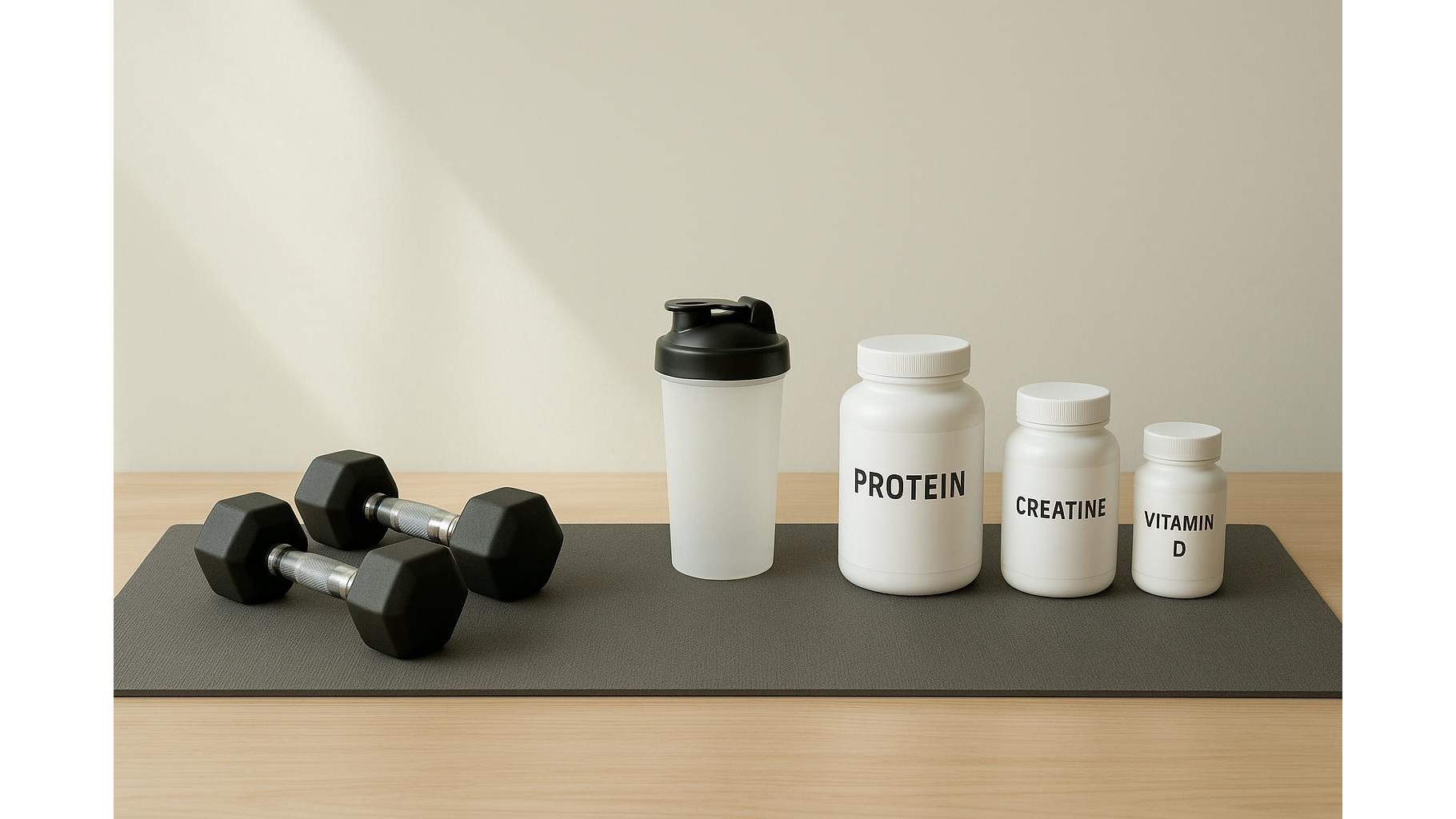
An effective beginner supplement stack for home fitness can be as simple as this: one basic protein powder if your diet is low in protein, creatine monohydrate for strength and performance, and vitamin D (plus possibly a modest multivitamin) based on personal needs and medical advice. Everything else is optional and often premature at this stage. Before clicking “buy”, ask: does this supplement solve a real problem in my current routine, or is it just excitement and marketing? Prioritise your training plan, sleep quality, stress management and meal prep. When those pillars are in place, a handful of well‑chosen supplements can support your progress instead of distracting you from the fundamentals that truly drive long‑term results.
In summary, beginners building a home fitness routine do not need a complex or expensive stack. A focus on protein intake, possibly supported by a simple powder, evidence‑based creatine, and smart health basics like vitamin D will cover most needs, while flashy pre‑workouts, BCAAs and fat burners can usually be skipped. Treat supplements as a small bonus layered on top of consistent training, real food and good recovery, and you will avoid common pitfalls while setting yourself up for sustainable progress.