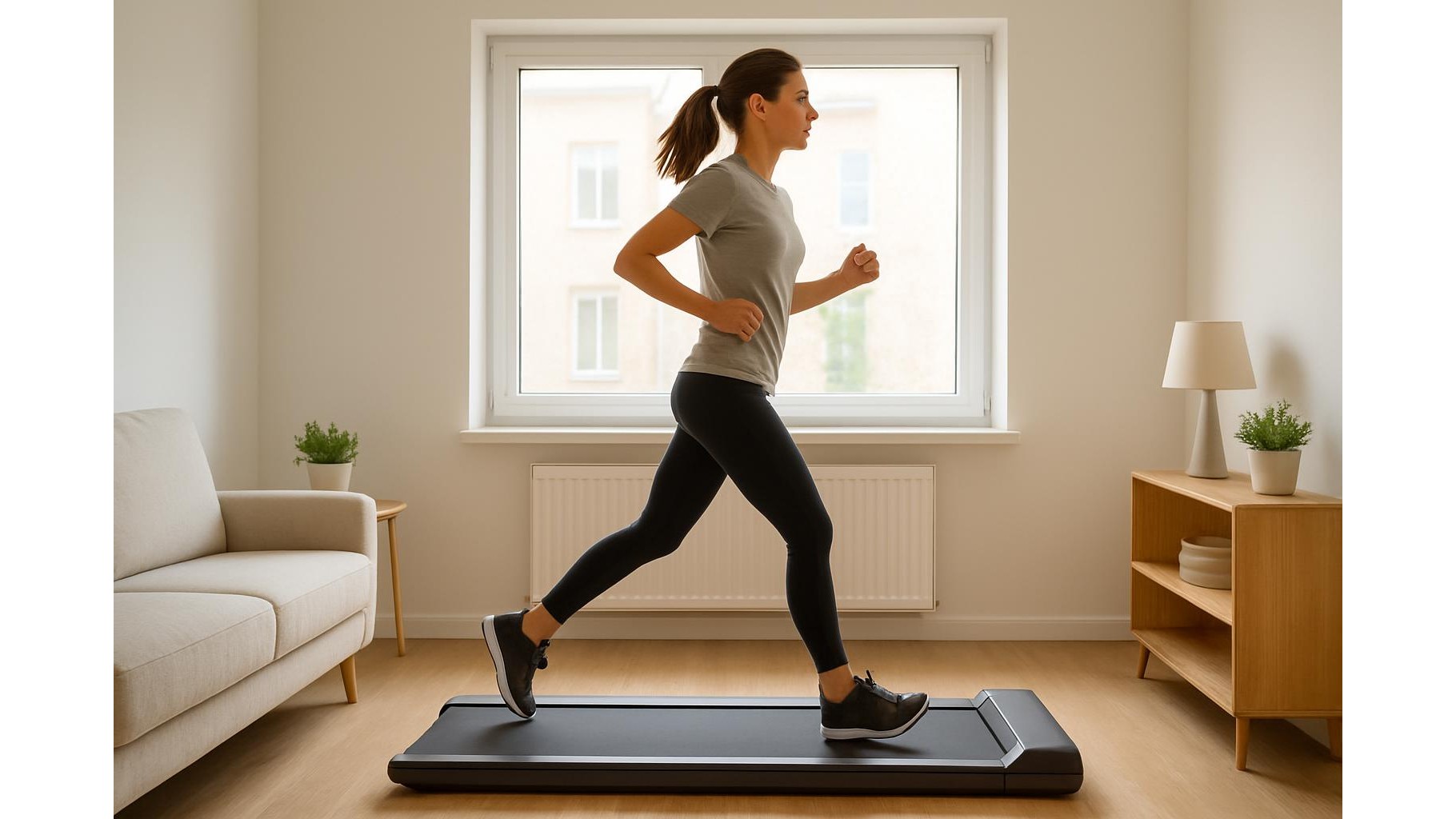
Compact under‑window treadmills have become a smart answer for runners who live in small flats and studio apartments. Ultra‑slim, easy to wheel around and designed to disappear under windowsills, sofas or low consoles, they let you train seriously without turning your living room into a full‑time gym. In this guide we look at how these treadmills fit in front of a window, what to expect in terms of motor power, running belt size, noise level and safety, and how to pick the right model for your tiny space.
Why under‑window treadmills suit tiny living rooms
Under‑window designs focus on slim frames and low profiles so they can slide beneath a window ledge, TV bench or daybed. Unlike bulky folding treadmills that still dominate the room when stored upright, ultra‑slim models keep a low silhouette and can often be left permanently in front of a window without blocking views or natural light. Their minimal footprint makes them ideal for narrow lounge layouts and open‑plan studios, where every square metre has to work hard. Many users also enjoy facing the window while running: natural light reduces eye strain compared with staring at a wall, and a street or courtyard view helps workouts feel less claustrophobic in compact homes.
What to know about motor power and top speed
Most compact under‑window treadmills are powered by smaller motors than full‑size home units. For walking and light jogging you will often see continuous power ratings around 1.0–1.5 HP with top speeds between 8–10 km/h; this keeps energy use and noise down, which is crucial in apartments with thin walls. If you aim for real running sessions with intervals or tempo work, look for at least 1.5–2.0 HP continuous output and a top speed of 12 km/h or more. Because slim frames leave less room for cooling, avoid running at maximum speed for very long stretches, and check for built‑in protections such as overheat shut‑off. A realistic assessment of your pace and training volume will help you choose a motor that performs without struggling.
Belt size, deck height and where it fits under the window
Belt dimensions are the biggest compromise with ultra‑slim treadmills. Many compact models offer a belt length around 100–120 cm and a width of 38–44 cm. This is enough for brisk walking and controlled running, but taller users and heel strikers should aim for the longer end of that range to avoid feeling cramped. Also consider the deck height from the floor to the top of the running surface: low‑profile designs of 10–14 cm are best if you plan to place the treadmill under a low window. Measure your floor‑to‑sill height, then add your shoe sole and running bounce to make sure your head does not get too close to the frame or curtains. When possible, leave at least 50–60 cm of clearance behind the treadmill in case you lose balance.
Noise levels, neighbours and apartment‑friendly features
One of the main worries for city runners is disturbing neighbours. Under‑window treadmills help by placing the machine against a wall that often backs onto the outdoors rather than another flat, but you should still look for features that reduce impact noise and vibration. Multi‑layer belts and basic shock‑absorption in the deck cut down the thudding sound of footstrikes, while brushless or well‑insulated motors reduce mechanical hum. A simple but effective trick is to place the unit on a thick rubber mat to isolate it from hard floors. Running in lighter shoes and shortening your stride a little can also lower impact noise. Finally, check the manufacturer’s stated dB rating at normal speeds and, if possible, schedule harder sessions at reasonable hours.
Safety basics for narrow spaces
Training in front of a window in a compact living room demands extra attention to safety. Always use the provided safety key or emergency stop lanyard so the belt halts quickly if you trip. Keep at least one metre of clear space in front of the treadmill and half a metre on each side, removing low tables, lamps or plant stands that might catch a swinging arm. For households with children or pets, choose a model with child‑lock controls or a main power switch you can turn off after each session, and avoid leaving the treadmill plugged in and ready to start. Secure loose curtains and blind cords so they cannot drift into the belt area, and never rest drinks or phones on the windowsill where they might fall onto the running surface.
In summary, compact under‑window treadmills allow small‑space dwellers to enjoy genuine running workouts without sacrificing their living room. By carefully checking motor power, belt size, deck height, noise control and safety features, you can find an ultra‑slim model that fits neatly below your windowsill yet still supports confident strides. Measure your space, assess your training needs realistically and pay attention to neighbour‑friendly details; with the right setup, even the tiniest flat can become a bright, window‑side running zone.