Creating a multipurpose home strength corner is one of the smartest ways to train effectively in limited space. A foldable half rack lets you lift safely, store your barbell and plates, and still reclaim your room when you are done. This guide explains how to choose the right foldable half rack, how to plan your space, and which features and accessories really matter for long‑term, safe strength training at home.
Understanding what a foldable half rack really offers
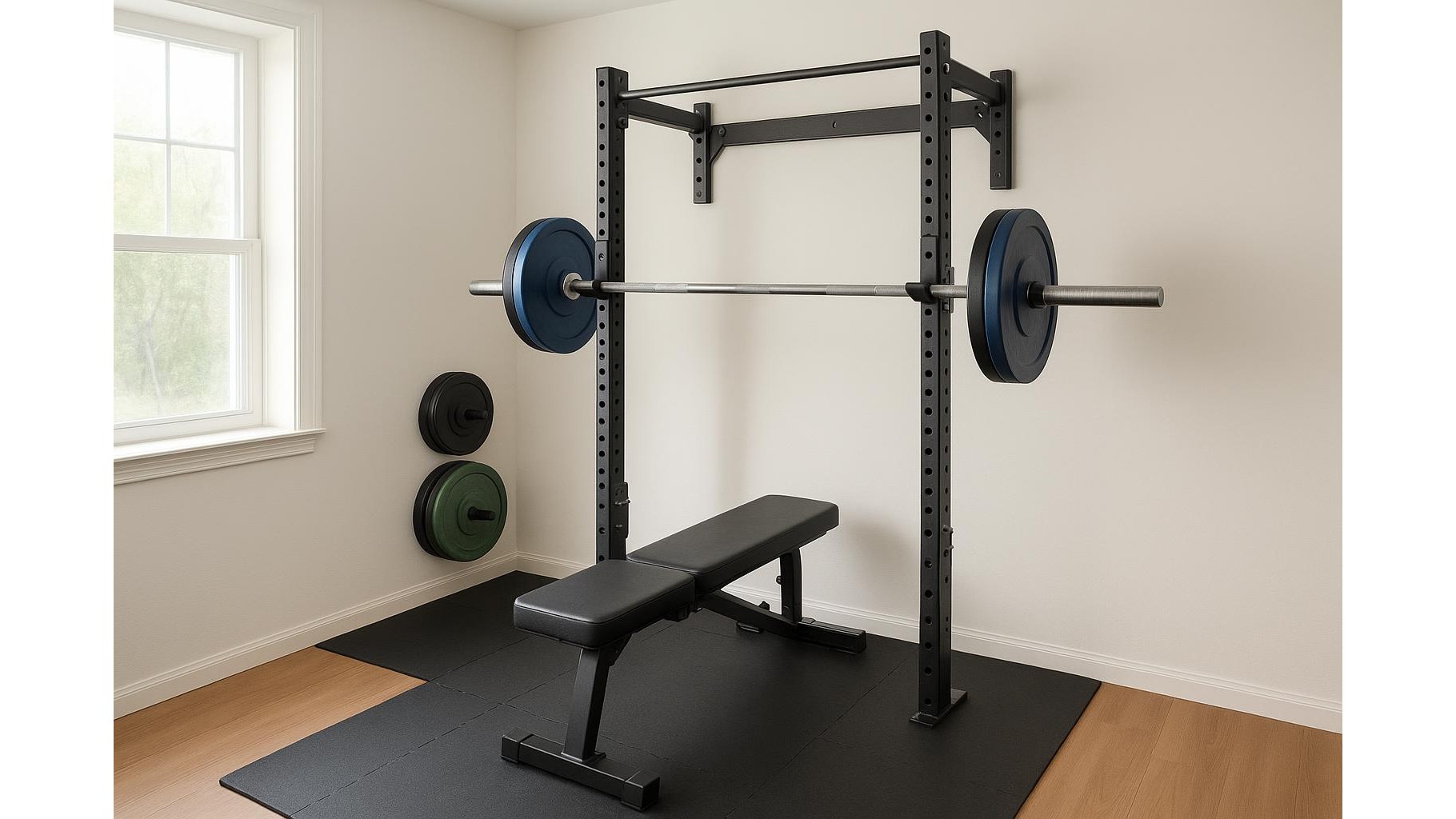
A foldable half rack is a compact structure designed to support squats, bench presses, overhead presses and more, while folding flat or nearly flat against a wall when not in use. Unlike a full power rack, a half rack has an open front, which saves depth and makes it ideal for a home gym corner. When you evaluate models, look at steel gauge and upright size for rigidity, along with the folding mechanism: heavy‑duty hinges or pivot arms are safer and more durable than flimsy brackets. Prioritise a rack with a clearly stated load capacity (including dynamic load during drops onto spotter arms) that exceeds your strongest planned lifts.
Wall‑mount vs free‑standing: which style suits your room?
The first big decision is wall‑mount vs free‑standing. A wall‑mounted foldable rack bolts directly into solid walls (brick, block, or well‑built stud walls), folding in or out when not in use. It is perfect for very small rooms, garages with cars, or shared spaces, but installation quality is critical: secure fixing hardware and correct anchoring are essential for safety. A free‑standing half rack does not rely on a wall and can be moved or rotated in the room; it often has a larger footprint but suits renters or rooms with weak walls. Choose free‑standing if you cannot drill into walls, and wall‑mount if you want the slimmest folded profile and are comfortable with permanent installation.
Space planning for a multipurpose strength corner
Before you buy, measure your available space carefully. You need to consider the footprint when in use and the depth when folded. Allow enough room for the barbell length (typically 2.0–2.2 m), plus clearance on each side for loading plates and moving around. Ceiling height matters too: if you plan to do standing overhead presses or pull‑ups, ensure the top of the rack and your head will not hit the ceiling. Think about your floor: a rubber gym mat layer protects both the surface and the rack, and helps with stability. Finally, plan where you will store weight plates, dumbbells, and a bench so that the area can function as a clean, efficient home strength corner rather than a cluttered storage spot.
Key safety features: spotter arms, J‑cups, and stability
For home training, safety should guide your choice. Quality spotter arms or safety arms are essential for squats and bench presses without a human spotter; they should be long enough to catch the bar safely, rated for heavy loads, and lock securely into the uprights. Look for J‑cups with protective lining (such as UHMW plastic) to reduce barbell knurling damage and noise. Stability is another priority: heavy‑gauge steel, a wide base, and optional floor or wall anchoring keep the rack from wobbling, especially during racking and unracking heavy loads. A clear max user load, plus honest, detailed assembly instructions, are good signals that the manufacturer takes safety seriously.
Useful accessories: pull‑up bars, storage, and bench compatibility
A multipurpose strength corner becomes truly versatile when you add the right accessories. Many foldable half racks include or offer an optional pull‑up bar; check its height, grip options, and load rating, as well as whether it needs to be removed before folding. Integrated plate storage pegs and barbell holders keep the area organised and can also add stability. Ensure the rack’s width and depth work comfortably with a flat or adjustable bench so you can bench press without hitting the uprights. Some racks accept extras like dip handles, landmine attachments, or band pegs, expanding your exercise menu without requiring more floor space. These details help turn the rack into the heart of a compact but highly capable home gym.
Budget, build quality, and future‑proofing your setup
When comparing prices, balance your budget against build quality and long‑term needs. Cheaper foldable half racks may cut corners on steel thickness, hardware, or finish, leading to wobble, rust, or early wear. Check the warranty terms and user reviews that mention long‑term reliability and customer support. Consider whether the rack uses a common hole spacing and accessory standard so you can upgrade with compatible attachments later, rather than having to replace the entire rack. Spending a little more upfront for a stable, high‑capacity, well‑finished rack usually pays off in safety, training confidence, and resale value if you eventually upgrade your home gym.
Choosing the right foldable half rack for your home strength corner comes down to understanding your space, your lifting style, and your safety requirements. Decide between wall‑mount and free‑standing based on your room and installation options, plan the layout around barbell and ceiling clearance, and prioritise solid construction with reliable spotter arms and accessories. With a thoughtful choice, your foldable half rack can deliver years of effective, safe, and enjoyable strength training without dominating your living space.