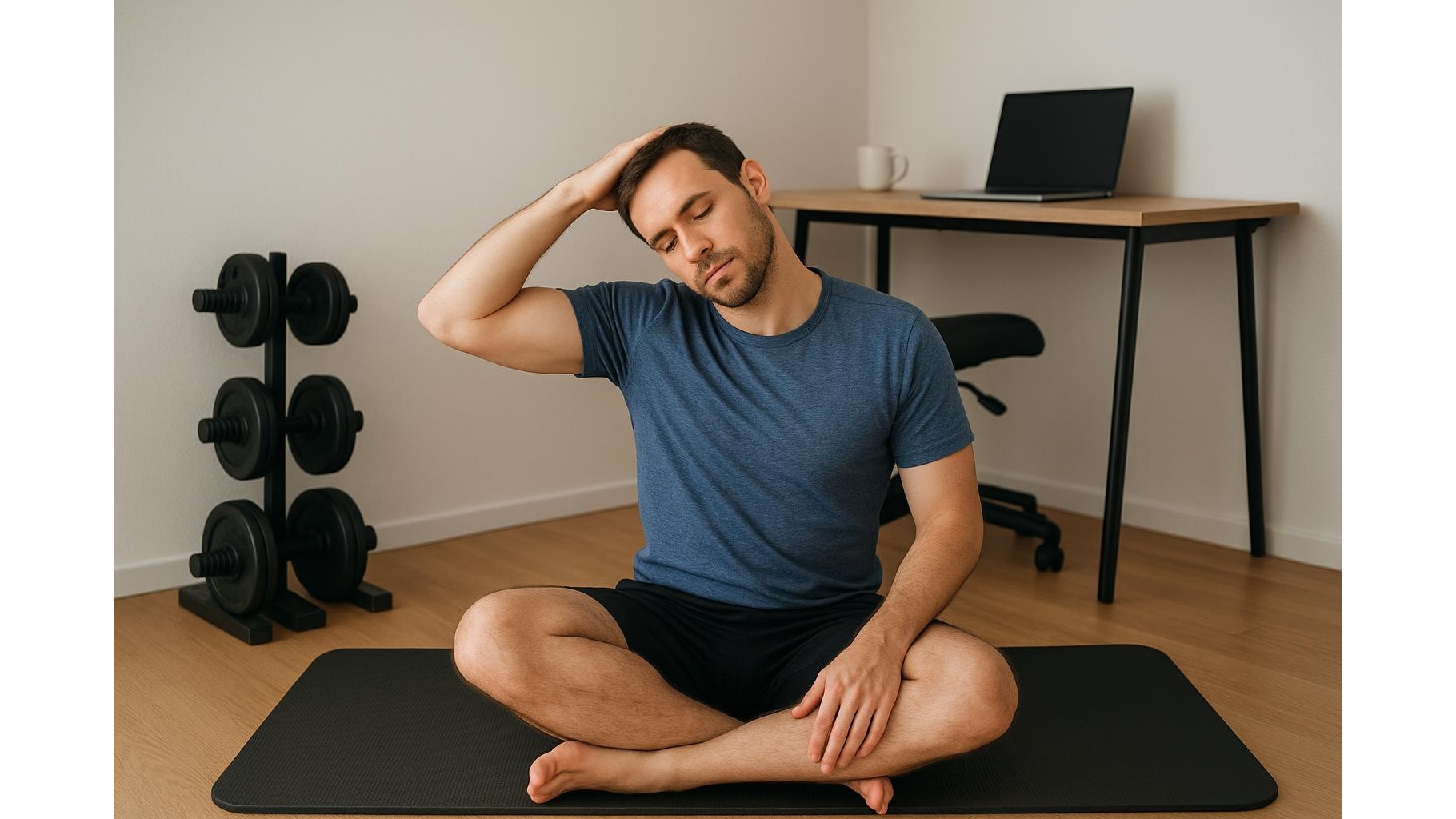
Spending all day at a desk and then pushing hard in your home gym is a recipe for tight neck and shoulder muscles. Stiff upper traps, cranky shoulder blades and tension headaches can slowly chip away at both your comfort and your performance. A simple, 15‑minute daily routine that combines mobility, light strength and relaxation can keep your neck and shoulders moving well, so you can lift safely and stay pain‑free long term.
Set up your space and warm up
Before you dive into drills, create a small, distraction‑free corner for your neck and shoulder care. All you really need is floor space, a mat and a wall. Start with 2–3 minutes of gentle movement prep: shoulder rolls, slow arm circles and easy neck nods (chin to chest and back to neutral, not cranked backwards). The goal is to increase blood flow without fatigue. Think of this as a mini warm‑up that bridges your desk posture and your evening training, telling your body it’s time to move differently.
Daily mobility for neck and upper back
Most desk workers end up in a rounded upper back with the head drifting forward. Targeted mobility work helps reverse this. Spend 5 minutes on controlled movements: seated chin tucks, gentle side‑to‑side neck rotations, and upper‑back rotations (thread‑the‑needle from all‑fours works well). Move slowly, breathe through your nose and avoid any sharp pain. Over time, this restores extension to your thoracic spine and reduces the constant tug on your neck and shoulders that comes from hunching over a laptop all day.
Light strength for postural endurance
Mobility alone is not enough; you also need light strength work to build endurance in the small stabilisers that hold your shoulder blades and neck in a healthy position. Bodyweight scapular wall slides, band pull‑aparts and prone Y‑T‑W raises on the floor are ideal. Use very low resistance and focus on quality: slow tempo, full range and relaxed breathing. Two short sets of each exercise are plenty in a 15‑minute routine. This type of training supports your heavier pressing, pulling and overhead work in the home gym by giving your postural muscles the stamina to keep alignment under load.
Targeted self‑massage and relaxation
After mobility and activation, finish with a couple of minutes of relaxation work for overactive muscles like the upper traps. Lie on the floor, support your head with a small cushion if needed, and practise slow, diaphragmatic breathing: inhale through your nose, let your ribs expand, exhale for slightly longer than you inhale. As you breathe, consciously soften the muscles around your jaw, neck and shoulders. This down‑regulates your nervous system after a stressful day at the computer, reducing the background tension that often flares up during heavy lifting sessions.
Integrating the routine into your training week
The real power of this 15‑minute routine comes from consistency. Slot it into your schedule either as a pre‑lift warm‑up on upper‑body days, or as a separate micro‑session between work and dinner. Aim for at least four sessions per week. On days when you feel especially tight, extend the breathing and relaxation portion by a few minutes and dial back the intensity in your home gym. Over time, you should notice better overhead range, fewer niggles around the neck and shoulders, and improved posture at your desk, all of which translate into safer, stronger lifting.
In summary, combining gentle mobility, light strength and relaxation drills into a short, daily practice is one of the most effective ways for desk‑bound lifters to care for their neck and shoulders. This is not about chasing fatigue or smashing PRs; it is about building resilient joints and calm, cooperative muscles that can handle both long workdays and demanding home workouts. Commit to the 15‑minute routine for a few weeks and you will likely feel the difference every time you sit, stand or pick up a barbell.