Building a home gym capsule wardrobe means you can move smoothly from heavy lifting to sweaty cardio without overflowing your closet. The goal is to choose a few smart, versatile pieces that balance comfort, support and performance, then mix and match them depending on whether you are training strength, HIIT or long, steady sessions. Here is how to dress intentionally for each workout type while keeping your wardrobe lean and efficient.
Core principles of a home gym capsule wardrobe
A smart home workout wardrobe starts with layering and fabric choices. For strength days, you want fitted but not restrictive tops so you can see your form. For cardio and HIIT, prioritise moisture-wicking, fast-drying materials and minimal seams to avoid chafing. Stick to a neutral colour palette (black, grey, navy) with one or two accent colours so every item works together. Choose pieces that can handle multiple roles: leggings that are compressive enough for squats but breathable enough for a short run, or a base T-shirt that works alone or under a hoodie. This way you buy fewer, better items and actually wear them on repeat.
What to wear on strength training days
On strength days, focus on stability, range of motion and safety. Opt for slim-fit tops so you can clearly see shoulder and back alignment on presses and rows. Bottoms should be high-waisted and squat-proof, with enough compression to feel secure during heavy lifts but without digging into your waist. Short sleeves or sleeveless tops prevent fabric from bunching during bench presses. Look for training T-shirts or vests in technical cotton blends that absorb sweat without getting heavy, and avoid overly loose shorts that might catch on dumbbells or benches. Keep accessories minimal: a lifting belt or wrist wraps if needed, but no dangling jewellery or oversized hoodies that hide your posture.
Best outfits for cardio and HIIT sessions
For cardio and especially HIIT, your outfit should prioritise cooling and friction-free movement. Choose lightweight shorts or thin, breathable leggings with mesh panels to help heat escape. Tops should be made from quick-dry, breathable fabrics that pull sweat away from the skin; a close but non-compressive fit prevents them from riding up during burpees, sprints or jump squats. For high-impact intervals, pair your base outfit with a high-support sports bra and avoid cotton, which traps moisture and can lead to irritation. If you tend to overheat, keep a thin performance T-shirt ready for warm-up, then strip down to a technical tank once your body temperature rises.
Layering and accessories that work for both
The smartest capsule pieces are those that you can wear for both strength training and cardio. A lightweight, zip-up layer in performance fabric is ideal to start cold lifting sessions and to keep muscles warm between sets, but it also works for gentle warm-ups before a tempo run. Invest in a few pairs of technical socks that offer arch support and stay dry to avoid blisters in both scenarios. A slim sweatband or small towel, and a pair of breathable trainers suited to your dominant activity (flatter, more stable soles for lifting; lighter, more cushioned options for cardio) complete the setup. Stocking these versatile accessories means you can adapt quickly to the day’s training without changing your entire outfit.
How many pieces you really need
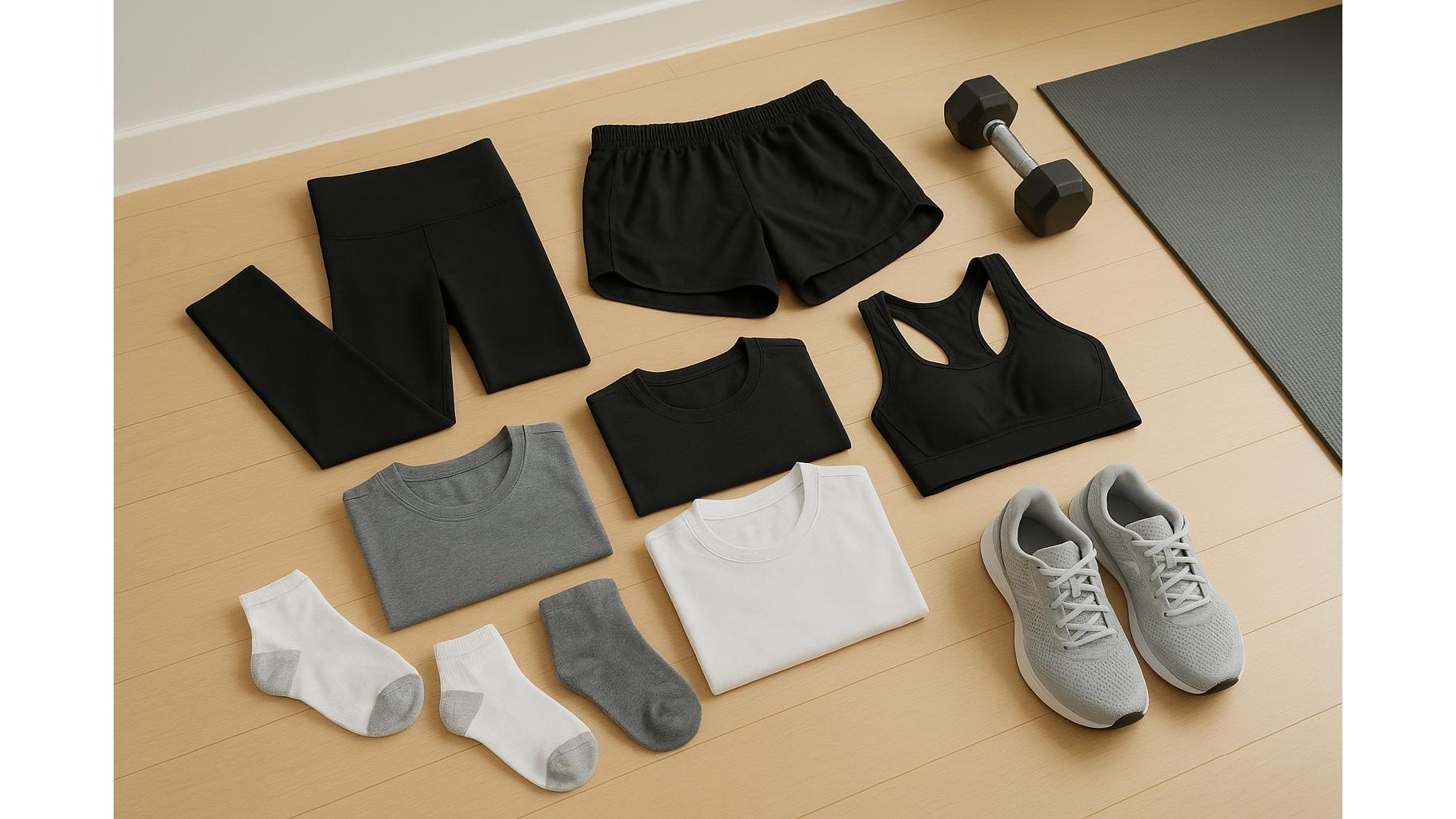
To keep your home gym wardrobe minimal, think in terms of rotation rather than variety. Many home lifters can function well with: 2–3 pairs of squat-proof leggings or shorts, 3–4 moisture-wicking tops, 2 high-support sports bras, 4–5 pairs of technical socks and 1–2 layering pieces. This is enough to cover several strength and cardio sessions per week without constant laundry panic. Focus on durable fabrics that hold their shape after many washes, and replace any item that becomes see-through, stretched out or uncomfortable. The result is a compact wardrobe that always feels ready, so choosing what to wear never becomes an excuse to skip your workout.
In summary, a smart home gym capsule wardrobe balances support, breathability and versatility across strength days, HIIT and cardio. By focusing on technical fabrics, squat-proof bottoms, moisture-wicking tops and a few strategic layers, you can create a small collection that covers every session. Instead of overflowing drawers, you get a streamlined set of outfits that help you move better, stay comfortable and stay consistent with your training.