Crunches are not the only way to build a strong, athletic midsection. In fact, endless spinal flexion can irritate your back and still leave your core weak in real-life movements. This 30-minute anti-rotation core workout at home focuses on resisting movement instead of chasing big sit-up numbers, helping you build a more stable trunk using just a resistance band or a single dumbbell.
Why anti-rotation beats endless crunches
Your core’s main job is not to curl you up, but to resist unwanted movement and transfer force between your upper and lower body. Anti-rotation exercises train your abs, obliques and lower back to keep your spine stable when you twist, push, pull or carry. This is exactly what you need for everyday tasks and heavy lifts. Instead of isolating your six-pack, you’ll challenge your entire trunk stability, protecting your lower back and improving posture without a single crunch.
Essential equipment for home anti-rotation work
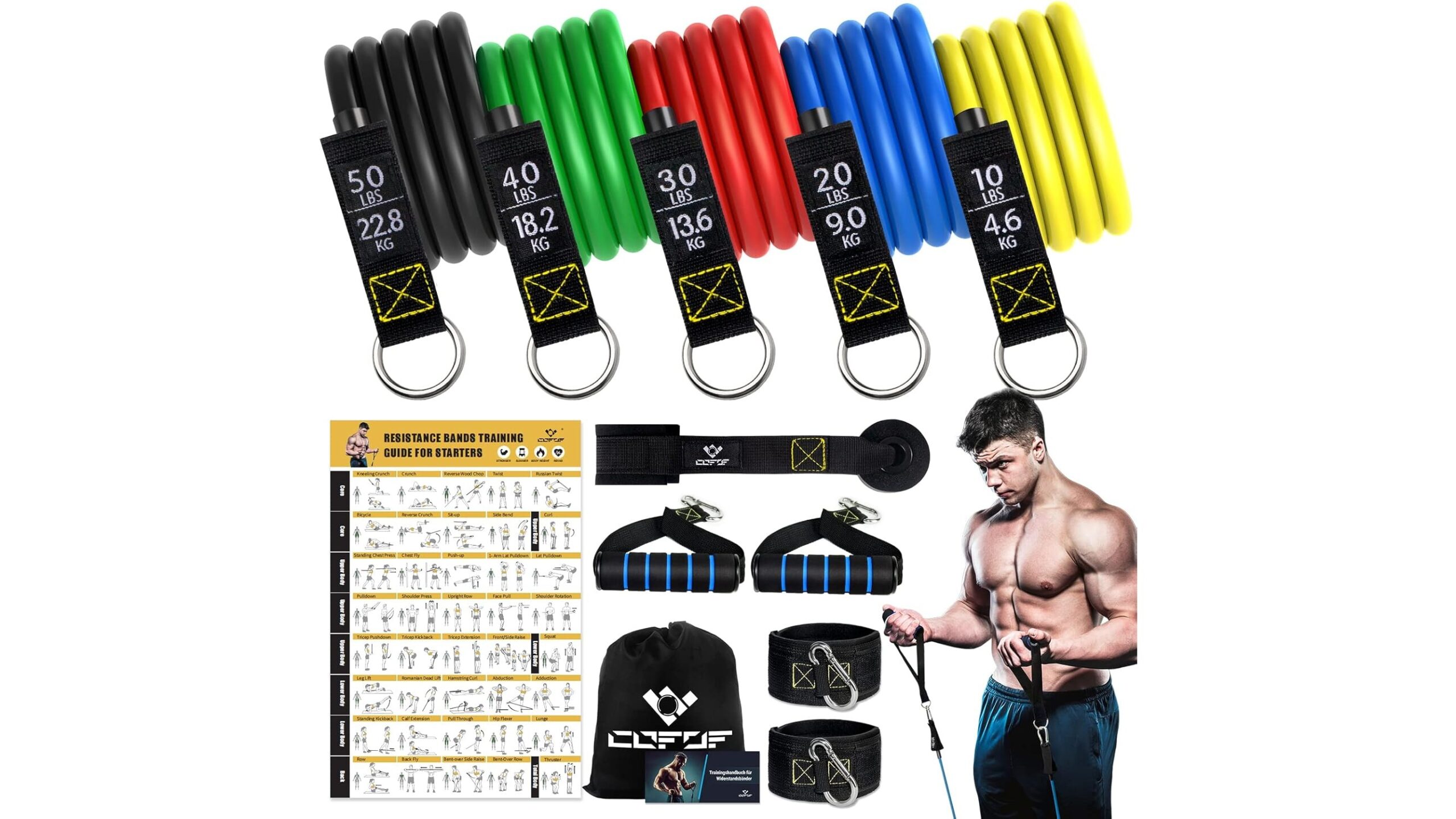
You only need one versatile tool to unlock dozens of anti-rotation moves: a quality resistance band set with handles. A great option is the COFOF Resistance Bands Set with Handles, which includes five stackable bands up to 150 lbs, a door anchor, ankle straps and a workout poster. The natural latex tubes are durable and elastic, and the door anchor lets you create horizontal and diagonal resistance from almost any room. With this single compact kit you can perform Pallof presses, banded chops, anti-rotation holds and carries, scaling the difficulty simply by clipping on another band or stepping further from the anchor.
The 30-minute anti-rotation core routine
This 30-minute home core workout is structured as three circuits. Move with control and prioritize tension over speed.
- Circuit 1 (10 minutes): Pallof Press Hold (each side) – 30 seconds on, 30 seconds rest; Half-Kneeling Anti-Rotation Press – 30/30; Dead Bug (bodyweight) – 30/30.
- Circuit 2 (10 minutes): Banded Chop (low-to-high) – 30 seconds each side; Tall-Kneeling Row with Anti-Rotation Hold – 30/30; Side Plank (knees or feet) – 30/30.
- Circuit 3 (10 minutes): Offset Load March (hold one handle or dumbbell on one side) – 40 seconds; Banded Anti-Rotation Squat – 40 seconds; Bear Plank Hold – 20 seconds on, 20 seconds rest.
Take 30–45 seconds between exercises if needed, and one minute between circuits. Aim for smooth breathing and a braced, but not rigid, trunk.
Progressions for every fitness level
If you are new to core stability training, start closer to the door anchor with lighter bands and shorter holds (15–20 seconds). Keep your stance wider for more balance and perform side planks from your knees. As you get stronger, step further from the anchor, stack multiple bands from the COFOF Resistance Bands Set with Handles, lengthen work intervals to 40–45 seconds, and try single-leg variations like split-stance Pallof presses. Advanced trainees can add slow tempos, pauses at maximum tension and unilateral carries to keep challenging anti-rotation strength without adding spinal stress.
Technique cues to maximise anti-rotation gains
To get the most from this no-crunch core workout, think about creating full-body tension. Before each rep, exhale gently, brace your midsection as if preparing for a light punch, and keep your ribs stacked over your pelvis. In Pallof presses and chops, the band will try to twist you; your goal is to stay square, with hips and shoulders facing forward. Move your arms, not your torso. Keep your neck long, glutes lightly engaged and your lower back neutral. If you feel strain in your spine instead of deep abdominal effort, reduce the band tension or slow down until you regain control.
By swapping endless crunches for targeted anti-rotation core training, you can build a stronger, more resilient trunk in just 30 minutes at home. With a compact, adjustable tool like the COFOF Resistance Bands Set with Handles, you unlock an entire library of stability drills that carry over to lifting, running and daily life. Follow this routine two to three times per week, focus on quality movement and progressive resistance, and your core will get stronger where it truly counts: resisting unwanted motion and keeping your spine safe.