Setting up a compact home cable machine is one of the smartest ways to build a truly versatile home gym in a small space. A good cable system lets you train your whole body with smooth resistance, easy weight changes, and countless exercise variations. In this guide, we’ll walk through how to choose the right machine, from weight stack vs plate-loaded models to pulley ratios, attachments and key safety features, so you can create an efficient, space‑saving setup that matches your training goals.
Understanding compact home cable machines
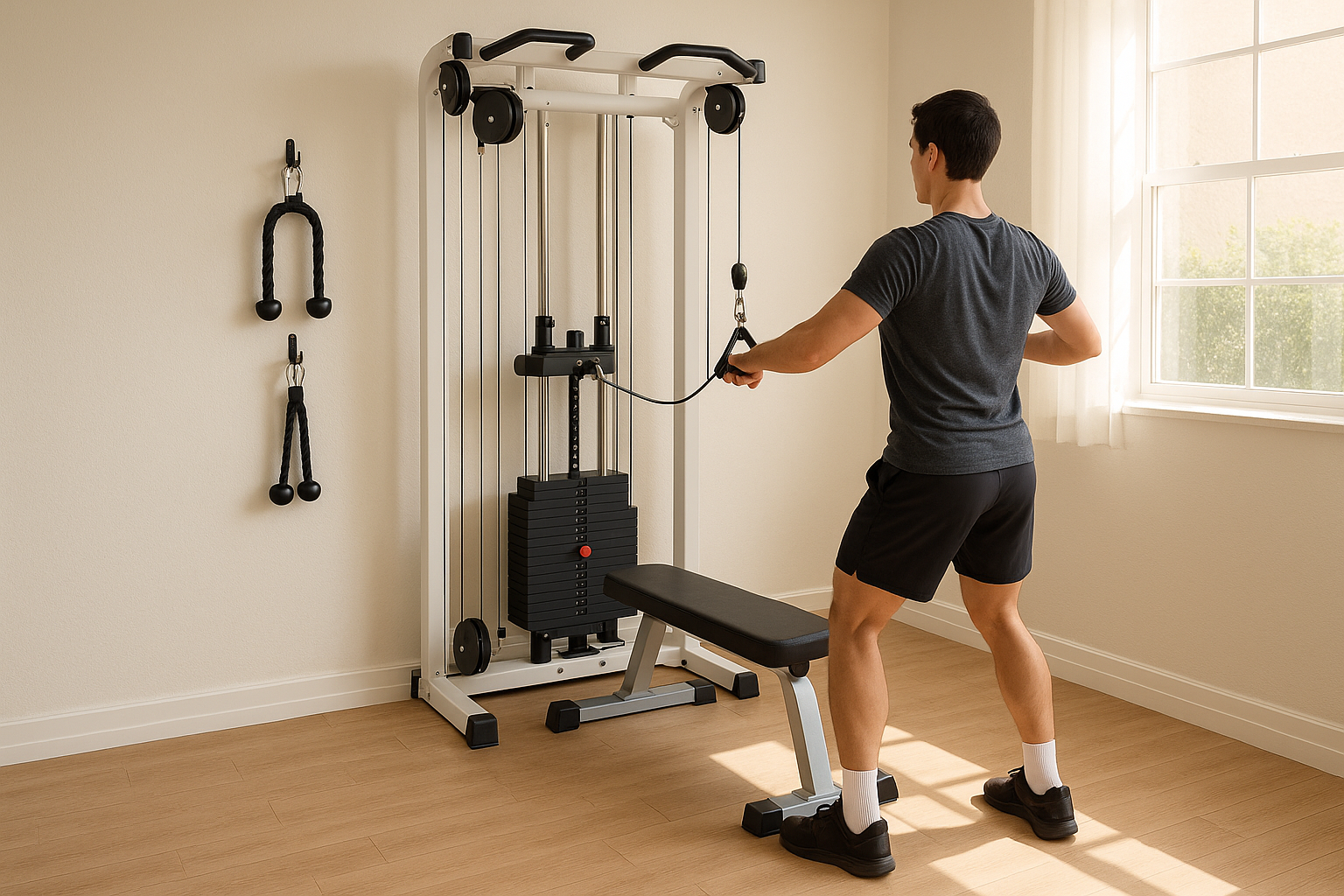
When you shop for a space‑saving cable machine, you’ll see three main formats: compact functional trainers, wall‑mounted cable stations, and cable towers that tuck into a corner. Functional trainers typically have two adjustable columns and give you the widest range of full body exercises, from chest presses and rows to leg kickbacks and core work. Wall‑mounted units save floor space and can be ideal if you train in a hallway or small spare room, as long as you have solid brick or block walls for mounting. Single‑tower cable machines are a good compromise for minimalists who still want adjustable pulleys for upper and lower body work, especially when combined with a bench and a few attachments.
Weight stack vs plate‑loaded: which is better?
One of the most important decisions is choosing between a weight‑stack system and a plate‑loaded cable machine. Weight‑stack machines use a built‑in stack with a simple selector pin, which makes changing resistance fast and tidy, with no plates lying around the room. They tend to cost more but are excellent for time‑efficient full body workouts, drop sets and supersets. Plate‑loaded machines use standard weight plates you may already own from a barbell set; they’re usually cheaper and often more compact, but you’ll spend a little extra time loading and unloading plates and need to factor in floor space for storing them. For most small home gyms, a plate‑loaded system is the most budget‑friendly, while a quality weight‑stack trainer is best if you prioritise convenience and a cleaner setup.
Pulley ratio, resistance range and progression
The pulley ratio tells you how the listed weight translates to what you actually feel. A 2:1 ratio means that when you select 40 kg, you’re effectively lifting 20 kg at the handle, but with a longer cable travel that’s perfect for functional movements and athletic patterns. Many compact cable machines use 2:1 or even 4:1 ratios to keep the motion smooth and allow for fine resistance jumps, ideal for rehab, isolation work and advanced lifters who need precise progression. When comparing machines, look at both the total weight capacity and the smallest increment you can adjust; this determines how easily you can progress in key lifts like rows, presses, pulldowns and triceps work. If you’re a stronger trainee, ensure the top resistance on the main pulley you’ll use for rows and presses is high enough to challenge you for years, not just months.
Attachments, ergonomics and exercise variety
A compact cable machine becomes a true full body training station when it includes the right cable attachments. At minimum, look for a straight bar, a wide or medium lat pulldown bar, a pair of D‑handles for unilateral work, and a rope attachment for triceps and face pulls. These support upper body staples like chest presses, rows, curls, pulldowns and shoulder raises. For lower body and glutes, an ankle cuff opens up abductions, kickbacks and hip flexor work. Check that the pulleys are fully adjustable from near the floor to above head height, so you can easily hit horizontal and vertical pulling angles, cable squats, woodchoppers and anti‑rotation drills. Good ergonomics also mean a solid, wobble‑free frame and smooth pulley action, which not only feels better but also protects your joints over long training cycles.
Safety, footprint and practical setup tips
In a small home gym, safety and footprint go hand in hand. Measure your room carefully, including ceiling height, and leave space around the machine so you can step forward, sideways and backwards for multi‑directional movements. If you opt for a wall‑mounted cable station, be sure you have a structurally sound wall and use appropriate fixings; this is critical for safety, especially when training heavy rows and pulldowns. Look for non‑slip footplates, stable bases and clear maximum load ratings. Integrated storage pegs for attachments and weight plates will keep your floor clear and reduce trip hazards. Finally, plan how the machine will combine with your existing equipment: a simple adjustable bench, a pull‑up bar and a set of resistance bands can all work with your cable system to create a highly efficient, compact home gym that supports balanced, long‑term progress.
Choosing the right compact home cable machine is about more than just saving space; it’s about building a versatile, safe and enjoyable training environment. By weighing up weight‑stack vs plate‑loaded designs, checking pulley ratios and resistance ranges, prioritising the attachments that match your exercises, and taking safety and room layout seriously, you can create a powerful full body workout station in almost any home. Take the time to assess your goals, strength level and available space, then invest in the cable system that will grow with you and keep your training consistent for years to come.