Recovering well after a home workout is just as important as the training itself. The right mix of carbohydrates and protein helps you restore energy, repair muscles and feel ready for your next session. You do not need complicated supplements or chef-level skills: with a few simple rules and accessible foods, you can build effective post-workout snacks that fit strength, cardio and mixed routines.
Why carbs and protein matter after training
During exercise, your body burns glycogen, the stored form of carbohydrate in your muscles, and creates small amounts of muscle damage that need repair. Carbohydrates help refill glycogen, while protein provides amino acids to rebuild muscle tissue. Evidence suggests that combining both within about 1–2 hours after your workout improves recovery more than taking either alone. For most home exercisers, aiming for roughly a 2–3:1 ratio of carbs to protein (for example 30–45 g carbs with 15–20 g protein) is a practical, research-aligned target that supports strength, cardio and mixed training.
Smart post-workout ideas for strength sessions
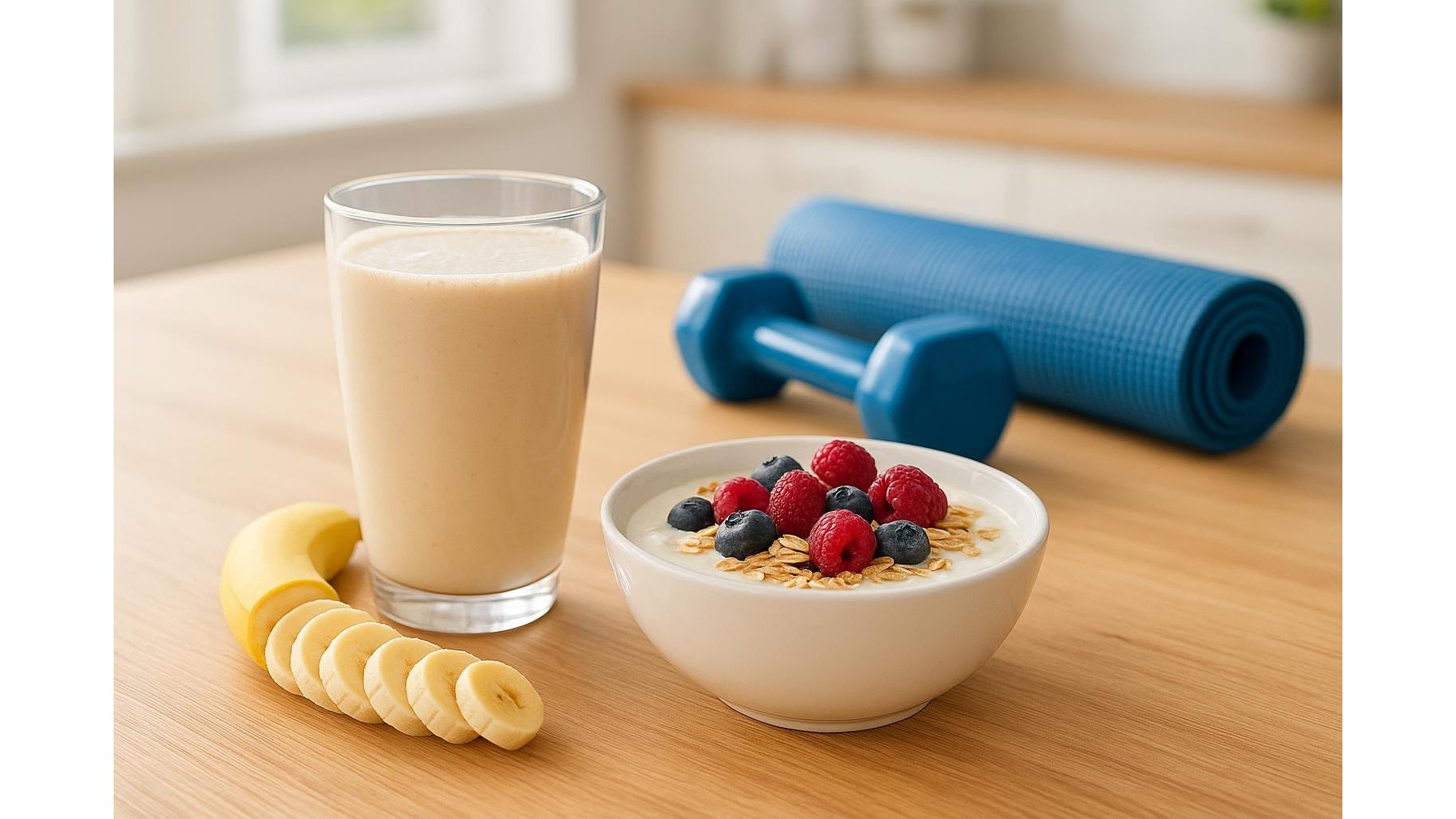
After a strength workout, your priority is muscle repair and growth. Aim for 20–30 g of high-quality protein with a moderate serving of carbs. Simple options include Greek yogurt with fruit, eggs on wholegrain toast or cottage cheese with crackers. If you prefer something you can sip while stretching or tidying your home gym, a basic protein shake blended with a banana or oats offers a convenient balance of nutrients. Look for powders that clearly list protein content per serving and minimal added sugars, so that you can accurately match your intake to your goals and pair them with wholesome carb sources of your choice.
Carb-focused snacks for cardio and endurance
Longer cardio or endurance-style home workouts deplete more glycogen, so your snack should be a little more carb-heavy while still including protein. Think about options like a peanut butter and jam sandwich, rice cakes with cottage cheese and fruit, or a bowl of wholegrain cereal with milk. These combinations quickly supply glucose to tired muscles while delivering 10–20 g of protein. To support hydration and electrolyte balance, you can also pair your snack with water and a pinch of salt in food, especially after very sweaty sessions. Keeping easy-to-grab staples in your kitchen—like wholegrain bread, yogurt, milk and nut butters—makes it far more likely you will actually follow through on your post-workout nutrition plan instead of skipping it.
Balancing recovery for mixed and HIIT workouts
Mixed sessions and HIIT combine resistance and cardio demands, so your recovery snack should strike a middle ground: solid carbs for energy, plus enough protein to protect lean mass. A great at-home option is a bowl of oats made with milk, topped with a spoon of nut butter and berries. This delivers slow-releasing complex carbohydrates, quality protein and healthy fats, keeping you full and stabilising blood sugar after intense intervals. Another approach is a simple plate of leftover chicken, rice and vegetables from dinner, used as a convenient post-workout meal the next day. By planning portions that provide at least 0.3 g of protein per kg of bodyweight over your day, your total intake will support muscle maintenance even if each snack is modest.
Timing, portion sizes and practical home routines
Current evidence shows there is no ultra-narrow “anabolic window”, but it is still wise to plan your post-workout meal within 1–2 hours of finishing, especially after training fasted or doing longer sessions. For many home athletes, this means arranging your routine so that you can move straight from your workout to a snack you prepped earlier—like a yogurt bowl, a sandwich or a ready-to-mix shake. Aim for portion sizes that feel satisfying but not heavy: enough carbs to reduce fatigue, and 15–30 g protein depending on your body size and training load. Consistency across the week, rather than perfection in any single session, is what ultimately drives better performance, improved body composition and less soreness from your home workouts.
In summary, effective post-workout recovery at home comes down to simple, repeatable habits: pair carbohydrates with protein, match portions to the type and length of your workout, and plan easy snacks that fit your routine. Whether you lift, run, cycle or mix everything together, a balanced recovery snack—such as yogurt with fruit, a sandwich with lean protein or a homemade shake with added carbs—will help you restore energy, rebuild muscle and stay ready for your next session in your home gym.