Finishing your home strength session with a focused 20-minute cardio finisher is one of the simplest ways to boost conditioning, burn extra calories and build mental toughness without overhauling your whole plan. With a bit of structure—and the right home cardio tool—you can turn those last minutes into a powerful, repeatable protocol that works whether you prefer low-impact or high-intensity work.
Why add a cardio finisher to strength workouts
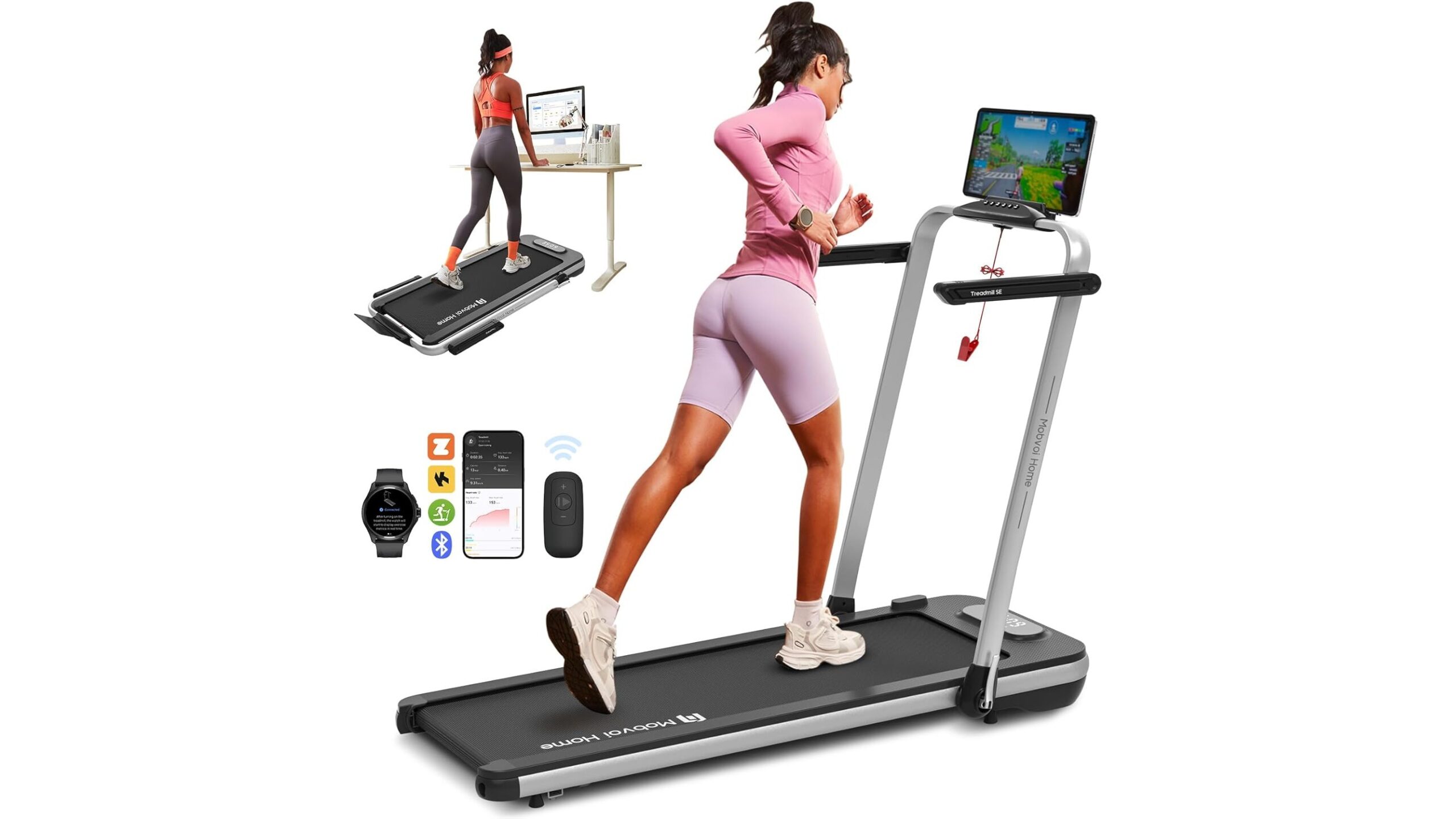
A cardio finisher is a short, intense block at the end of your lifting session. Because your muscles are already warm, you can ramp up your heart rate fast without a long warm-up. This improves cardiovascular fitness, supports fat loss and builds work capacity so your future strength sessions feel easier. At home, a compact treadmill like the Mobvoi Home Treadmill SE Smart AI 3 in 1 Folding Treadmill Walking Pad lets you switch from weights to walking, jogging or intervals in seconds, without needing a separate cardio room or a gym membership.
The 20-minute home cardio finisher structure
This 20-minute finisher is built on simple intervals you can repeat week after week. It works perfectly on a treadmill, but you can also adapt it to outdoor running, step-ups or low-impact marching in place. The basic template looks like this:
- Minutes 0–4: Easy warm-up (brisk walk or light jog)
- Minutes 4–16: 40 seconds hard / 80 seconds easy (8 total rounds)
- Minutes 16–20: Cool-down at comfortable walking pace
Use an RPE (Rate of Perceived Exertion) scale of 1–10: keep the easy periods around 3–4/10, and push the hard intervals to 7–8/10. On a treadmill, that might mean alternating between a strong power walk and a faster walk or run, adjusting speed instead of guessing.
Using a folding treadmill for flexible finishers
If space is tight, a folding treadmill can turn any living area into a mini cardio zone. The Mobvoi Home Treadmill SE Smart AI 3 in 1 Folding Treadmill Walking Pad is particularly well suited to finishers: it folds down flat, slides under a bed or sofa, and offers a speed range of 1–12 km/h so you can walk, jog or run depending on the day. Its quiet 2.5 HP motor keeps noise low, while the LED display cycles through speed, time, distance and calories, making it easy to track your 40/80 intervals without fumbling with a phone. The included remote control and shortcut buttons (3 and 6 km/h) help you switch gears quickly during hard and easy segments.
Low-impact and beginner-friendly options
Not every finisher needs to be high-impact. If you are a beginner, heavier, or managing joint issues, stay at a fast walking pace and let incline or slightly higher speed create challenge instead of pounding. On a compact treadmill with a five-layer shock-absorbing belt like the Mobvoi model, your joints get extra protection while you build fitness. Keep your “hard” rounds as a purposeful, arms-swinging power walk at 6–7/10 effort, then drop back to a relaxed stroll during recovery. Over time, you can nudge speed up by 0.2–0.5 km/h or increase the number of work rounds, maintaining a smooth, low-impact style that still drives progress.
Progressing your 20-minute finisher over time
To avoid plateaus, increase the training stimulus gradually. Once the standard 40 on / 80 off feels manageable, you can apply one change at a time:
- Shorten rest: move to 45 seconds hard / 75 seconds easy, then 50/70.
- Increase speed: add 0.2–0.5 km/h to your hard intervals every 1–2 weeks.
- Vary modes: alternate sessions of power walking with light jogging.
The advantage of a programmable, AI-coached treadmill such as the Mobvoi Home Treadmill SE is that its TicSports app can provide personalised plans, real-time metrics and coaching cues, helping you fine-tune progress while keeping finishers short and focused instead of random and exhausting.
Fitting the finisher into a weekly home training plan
To recover well, place this 20-minute finisher at the end of 2–3 strength workouts per week, rather than after every single session. For example, finish your lower-body and full-body days with the interval block, but keep upper-body days strength-only. Aim for consistency: it is better to finish 20 minutes at a controlled 7–8/10 effort than to crush yourself once and skip the rest of the week. With a space-saving treadmill parked near your rack or dumbbells, transition time is almost zero: rack the last set, step on, hit start, and you are into disciplined conditioning instead of random extra reps.
Used consistently, a structured home cardio finisher turns the “last 20 minutes” of your strength session into a reliable engine for better endurance, fat loss and resilience. With a compact, foldable treadmill doing the heavy lifting on convenience and tracking, you can keep your routine simple—lift, then hit your intervals, cool down and get on with your day—knowing that every session nudges your conditioning forward without demanding extra hours or gym access.