A consistent warm-up and cool-down routine at home is one of the simplest ways to protect your joints, boost performance and speed up recovery. You do not need a full garage gym to get the benefits: a few minutes of targeted movement and some affordable tools are enough. Below you will find a step-by-step structure you can follow every day, plus a selection of basic home gym accessories that make warming up and cooling down easier and more effective.
Set up your safe warm-up space
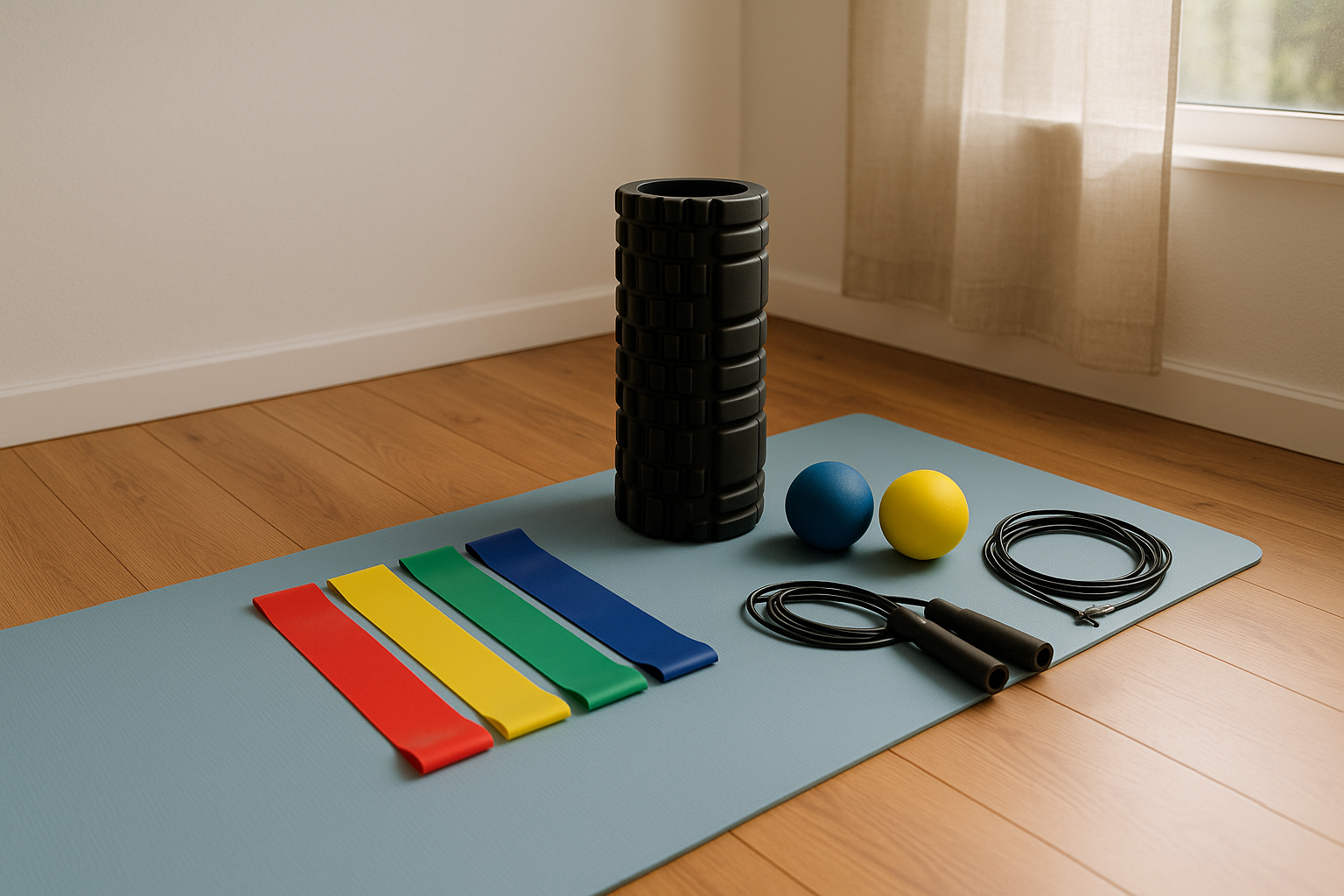
Before you move, create a small, clear training zone. A quality non-slip yoga mat protects your joints and stops you sliding as your body temperature rises. The Oak & Tea Yoga Mat for Women Men Non Slip Exercise Mat (TPE, 183x61x0.6 cm) offers dense cushioning, good grip on wood or tile and is lightweight enough to roll away after use. Having a defined mat “boundary” encourages you to move with control, align your joints correctly and avoid twisting on hard floors. Keep a bottle of water nearby, wear supportive shoes if you jump, and ensure you can fully extend your arms without hitting furniture or walls.
Build a simple dynamic warm-up sequence
Effective warm-ups should gradually raise your heart rate, increase joint mobility and activate key muscles. Start with 2–3 minutes of easy cardio: marching on the spot, high knee walks or gentle step touches. If you enjoy skipping, the Blukar Skipping Rope, Speed Jump Rope uses 360° ball bearings for smooth rotations and has foam handles for a secure grip, making it ideal for short bursts of low–impact jumping. Follow with dynamic stretches on your mat: arm circles, hip circles, leg swings and gentle torso rotations. Finish the warm-up with 1–2 sets of bodyweight moves like squats, glute bridges and wall push-ups to “wake up” the muscles you are about to train.
Activate muscles with resistance bands
Adding resistance band activation to your home warm-up helps stabilise joints and improve movement quality, reducing your risk of strains. The Gritin Resistance Bands Set of 5 provides five loop bands, from light to extra-heavy, made from skin-friendly natural latex. Use lighter bands around your thighs for lateral walks and glute bridges to fire up hips and glutes before squats or deadlifts. Medium bands work well for rows or pull-aparts to activate the upper back before pressing. Because they are small and portable, you can keep them with your mat and quickly build a 5–7 minute activation circuit that fits any workout, from strength training to Pilates.
Cool down with stretching and breathing
After training, a structured cool-down helps bring your heart rate down safely and reduces post-workout stiffness. Start with 1–2 minutes of slow walking or gentle marching on your yoga mat to transition from intense movement to rest. Then move into 5–10 minutes of static stretching: calf, hamstring, quad and hip flexor stretches for the lower body; chest and shoulder stretches against a wall for the upper body. Hold each stretch for 20–30 seconds without bouncing and breathe deeply into your belly. The cushioning of the Oak & Tea Non Slip Exercise Mat makes kneeling and lying stretches more comfortable, encouraging you to stay in each position long enough to actually lengthen tight muscles and restore range of motion.
Use massage tools to release tight spots
Self-massage tools turn your home cool-down into a mini recovery session. A foam roller is excellent for large muscle groups: the KG Physio Foam Roller for Back, Legs & Arms is an ultra-light EVA roller with raised zones that allow different massage intensities. Roll slowly along your calves, quads, hamstrings and upper back, pausing on tender spots for 20–30 seconds. For more precise pressure, the Acupoint Physical Therapy Massage Balls are designed specifically for trigger point therapy and self myofascial release. Place them between your body and the wall or floor to target the glutes, hips, shoulders or the muscles beside the spine. Regular rolling can ease deep tension, improve circulation and enhance recovery between home workouts.
Turn your routine into a daily habit
A simple warm-up and cool-down routine becomes truly protective only when done consistently. Aim for at least 5–10 minutes before and after every session, whether you are lifting weights, following a HIIT video or just doing bodyweight circuits. Keep your yoga mat, resistance bands, foam roller, massage balls and skipping rope stored together so there is zero friction to start. Over time you can adjust the length and focus depending on how your body feels: add more band work if your knees or shoulders need extra support, or spend longer with the roller and massage balls if you feel especially tight. By treating warm-up and cool-down as essential parts of your home workout, you will protect your joints, perform better and recover faster with every session.