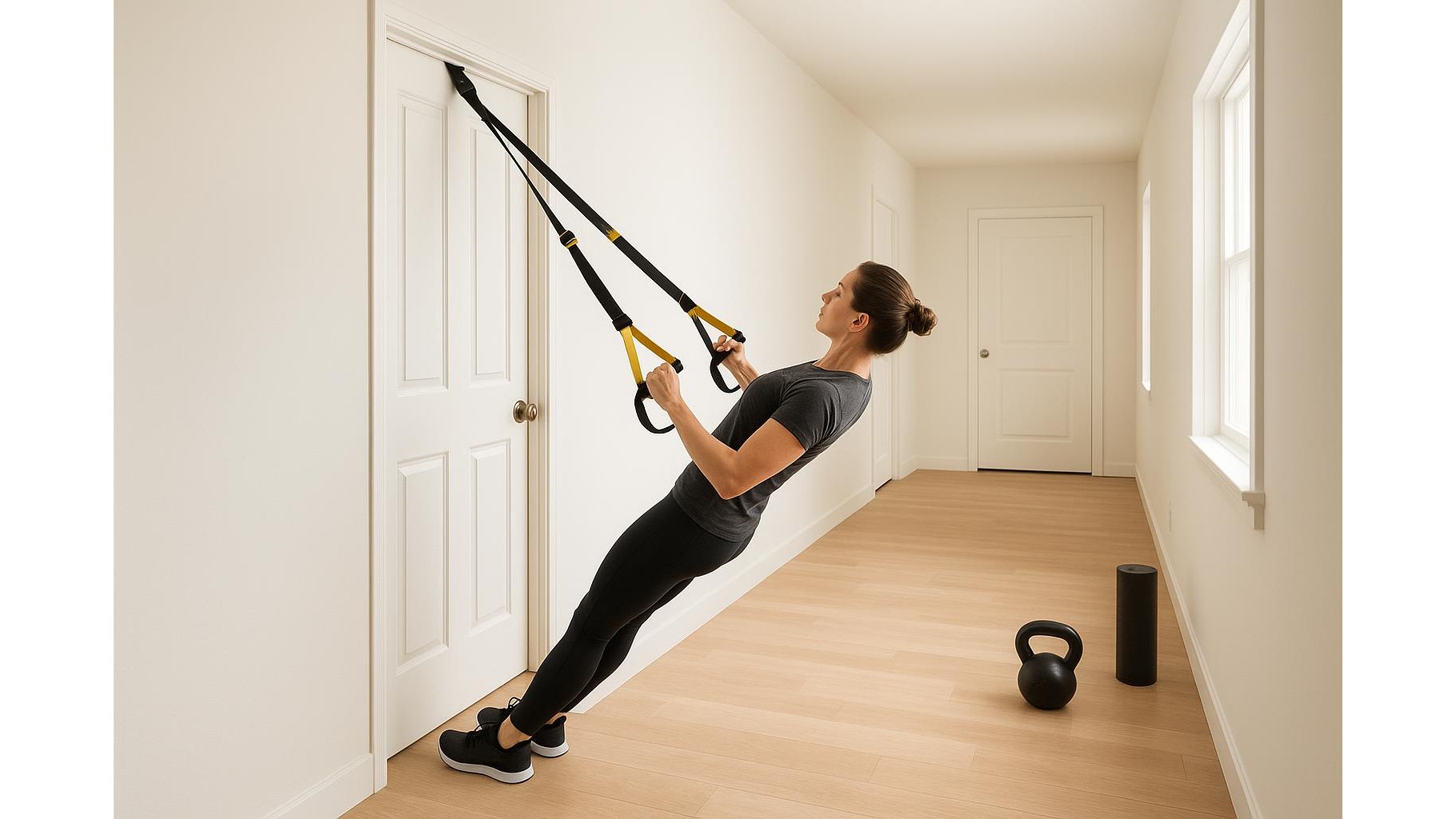
Setting up a compact suspension trainer is one of the easiest ways to turn a doorway into a full‑body gym. These strap‑based systems use your bodyweight and leverage to train strength, mobility and core stability, without taking up permanent space. Choosing the right model, however, means looking beyond marketing claims and focusing on anchors, strap quality, safety and how well the system matches your training level and home setup.
Table of contents
Assess your space and anchor options
Before you look at specific products, think about where you will actually train. A truly door‑friendly suspension trainer should include a secure door anchor that works on solid, inward‑opening doors and does not damage the frame. Check that the anchor is wide and padded enough to distribute pressure and that the straps can be shortened so your feet are clear of walls. If you plan to train outdoors as well, prioritise systems that provide a second anchor option, such as a tree, beam or bar loop, so you are not limited to one room in your home.
Strap quality, adjustment and comfort
High‑quality webbing straps are the backbone of any suspension system. Look for thick, tightly woven material rated for high loads and reinforced with box‑stitching at stress points. Smooth and quick length adjusters are essential so you can move from rows to presses or from squats to core work without interrupting your workout. Handles should be textured for grip, with separate foot cradles or longer loops to support exercises like hamstring curls and suspended planks. Comfortable handles and stable foot loops will encourage longer, more varied sessions and reduce hand fatigue or ankle pressure.
Safety features that really matter
When you suspend your bodyweight from a door frame, safety features are non‑negotiable. Quality trainers use robust metal buckles or heavy‑duty cam mechanisms that resist slippage under load, and they include safety stitching that shows visible wear if the system needs replacing. A good door‑friendly model also provides clear guidelines on door orientation (usually the anchor must be on the opposite side from you) and recommended maximum weight. If you share the trainer with family members, choose a system with bright, easy‑to‑see alignment markers on the straps so everyone can quickly set safe and symmetrical lengths before they start exercising.
Matching difficulty to your training level
Suspension training can feel deceptively simple, but the difficulty ramps up quickly as you change your body angle and leverage. Beginners should prioritise trainers that come with structured guidance, such as exercise charts, progressions and clear setup diagrams. This helps you start with higher body positions (more upright rows, elevated push‑ups) before progressing to harder moves like pistols or archer push‑ups. Intermediate and advanced users may want extra‑long straps that allow for hip hinge, sprint and core drills further from the anchor point. Whichever level you are at, make sure the trainer allows fine strap adjustments so you can find the right intensity for each movement.
Program variety and long‑term versatility
A compact suspension trainer should support full‑body programming: upper‑body pulls and pushes, squats and lunges, and plenty of anti‑rotation and anti‑extension core work. Check that the system enables both bilateral and unilateral exercises and that the handles and anchors don’t tangle easily when you switch between them. If your goal is general fitness, look for guidance on time‑efficient circuits you can run in a small space. If strength and muscle are priorities, make sure you can quickly transition between exercises and adjust angles to hit muscular fatigue within targeted rep ranges, turning your doorway setup into a serious home gym that will grow with you over time.
By weighing up your space, anchor options, strap quality, core safety features and your personal training level, you can choose a compact suspension trainer that delivers years of effective, versatile workouts without crowding your home. A well‑chosen system will make it easy to slot short, intense sessions into your day, keeping your strength, mobility and conditioning progressing even when you do not have time – or desire – to visit a commercial gym.