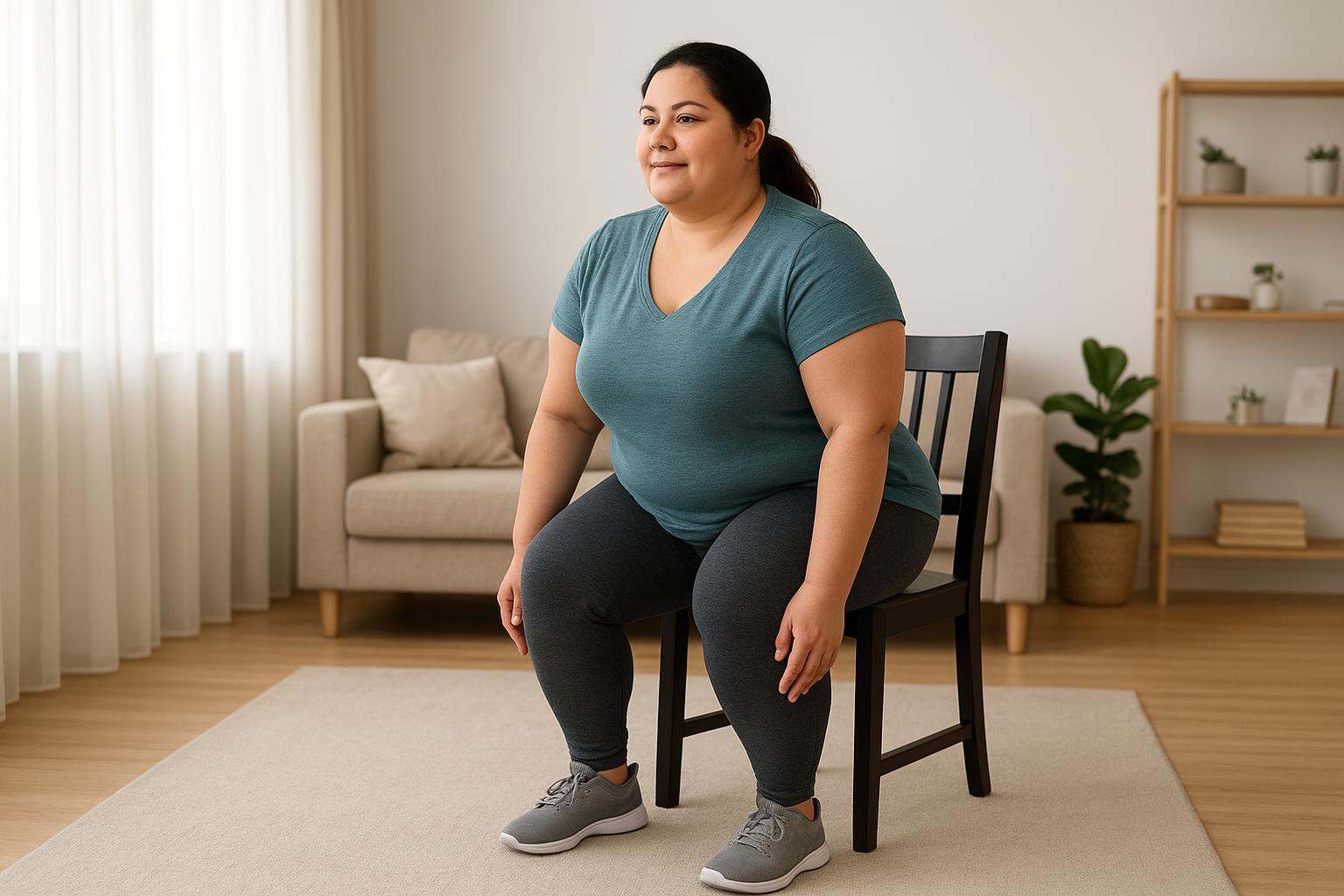
Starting a home strength plan for beginners with obesity can feel intimidating, especially if you worry about joint pain, balance or stamina. This gentle 3-day routine shows you how to train safely in your living room using just your bodyweight, a sturdy chair and light weights. You will build strength, protect your knees and back, and gain confidence step by step, without floor work or high-impact moves.
Why strength training is essential when you live with obesity
For beginners with obesity, strength training at home offers big benefits: it supports weight management, protects your joints and makes everyday tasks like climbing stairs or standing up from the sofa easier. Unlike high-impact cardio, this joint-friendly workout keeps one or both feet on the floor and always allows you to use a chair for support. You will focus on large muscle groups (legs, hips, back, chest and arms) with controlled movements and plenty of rest. The goal is not exhaustion but steady progress: finishing each session feeling slightly challenged yet still in control.
Safety first: setting up your home space and listening to your body
Before starting this 3-day strength routine, clear a small area so you can take two steps forward and to each side without bumping into furniture. Use a sturdy chair without wheels, ideally with armrests, placed against a wall so it cannot slide. Wear supportive trainers and, if you use light weights, hold them with a full closed grip. Work at a pace where you can still talk in short sentences, and stop if you feel sharp pain, dizziness, chest discomfort or unusual shortness of breath. Aim for a gentle warm-up (marching on the spot, shoulder rolls, ankle circles) for 5 minutes, and finish each session with easy stretches for the legs, hips and shoulders to reduce stiffness.
The gentle 3-day weekly plan with chair support
This beginner home strength plan is organised in three non-consecutive days (for example Monday, Wednesday, Friday) so you always have a rest day in between. Each workout includes five main moves: sit-to-stand squats using the chair, wall or counter push-ups, seated knee extensions, seated overhead press (with or without weights) and seated row using light resistance bands or simply squeezing the shoulder blades back. Start with 1–2 sets of 8–10 repetitions per exercise, resting 60–90 seconds between sets. As weeks pass, you can gradually add a third set or increase reps toward 12–15, always prioritising smooth, pain-free movement over intensity.
Progressions and adaptations for different ability levels
If you are very new to exercise or feel unsteady, you can begin with chair-only movements: practise standing up and sitting down with both hands on the armrests, or marching your feet while seated. As you gain confidence, try relying on one hand, then no hands, always hovering over the chair for safety. Wall push-ups can progress by stepping your feet slightly further from the wall to increase resistance. If your knees feel sensitive, reduce the range of motion in squats or focus more on seated leg extensions and glute squeezes. On the other hand, if you find the basic routine easy, you can slow down each rep (for example three seconds up, three seconds down) or add a light household object such as a filled water bottle to increase the challenge in a controlled, joint-friendly way.
Motivation, tracking and when to seek professional help
Consistency matters more than perfection in this home strength plan for beginners with obesity. Keep a simple log of which days you train, how many sets and reps you complete, and how you feel afterwards. Celebrate small wins: standing up more easily, feeling steadier on the stairs, or noticing less back fatigue. If you live with medical conditions such as heart disease, uncontrolled diabetes or severe joint pain, discuss this plan with your doctor or a qualified physiotherapist before starting. They can help you personalise the exercises, especially if you use medications affecting balance or heart rate. Remember that progress may be slow but it is real: every safe, supported session is a step toward better strength, mobility and confidence.
In summary, this gentle 3-day home strength routine gives beginners with obesity a safe path into resistance training using just bodyweight and a reliable chair. By focusing on controlled movements, clear rest days and gradual progressions, you can strengthen your muscles while protecting knees, hips and back. Combine this plan with short walks and supportive nutrition habits, and you will steadily improve how you move, feel and live at home.