Choosing the right socks for home workouts and garage training is more important than most people think. The right pair can boost grip, improve stability, reduce blisters, manage sweat and help keep your feet fresh during intense sessions on tiles, laminate, rubber mats or bare concrete. In a home gym where you often train without shoes or with minimalist footwear, technical socks become real equipment, not just an accessory.
Understand your training surface and style
Before buying, consider where and how you train. On tiles and laminate, you need socks with strong anti-slip grip on the sole to prevent sliding during squats, lunges and yoga flows. In a garage gym with concrete or rough rubber flooring, you want extra cushioning and slightly thicker yarn to protect from impact and cold. For high-intensity circuits, skipping and kettlebell work, choose socks that balance shock absorption with a snug, locked‑in feel so your foot does not move inside the fabric. If you often do yoga or Pilates, prioritise barefoot-like sensitivity with slim yet grippy socks.
Prioritise grip and stability for safety
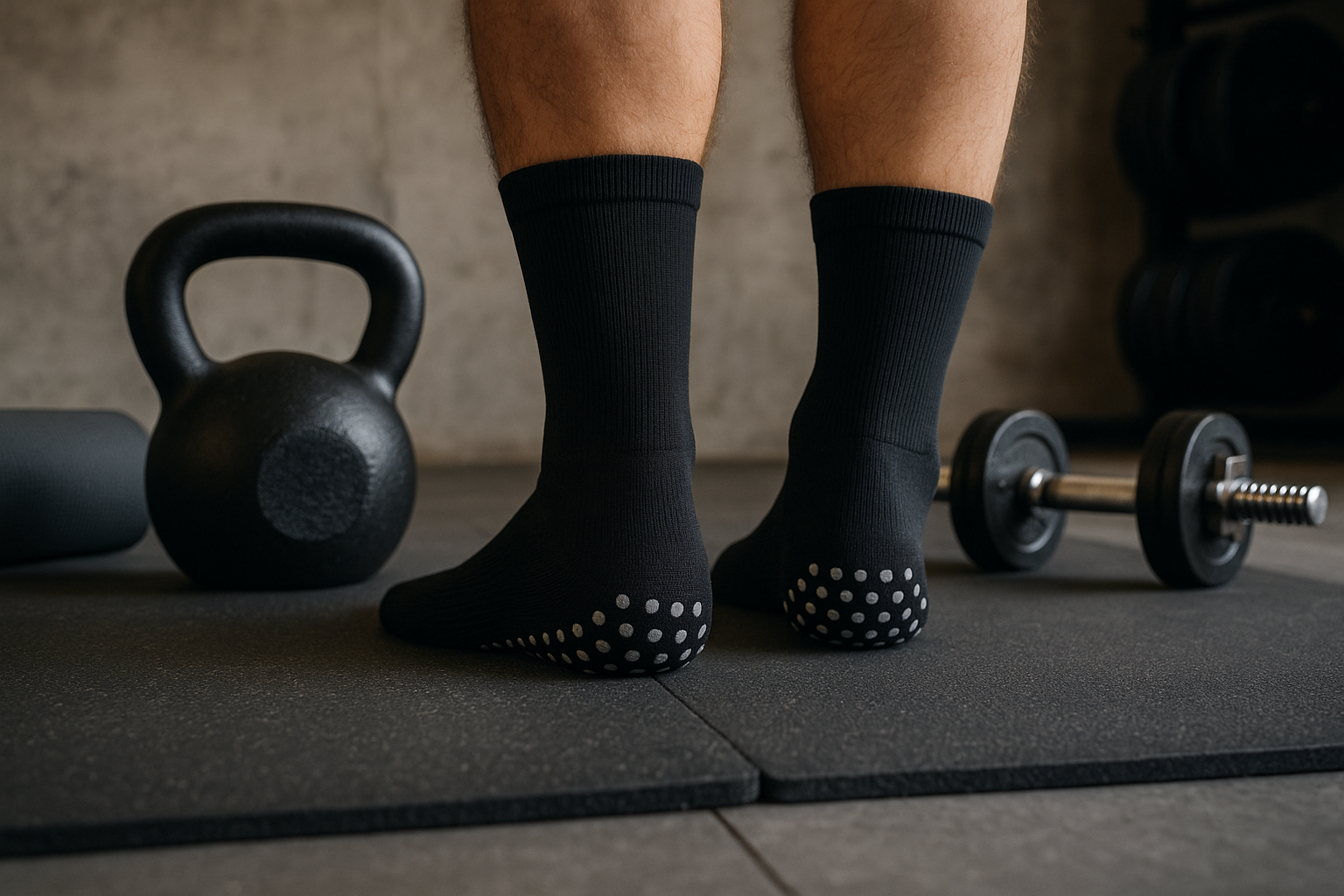
For home workouts, grip socks designed for training and Pilates are particularly useful because they stabilise your stance on smooth floors. Look for full-length silicone dots or patterns that cover heel, midfoot and forefoot, rather than just the heel area. A snug midfoot band or arch support helps prevent the sock from twisting during lateral moves and burpees. Avoid very loose or thick casual socks, which can bunch up and create dangerous slip points. Proper grip socks allow you to train safely without shoes when you want maximum ground contact for glute bridges, calf raises or balance exercises.
Cushioning, fit and support
The right cushioning depends on your routine. For heavy strength sessions in a garage gym, a slightly padded heel and forefoot reduce impact on hard surfaces and add comfort under weightlifting shoes or minimalist trainers. For bodyweight and mobility work, a thinner, more responsive sock often feels better. Fit is crucial: choose compression-style socks or models with a tight, elastic collar so they do not slip down during mountain climbers or sprints on the spot. Reinforced heel and toe zones extend durability, especially if you move a lot on rough rubber mats. If you have arch issues, look for built‑in arch support bands to reduce fatigue during long sessions.
Breathability, anti-odor and fabric technology
Home gyms easily get hot and humid, so your socks must manage moisture efficiently. Prioritise technical blends with breathable mesh panels on the top of the foot and moisture‑wicking yarns that pull sweat away from the skin. Avoid heavy cotton-only socks that stay wet and increase the risk of blisters. Many good training socks use anti-odor technologies, such as antimicrobial treatments or fibres that slow bacteria growth, keeping your feet fresher between washes. This is particularly useful if you train in a closed garage space. Quick‑dry fabrics also mean your socks are ready sooner for the next session.
Choosing different socks for different home workouts
Instead of one generic pair, build a small rotation based on your typical sessions. For yoga, Pilates and mobility on hard floors, choose thin, ultra‑grippy socks that keep you stable in downward dog and lunges without overheating. For HIIT and functional training, select socks with a balance of cushioning and compression, plus reliable grip for fast transitions. For barbell or dumbbell work in the garage, consider slightly thicker, cushioned socks that protect from the cold floor and pressure from lifting shoes. Rotating pairs not only improves comfort and performance but also extends each pair’s lifespan, as the elastic fibres get time to recover between sessions.
Care, hygiene and when to replace your socks
Even the best technical socks lose performance if you do not care for them properly. Wash them inside out at moderate temperature to preserve grip prints and elastic fibres, and avoid fabric softeners that can reduce moisture‑wicking effectiveness. Always let socks dry completely before storing them in your home gym bag to prevent bad odours and bacteria growth. Replace training socks when the grip pattern starts to wear off, when you see thinning in the heel or toe, or when the elastic no longer holds the sock in place. Investing in a few quality pairs and maintaining them well ensures safer, more comfortable and more hygienic home workouts and garage training sessions.