Designing a home gym is not just about picking the right dumbbells or treadmill. To keep your space truly usable, you need smart, modular wall-mounted storage that keeps floors clear, equipment protected and every piece easy to reach. The right mix of shelves, hooks and racks can transform even a small corner into an efficient, safe workout zone.
Why wall-mounted storage matters in a home gym
A cluttered gym is more than an eyesore – it’s a safety risk. Loose kettlebells, scattered resistance bands and stacked plates can cause trips, falls and damaged flooring. Wall-mounted storage lets you use vertical space, leaving walkways clear and creating logical zones for strength, mobility and cardio gear. Compared with freestanding units, fixed wall systems are more stable and often more compact, so they work well in small spare rooms, garages or shared spaces. Planning your storage from the start also protects your investment, reducing wear and tear on bars, plates and accessories.
Key features of a modular wall system
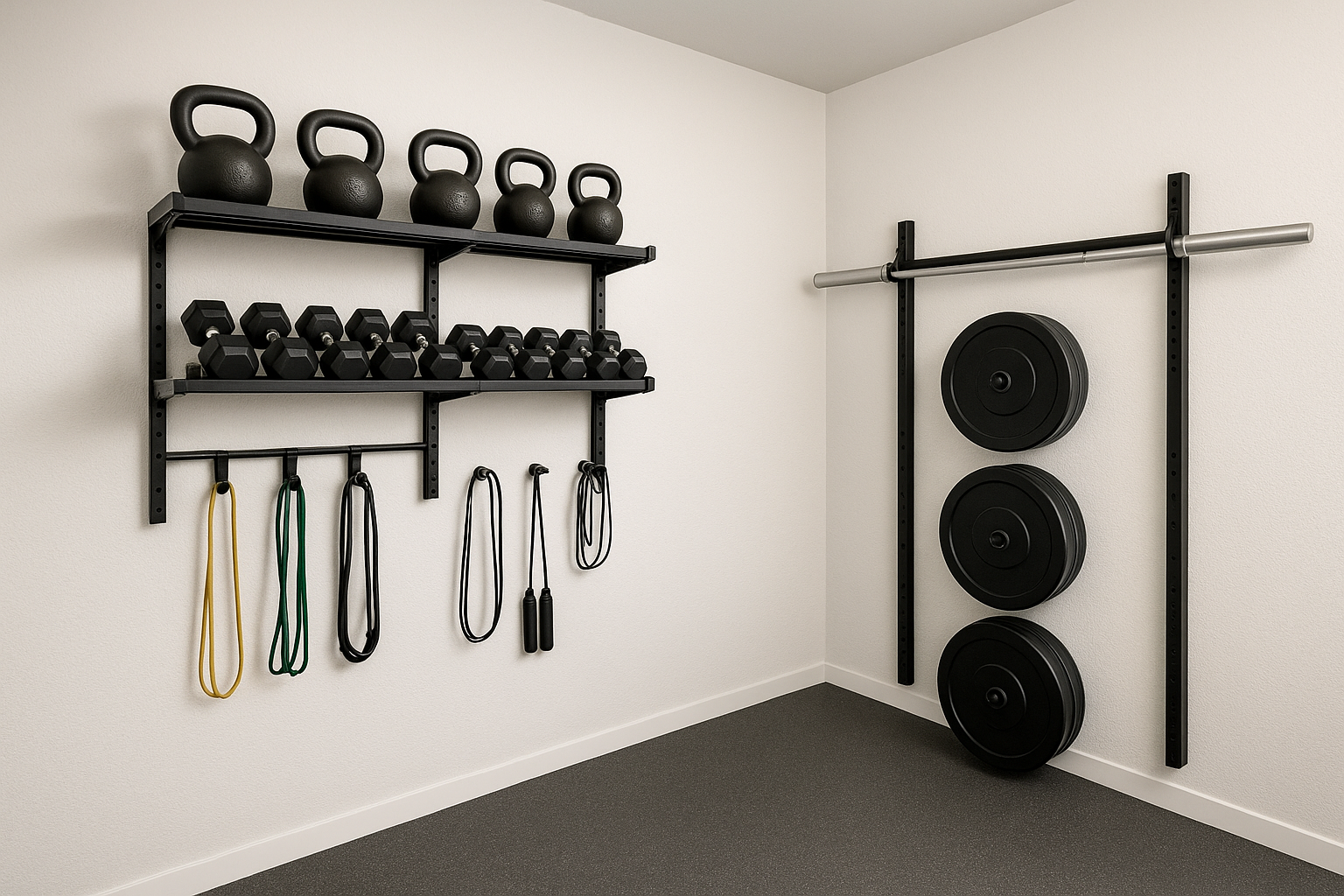
When choosing modular wall-mounted storage, look for systems that allow you to add, remove and reposition components as your training evolves. Shelves should be deep and strong enough for dumbbells or medicine balls, while hooks need to support the weight of suspension trainers, jump ropes and bands without bending. Adjustable mounting rails or pegboard-style panels give you flexibility if you later upgrade to heavier gear. Check the stated weight capacity for each element and ensure fixings are included and compatible with your wall type. Powder-coated steel is ideal for garages and high-humidity spaces, as it resists rust and scratches.
Planning layout and safety before installation
Before drilling, map out your wall on paper and decide where each category of equipment will live. Store heavier items like weight plates and dumbbells lower down so they are easier to lift safely, and keep lighter accessories higher. Maintain clear space around your rack or lifting area so stored items do not interfere with bar paths or your footing. Measure ceiling height and door swings to avoid blocking access. Most importantly, assess your wall construction: solid brick or block can take heavy loads with the right anchors, while plasterboard may require locating studs or using a backing board. Never exceed the manufacturer’s load ratings; it’s better to overspec capacity for peace of mind.
Choosing shelves, hooks and racks for different equipment
Different pieces of home gym equipment demand different storage solutions. Sturdy shelves work well for dumbbells, kettlebells and smaller cardio accessories. Deep, ventilated shelves help prevent moisture build-up on yoga mats and gloves. Robust hooks or pegboard pegs are ideal for jump ropes, belts, suspension trainers and resistance bands – keeping them tangle-free and visible. Dedicated barbell racks and plate storage mounted on the wall free up floor space and reduce the risk of bars rolling. Consider a small wall-mounted rack near your training area for frequently used items, and a second zone for seasonal or less-used gear so your main workout zone stays streamlined.
Installation best practices and maintenance
Even the best modular system is only as safe as its installation. Use a spirit level to keep rails and brackets straight, and always drill pilot holes appropriate to your fixings. If you are unsure about wall type or load, consult a professional to avoid hidden issues like weak plaster or electrical cables. Once installed, periodically check screws and anchors for loosening, especially in high-use zones where equipment is regularly taken down and rehung. Wipe down metal surfaces to remove sweat and dust, which can cause corrosion over time. As your equipment collection grows, re-balance your layout rather than overloading a single shelf or hook; modular systems are designed to evolve with your training.
By investing in well-planned, modular wall-mounted storage, you turn your home gym into a safer, more efficient training environment. Clear floors, organised zones and securely fixed shelves and racks help you find gear faster, focus on your workouts and protect both your equipment and your body. With a considered layout and proper installation, even a compact room can feel like a professional, tidy training space that supports your fitness goals for years to come.