
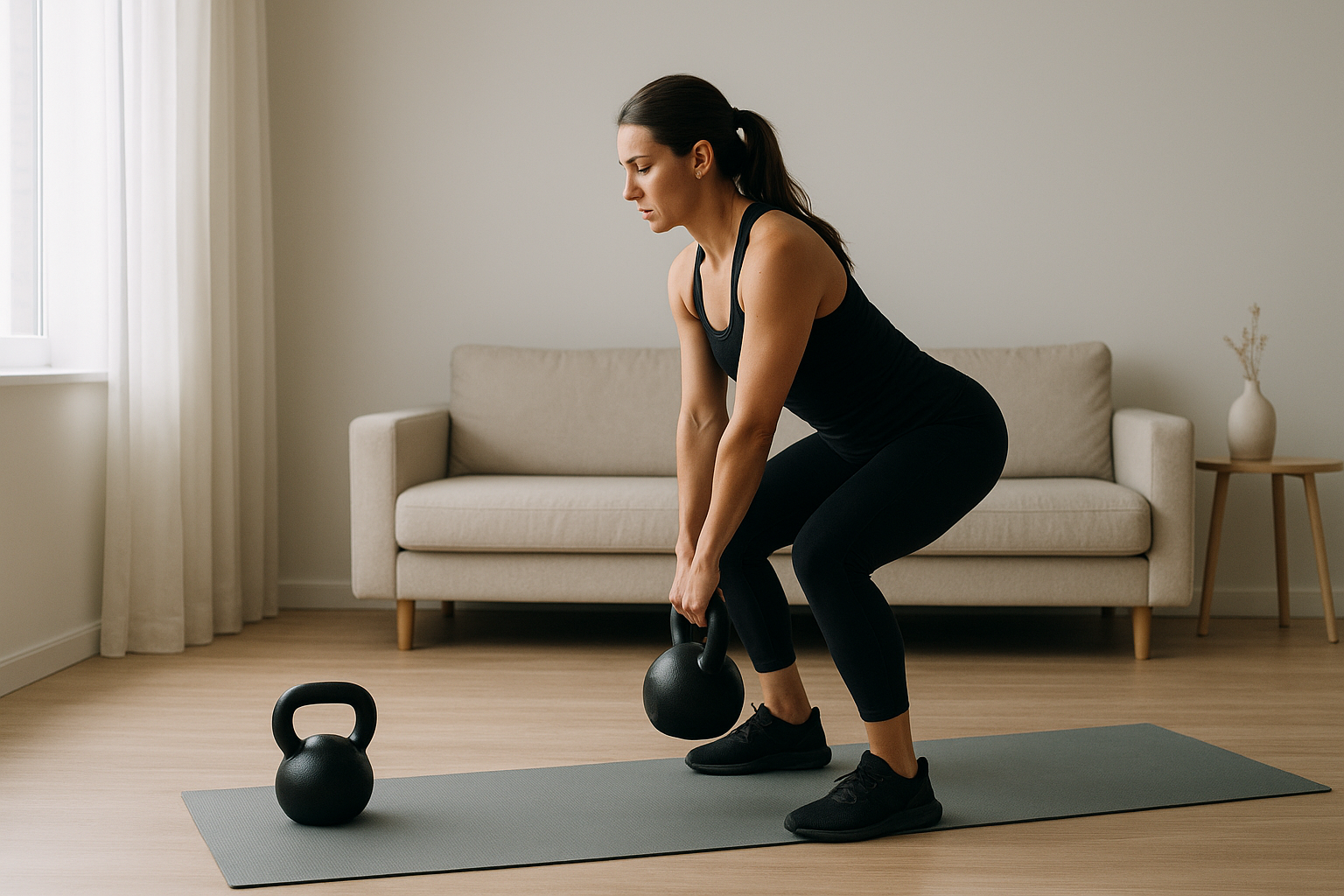
If you want a powerful full body workout at home without filling your living room with gear, a single kettlebell is hard to beat. This minimalist routine delivers strength, power and conditioning in just 30 minutes, three times per week. All you need is one well‑chosen bell, a small patch of floor space and a plan that balances push, pull, hinge and core work so you can progress safely while staying consistent.
Why a single kettlebell is enough for strength
A thoughtfully designed one-kettlebell program can hit every major muscle group and energy system. The key is choosing compound movements that recruit multiple joints at once, such as swings, goblet squats, presses and rows. Working unilaterally (one side at a time) increases the challenge on your core and stabilisers, making a relatively light bell feel heavy. You’ll cycle through strength-focused sets with controlled tempo, then add short bursts of power and conditioning using swings or cleans. Because you’re repeating this structure three times per week, the volume adds up quickly without requiring long sessions or a full rack of weights.
Choosing the right kettlebell for your home gym
For a minimalist setup, prioritise a bell that’s comfortable to grip, durable and clearly marked for quick weight reference. A classic cast-iron model around 8–12 kg for most beginners (12–16 kg for stronger users) is a smart starting point. Look for a smooth but not slippery handle with enough space for a two-handed swing, a flat base for floor work like rows and push-ups, and a tough coating to survive the inevitable bumps on hard floors. With a single versatile kettlebell, you can progress by adding reps, sets, tempo variations and more challenging unilateral patterns before you ever need to buy a heavier weight.
The 30-minute, three-day minimalist kettlebell plan
This 30-minute kettlebell workout is built around three sessions per week (for example, Monday, Wednesday, Friday). Each day uses the same core moves but shifts the emphasis slightly to keep you progressing. After a 5-minute warm-up (hip circles, arm swings, light deadlifts), rotate through:
- Day A – Strength focus: Goblet squat, one-arm floor press, one-arm row, hard-style plank.
- Day B – Hinge & power: Kettlebell deadlift, two-hand swing, half-kneeling press, suitcase carry.
- Day C – Mixed conditioning: Clean to squat, push press, swing intervals, Turkish get-up practice with bodyweight or a very light bell.
You’ll work each exercise for controlled sets of 6–10 reps, resting 45–60 seconds between sets, and finish with 5 minutes of swings or carries for conditioning.
Sets, reps and progression for steady gains
To build strength and muscle with a single kettlebell, structure most movements in the 3–5 set range of 6–10 reps per side. For swings and other power moves, think in terms of total reps (for example, 10 sets of 10 swings) rather than time, so your form stays crisp. Across the weeks, progress by adding a rep or set, shortening rest slightly or improving technique before you increase load. When the bell starts to feel too light, slow the eccentric (lowering) phase, use more unilateral work and integrate challenging patterns like front-loaded squats and paused presses. This approach keeps you improving with the same piece of equipment for months.
Safety, technique and home training tips
Because a kettlebell home workout involves ballistic moves, technique matters more than sheer effort. Always hinge from the hips in swings and deadlifts, keeping the back neutral and the bell close to your body. Start sessions with a thorough warm-up and finish with light mobility for hips, hamstrings and shoulders. Clear your training area of obstacles, especially behind you for swings and cleans. Train barefoot or in flat, stable shoes to improve balance. Finally, respect fatigue—if your form breaks down, cut the set short. A consistent, technically sound 30‑minute routine will outperform longer, sloppy workouts every time.
This minimalist kettlebell routine proves you don’t need a full gym to gain strength, power and conditioning. With a single bell, three focused sessions per week and smart progression, your living room can become a highly effective training space. Commit to these 30-minute blocks, stay patient with technique and you’ll build a resilient, athletic body while keeping your home gym setup refreshingly simple.









