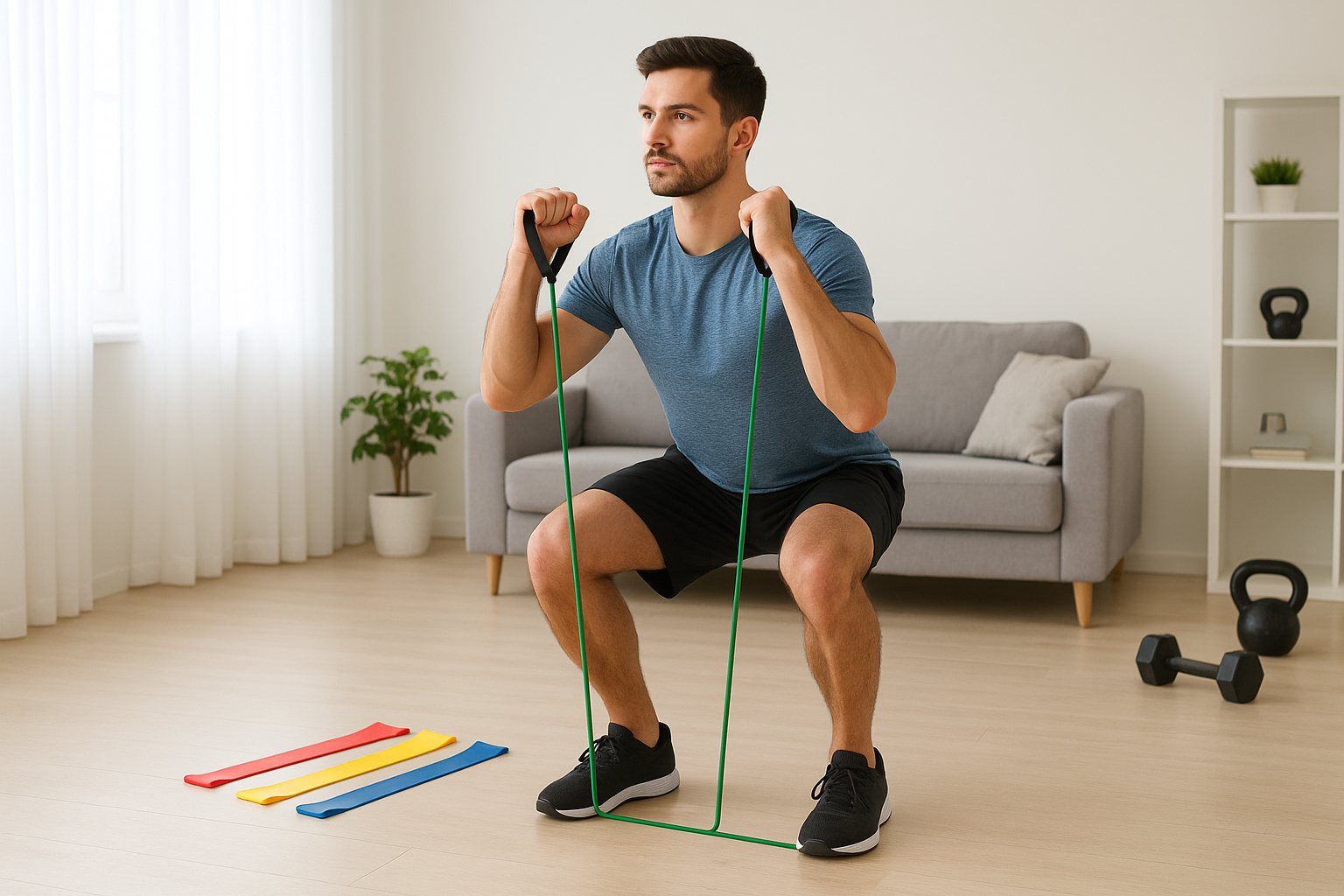
A well-structured resistance band conditioning circuit can deliver a powerful blend of strength and cardio in just 30 minutes, all from the comfort of your living room. By pairing controlled, time-efficient strength blocks with brisk conditioning intervals, you can build total-body strength, boost your cardiovascular fitness and keep your joints happy with low-impact training. This routine is ideal if you want an effective, scalable home workout that only requires a set of resistance bands and a small amount of floor space.
Why resistance bands are perfect for home conditioning
Resistance bands create constant tension through the full range of motion, making them ideal for both muscle strength and muscular endurance. Unlike free weights, bands are lightweight, portable and easy to store, so you can keep your home gym clutter-free. They also allow for subtle progression: simply move further from the anchor point or switch to a thicker band to increase difficulty. For circuit-style training, this means you can move quickly between exercises without adjusting plates or loading machines, keeping your heart rate elevated and the session time-efficient.
Structure of the 30-minute resistance band circuit
This 30-minute home workout alternates between strength-focused blocks and cardio-flavoured conditioning intervals. Start with a 3–5 minute warm-up (marching on the spot, band pull-aparts, bodyweight squats) and then follow this structure:
- Block A – Lower body strength (8 minutes): 40 seconds work / 20 seconds rest, cycling through banded squats, banded Romanian deadlifts and lateral band walks.
- Block B – Upper body strength (8 minutes): 40 seconds on / 20 seconds off, with band rows, chest presses and overhead presses.
- Block C – Core and conditioning (8 minutes): 30 seconds work / 15 seconds rest, alternating banded woodchops, banded dead bugs and fast band punches.
- Finisher (3–5 minutes): Continuous band thrusters (squat to press) and fast rows for a final cardio hit.
Use a timer, move briskly between stations, and keep rest periods honest to maintain a strong conditioning effect.
Exercise suggestions and form cues
To get the most from this circuit, focus on quality technique. In the banded squat, stand on the band with feet shoulder-width apart, holding the ends at shoulder height. Push hips back, keep your chest proud and drive through your heels as you stand. For banded rows, anchor the band around a sturdy point at mid-chest height, step back to create tension, then pull your elbows towards your ribs, squeezing your shoulder blades. In overhead presses, avoid over-arching your lower back by bracing your core before each rep. Choose band tension that allows 12–15 controlled reps within your work intervals; the last few should feel challenging but not sloppy.
Progressions, regressions and programming tips
The beauty of a resistance band home workout is how easily you can scale it. Beginners can reduce work intervals to 20–30 seconds, increase rest to 30–40 seconds and use lighter bands. Focus on mastering movement patterns with smooth, controlled reps. Intermediate and advanced trainees can increase band resistance, extend work periods to 45–50 seconds or add an extra round to each block. You can also tweak tempo: slow eccentrics (lowering for three seconds) increase time under tension for strength, while faster but still controlled tempos ramp up the cardio conditioning. Aim to perform this circuit two to three times per week, leaving at least one rest day between sessions for recovery.
Safety, setup and making it a habit
Before each session, quickly check your bands for nicks or wear and anchor them securely to avoid snapping or slipping. Maintain a neutral spine, keep your knees tracking in line with your toes and stop if you feel sharp pain. Because this circuit is low-impact and easily modifiable, it’s suitable for most fitness levels, but adjust volume and intensity to your current capacity. To turn this into a lasting habit, schedule your 30-minute conditioning circuit at the same time on training days, lay your bands out in advance and track your progress by noting band thickness, intervals and perceived effort. Over a few weeks, you’ll notice improved strength, stamina and confidence in your home workouts.
In summary, this 30-minute resistance band conditioning circuit offers a simple, effective way to train full-body strength and cardio without leaving home. By combining structured strength blocks with focused conditioning intervals, you’ll build muscle, boost your heart health and develop better movement patterns using just a set of bands. Stick with the plan, adjust the intensity as you improve and enjoy the versatility and convenience of a smartly designed home-gym routine.