
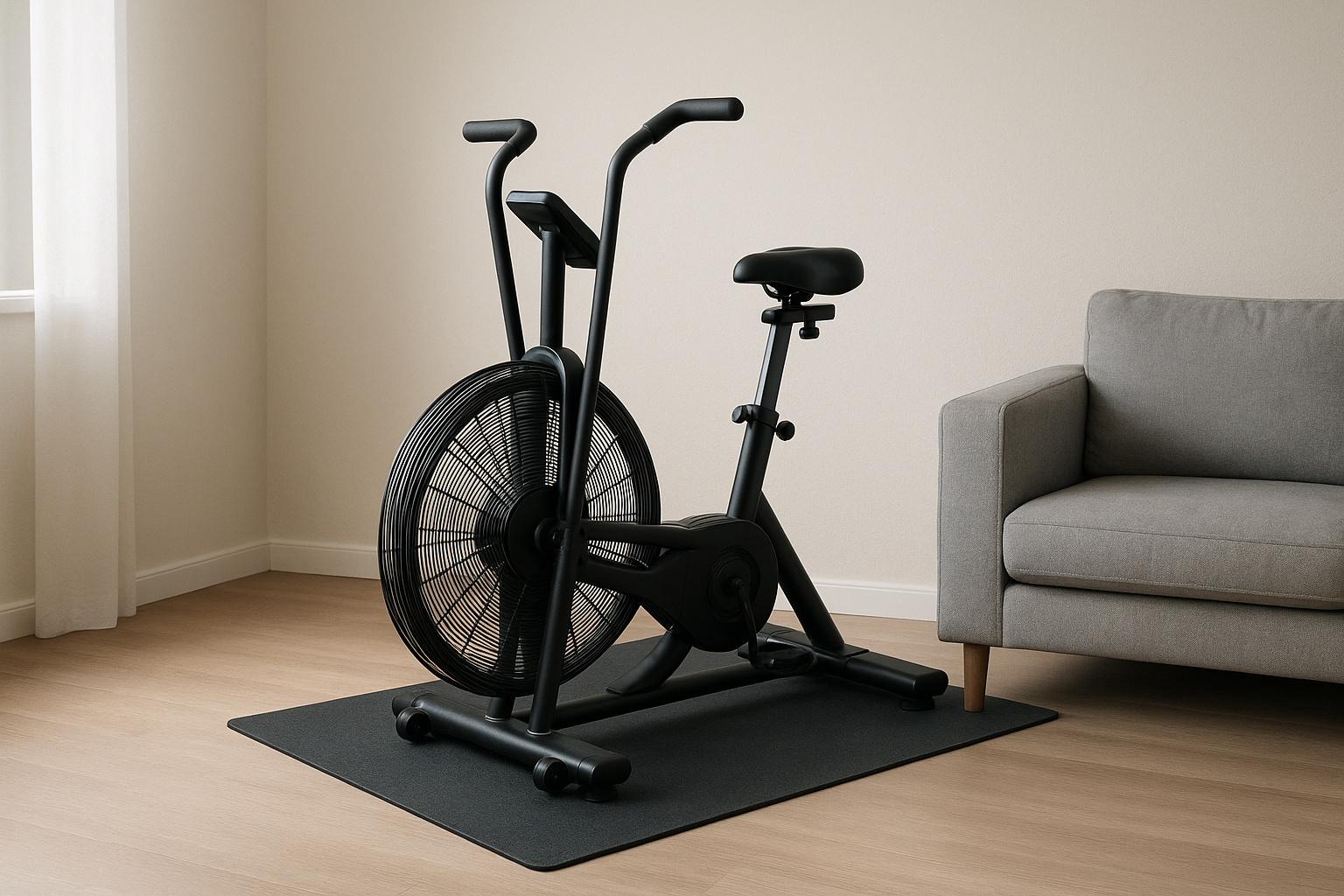
Building a home gym in a small flat can be challenging, especially if you want the intensity of an air bike without disturbing neighbours. Compact, quiet assault-style trainers offer full-body conditioning, scalable resistance and low impact on your joints, but they also bring spinning fans, moving arms and vibration into a shared building. This guide explains how fan resistance works, what realistically affects noise levels, and which features and dimensions to prioritise when choosing a compact air bike specifically for apartment living.
Why air bikes work so well in small home gyms
Air bikes stand out because their fan-based resistance automatically matches your effort: the harder you push and pull, the more resistance you create. This makes them ideal for HIIT workouts and steady-state cardio in a compact home gym. Many compact air bikes have a smaller footprint than a rowing machine or treadmill, so they fit into a corner of a living room or spare room while still offering full-body training through the moving handles and pedals. Unlike motorised cardio machines, air bikes don’t rely on a heavy electric motor, which can reduce mechanical failure and keep running costs low – important if you’re optimising a minimal, efficient apartment setup.
Fan resistance and how it affects noise
The signature feel of an assault-style air bike comes from its large fan wheel, which creates resistance as it pushes air. For apartments, it’s crucial to understand that fan size, blade design and housing all influence noise. A bigger, more open fan usually gives smoother resistance but can generate more whooshing sound at higher speeds. Smaller, compact fans are easier to fit in tight spaces yet may spin faster and produce a slightly higher-pitched noise. Look for bikes that highlight features such as refined fan cages, solid construction and stable frames: all of these help minimise vibration and rattling, which neighbours are more likely to notice than the basic rush of air. Using a thick rubber mat under the bike will further dampen noise and protect flooring.
Compact footprint and apartment-friendly dimensions
In a flat, the dimensions and weight of your air bike are as important as its resistance profile. Check the stated footprint (length and width) and compare it with the floor space you actually have available, remembering to allow room for your moving arms and knees. A genuinely compact air bike should be short enough to park along a wall without blocking walkways, and low enough to sit under standard ceiling heights even when you stand up to pedal hard. Lighter frames are easier to move, but they must still feel sturdy when you sprint. Transport wheels are a must in small apartments, letting you roll the bike out of a closet or corner and quickly reposition it after each workout.
Noise management, neighbours and flooring
Even the best quiet air bike will generate some sound, but you can control how far it travels. Focus on three main areas: air noise from the fan, mechanical noise from chains, belts and bearings, and structural noise transmitted through your floor. Belt-drive systems are generally quieter and lower-maintenance than chain drives, making them preferable for flats. Regularly tightening bolts and lubricating moving parts also cuts down on clatter. To protect downstairs neighbours, invest in a high-density gym mat or even a double layer of mats to absorb vibration, and schedule high-intensity intervals during daytime hours. Thinking about when and how you ride your air bike is as important as the model you pick if you want to keep peace in a shared building.
Key features and settings to prioritise
When narrowing down options, prioritise adjustable ergonomics, clear console feedback, and sensible safety features over flashy extras. A good apartment-friendly air bike will offer a vertically and horizontally adjustable seat so different users can ride comfortably without knee or back strain. A simple but readable LCD display should show time, distance, calories and heart rate, with preset interval programmes to guide short, effective sessions that fit into a busy home routine. Look for solid, grippy pedals, stable foot pegs if you want upper-body-only work, and enclosed moving parts where possible to keep things safe in family homes. Foldability is rare with air bikes, but models that are easy to tilt and roll can still feel very compact in daily use.
Is a compact air bike right for your flat?
For many people training in small spaces, a compact air bike is one of the most efficient pieces of home gym equipment available. It offers scalable intensity, engages both upper and lower body, and occupies less floor space than several other cardio machines. If you pay attention to fan design, drive system, frame stability and the quality of your floor protection, you can keep noise at levels that are acceptable for most apartment buildings. Combine these practical checks with realistic expectations about when and how you train, and a quiet, assault-style air bike can become the heart of your home workouts without overwhelming your flat – or your neighbours.









