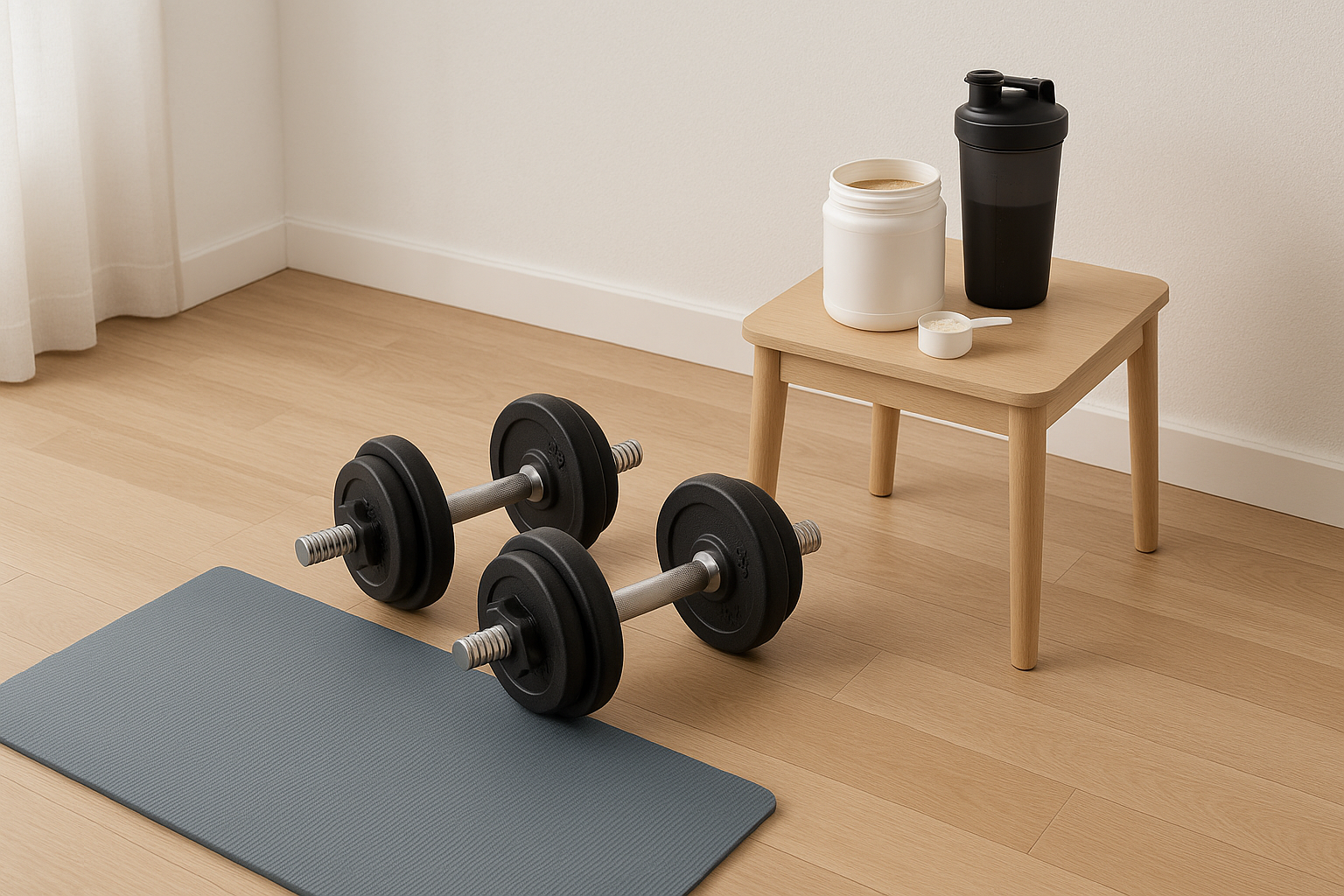
Training in a home gym makes protein intake even more important, because you control both your workouts and your nutrition. Protein powder is simply a convenient way to hit your daily target, but many people overuse it, time it badly or pick the wrong type for their goals. Below you will find an evidence-based guide to how much protein you really need, how to use shakes for fat loss or muscle gain, and what to look for when choosing a supplement.
How much protein do you really need at home?
The most useful guideline for active people training at home is around 1.6–2.2 g of protein per kg of body weight per day. If you weigh 70 kg, that is 112–154 g of protein. You do not need all of this from protein powders; aim to get most from whole foods (meat, fish, eggs, dairy, legumes) and use a shake to “top up” what you are missing. A single scoop of a typical whey powder provides about 20–25 g of protein, which is ideal to complete a meal or snack. For most home trainees, 1–2 scoops per day are plenty, as long as the rest of the diet is balanced.
Using protein powder for muscle gain
To build muscle with home workouts, you need both a progressive resistance plan and sufficient protein spaced across the day. Research suggests that 20–40 g of high-quality protein per meal, every 3–4 hours, maximises muscle protein synthesis. This means you could use a shake after a workout if that is the easiest way to get one of these “protein doses” in. Focus less on a narrow “anabolic window” and more on total daily intake and distribution. Combining your shake with some carbohydrates (like fruit or oats) can make it more filling and support your overall calorie surplus when gaining muscle.
Using protein powder for fat loss
When your goal is fat loss, protein becomes a tool to protect lean mass and keep you full while you eat fewer calories. Higher-protein diets (around 2.0–2.4 g/kg) help maintain muscle during a calorie deficit and can reduce hunger. In this case, a whey or plant-based shake can replace a more calorie-dense snack or be used as a quick, high-protein breakfast before a home workout. Blending your powder with water or a low-calorie milk alternative, plus fibre-rich berries, creates a satisfying, lower-calorie meal that supports your deficit without sacrificing recovery.
Types of protein powder and what to look for
Most people will do well with a basic whey protein concentrate, which offers a complete amino acid profile and is rapidly absorbed. If you are lactose intolerant, a whey isolate or a plant-based protein (such as pea, rice or a blend) is a better choice. Look for products that clearly list the amount of protein per serving, have minimal added sugars, and provide at least 70–80% calories from protein. Avoid being distracted by flashy claims; there is no need for added “fat burners” or proprietary blends. A straightforward, third-party tested protein powder is usually the best option for a home gym athlete.
Common mistakes when using protein powder
The biggest mistake is thinking more is always better. Going far above 2.2 g/kg offers little extra benefit for most lifters and can crowd out other important nutrients. Another common error is treating protein shakes as meal replacements without adding any fibre, healthy fats or micronutrients, which can leave your diet unbalanced. Many people also forget that total calories still matter: adding multiple daily shakes on top of your normal food intake can easily stall fat loss. Finally, remember that supplements cannot fix a poorly designed training plan—progressive overload, sleep and consistency are still the foundation of results.
Used intelligently, protein powder is a convenient ally for your home workouts, helping you hit evidence-based protein targets for both muscle gain and fat loss. Focus on your daily gram-per-kilo range, spread your intake across the day, and use shakes to fill genuine gaps rather than as a shortcut. Choose a simple, high-quality product that fits your digestion and preferences, and pair it with consistent training and solid overall nutrition. In this way, you turn a basic tub of powder into a practical tool that supports long-term progress in your home gym.