
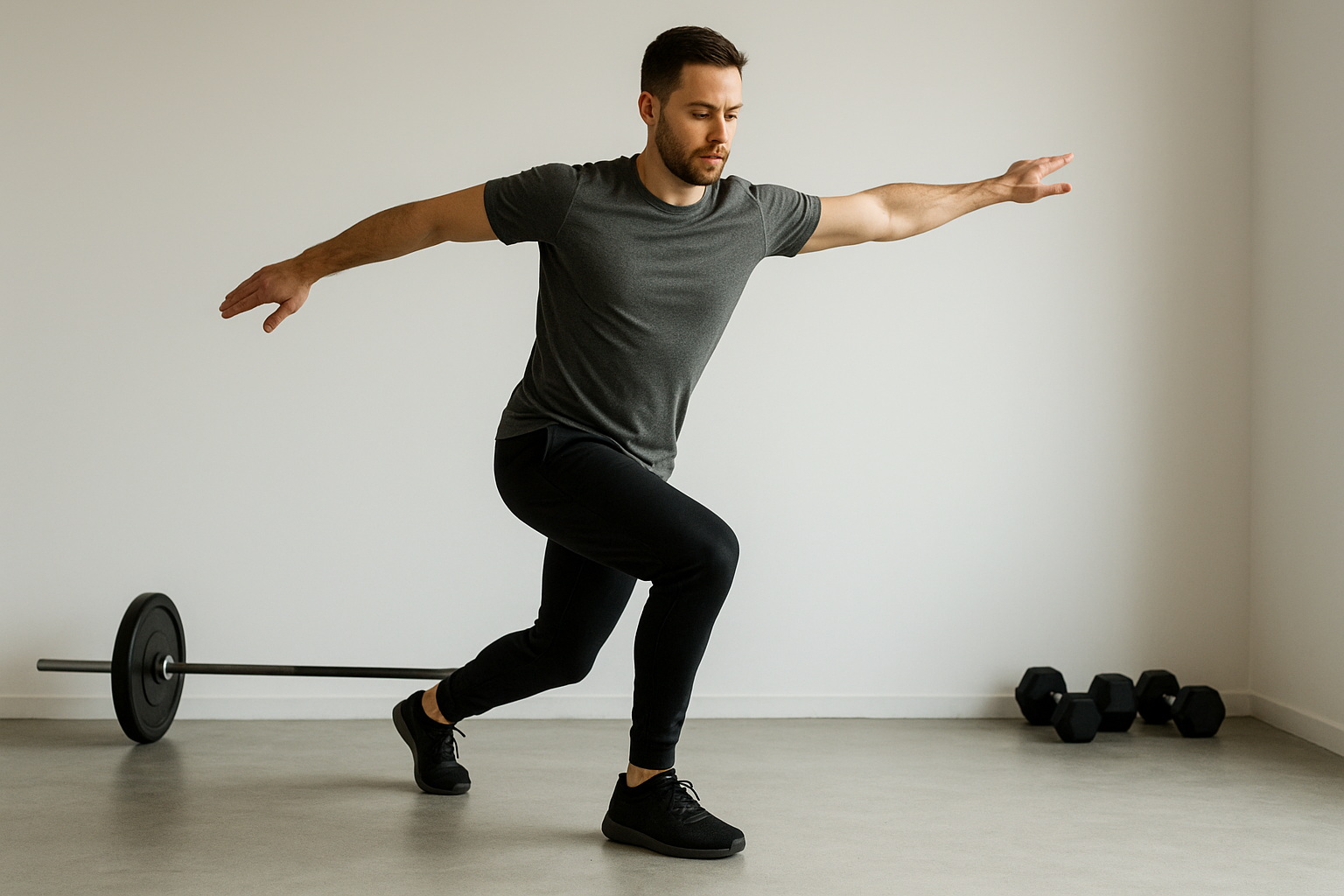
Preparing for a heavy lifting day at home is about more than just feeling “ready”. A smart, joint-friendly warm-up routine can protect your back, hips and shoulders, reduce injury risk and help you lift more efficiently. Instead of endless cardio, combining mobility, activation and a few simple home gym tools creates a focused sequence that wakes up your nervous system and lubricates your joints before heavy squats, presses and pulls.
Joint-friendly mobility for hips and lower back
Start your home warm-up with slow, controlled movements for the hips and lumbar spine. Think cat-camel, segmental bridges and 90/90 hip rotations. These drills gently move the spine and hips through range without loading them, ideal before heavy deadlifts or squats. Spend 5–7 minutes here, breathing deeply and focusing on smooth motion rather than intensity. This approach reduces stiffness, improves hip external and internal rotation, and prepares the lumbar area to brace under load. Done consistently, these simple mobility exercises can significantly reduce post-session tightness and help protect your lower back when the weights get heavy.
Shoulder prep for pressing and pulling
The shoulders are heavily challenged on bench, overhead presses and rows, so they deserve dedicated prep. Begin with arm circles, scapular wall slides and band pull-aparts, keeping the ribcage down and neck relaxed. These drills encourage the shoulder blade to glide properly over the ribcage and warm the rotator cuff without irritation. Focus on 2–3 sets of 10–15 slow reps, feeling the muscles between your shoulder blades working. This kind of shoulder mobility and activation improves pressing stability and can help prevent common aches in the front of the shoulder and upper back when you move to heavier loads.
Glute activation for safer, stronger squats and deadlifts
Strong, active glutes are essential for protecting your back and knees on lower-body days. Prioritise exercises like glute bridges, side-lying clamshells and monster walks with a light band. These movements target glute max and glute med, helping them fire before your work sets. When the glutes are “online”, your hips share more of the load, which reduces strain on the lumbar spine during heavy squats and deadlifts. Aim for 2 sets of 12–15 reps per exercise, keeping the tension in the hips rather than the lower back. You should feel a firm burn around the side and back of the hips by the end of this block.
Core bracing and spinal stability
Before you lift heavy, your core needs to know how to brace. Incorporate movements like dead bugs, bird dogs and tall-kneeling anti-rotation presses into your warm-up. These spinal stability drills teach you to create tension through the midsection while keeping the spine neutral, a key skill for safe heavy lifting. Work in slow, controlled reps, matching movement to your breath: exhale as you create tension, inhale as you return. A properly primed core improves bar path, reduces compensation through the lower back and enhances overall control under load, especially in compound movements done in a compact home gym space.
From warm-up to first working set
Once your joints are mobile, glutes activated and core braced, transition smoothly into your main lifts. Start with 2–3 lighter warm-up sets of your first exercise, gradually adding weight and keeping reps low. This extends your warm-up into the specific pattern you will load heavily, without fatiguing you before the working sets. Keep rest periods short during this transition to maintain warmth, then expand rest for your heavy sets. By treating the warm-up as a structured sequence instead of an afterthought, you build a consistent ritual that protects your back, hips and shoulders session after session, boosting both safety and performance in your home workouts.
A well-designed home warm-up does not require complex equipment or a lot of extra time, but it makes a huge difference when you are pushing heavier weights. By focusing on mobility for the hips and shoulders, targeted glute activation and solid core bracing, you create a body that is ready to lift rather than simply hoping nothing hurts. Turn this sequence into a non-negotiable part of your heavy days, and you will likely notice smoother reps, better bar control and fewer aches creeping in after training.









