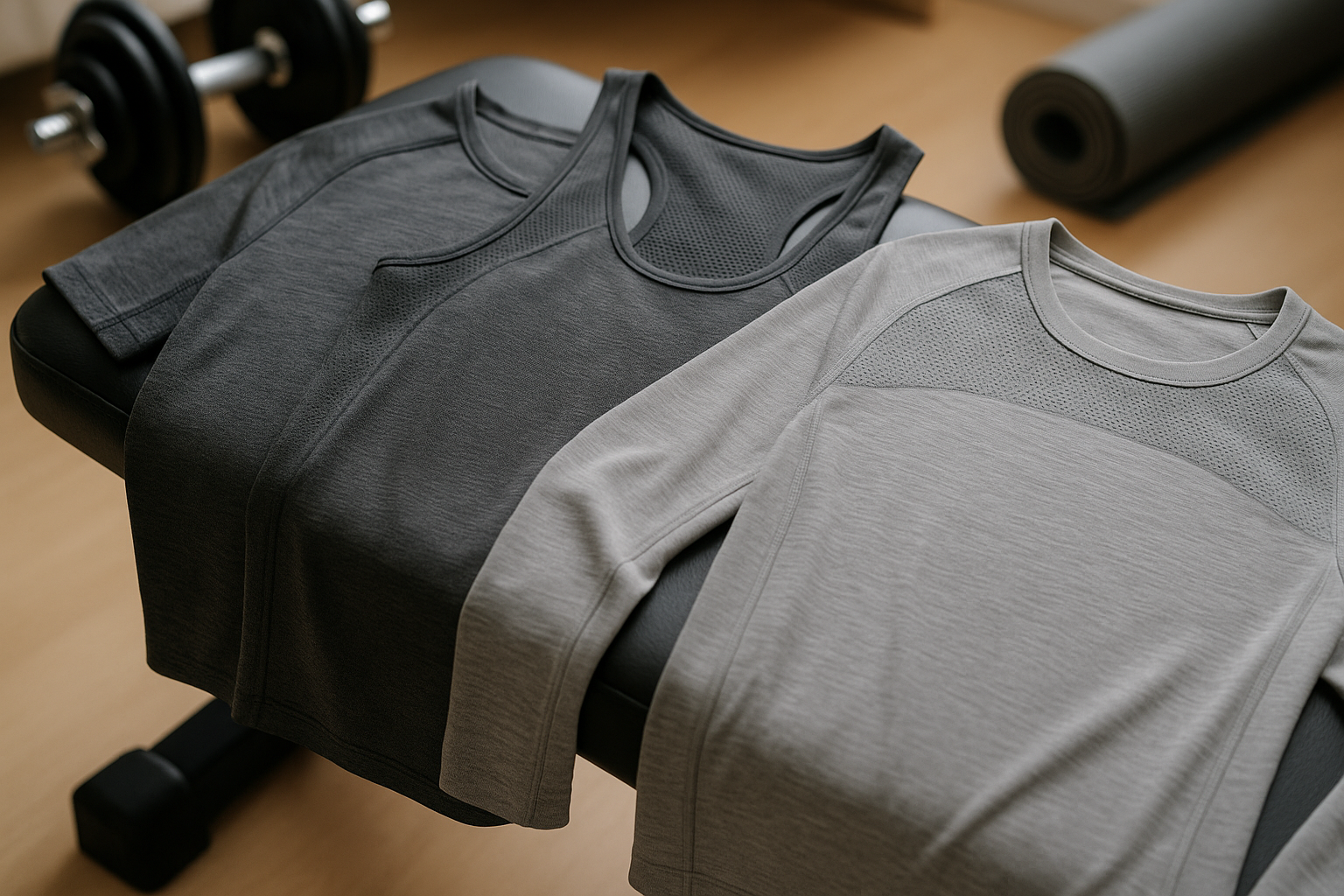
Staying cool and comfortable during sweat-heavy home workouts starts with what you wear on your upper body. Whether you are smashing HIIT circuits in the living room or grinding through a heavy dumbbell session in the garage, the right breathable top will help manage moisture, prevent chafing and reduce odour build‑up. This guide walks you through the key features to look for in technical T‑shirts, training tanks and long-sleeve gym tops so you can stay focused on your performance, not your clothes.
Choosing the Right Fabric for Indoor Training
For intense indoor sessions, fabric choice is critical. Prioritise synthetic performance materials such as polyester and polyamide blends over cotton, which tends to hold on to sweat and feel heavy. Look for tops marketed as moisture-wicking or quick-drying; these are designed to pull sweat away from your skin and help it evaporate faster. Lightweight knits and micro‑mesh panels increase airflow, which is especially helpful when you do not have outdoor breeze or gym-level air conditioning. If you are sensitive to static or prefer a softer feel, a small percentage of elastane can add stretch and comfort without sacrificing breathability.
Fit and Cut for Freedom of Movement
At home you may move more freely than in a crowded gym, so your training top fit should support that freedom. Aim for a slim but not tight cut that follows the body without clinging to every contour, allowing air to circulate and sweat to evaporate. Raglan sleeves, dropped armholes and ergonomic patterning around the shoulders help if you do a lot of pressing, rowing or overhead movements. For HIIT and cardio, slightly looser fits can feel cooler, while for strength and mobility work a closer fit can prevent fabric from getting in the way. Choose hems that sit below the waistband so the top does not ride up during burpees, mountain climbers or kettlebell swings.
Seams, Tags and Chafe Prevention
High‑repetition home workouts can quickly highlight any irritation points in your clothing. Look for flatlock seams or construction that minimises bulk along the shoulders, sides and underarms, where rubbing is most likely. Tops described as having seamless or low‑profile seams can be a good choice for longer sessions, especially on the rowing machine, bike or during core work on the mat. Tagless necklines or heat‑printed labels reduce itching and rubbing as you sweat. If you have sensitive skin, avoid heavy screen prints in high‑friction zones, and favour tops with smooth, uniform fabric surfaces that will not catch or scratch during dynamic movements.
Odour Control and Easy Care
Because home workout gear is used often and sometimes dried indoors, odour control becomes a must‑have. Many performance tops use antimicrobial treatments or thread technologies designed to slow down the growth of odour‑causing bacteria, keeping your kit fresher for longer. When you check care labels, make sure the top can handle frequent washing at moderate temperatures without losing its moisture-wicking properties or shape. Quick‑drying fabrics make it easier to wash after a morning session and have it ready again by evening. Avoid heavy fabric softeners that can clog the fibres of technical materials and reduce their breathability over time.
Matching Tops to Your Home Workout Style
Your ideal breathable workout top depends on the kind of training you do most. For HIIT and circuit training, lightweight technical T‑shirts or sleeveless tanks with open armholes help shed heat quickly. Yoga, Pilates and mobility sessions often feel best in soft, stretchy tops that offer coverage without restriction, such as fitted long sleeves with ample elastane. If you train in a cooler garage or basement, a long-sleeve performance top can keep muscles warm while still allowing sweat to evaporate. When you mix cardio with strength work, consider owning a small rotation of tanks, tees and long sleeves so you can match your top to both the room temperature and the training intensity.
Choosing the right breathable tops for sweat-heavy home workouts comes down to a balance of fabric, fit, construction and odour control. Prioritise moisture‑wicking materials, chafe‑free seams and cuts that support your preferred style of training, and build a small collection that covers tanks, T‑shirts and long sleeves. With a thoughtful selection of tops ready to go, you will be able to train harder and more comfortably at home, staying focused on your goals instead of being distracted by clingy, damp or irritating clothing.