If you want a serious home cardio workout without giving up much floor space, you’re probably choosing between a compact mini stair stepper and a taller vertical climber. Both promise intense calorie burn and lower‑body toning, but they feel very different in terms of impact on the joints, noise level and how much room they take up. Using two popular models – the Niceday Mini Stepper Exercise Machine and the MERACH Stair Stepper Vertical Climber – here’s how these two categories compare for real‑world home use.
Calorie burn: which machine is more time‑efficient?
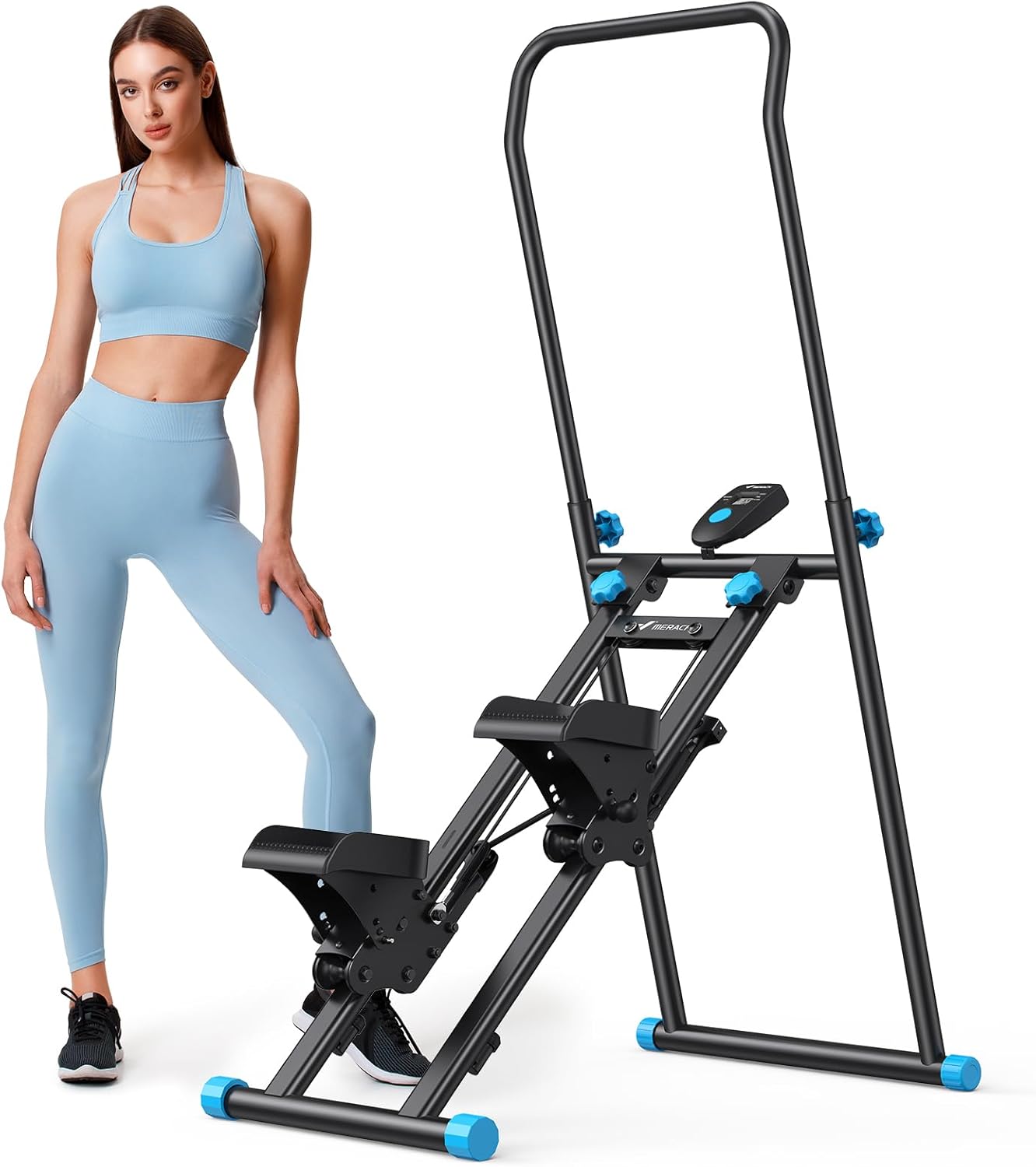
In terms of calorie burn per minute, a well‑designed vertical climber like the MERACH Stair Stepper Vertical Climber usually has the edge. MERACH states that 20 minutes on its climber can match 20 minutes of jogging or even longer sessions of swimming, yoga or cycling, thanks to full‑body engagement of legs, glutes, core and upper body. You’re essentially doing a standing climbing motion with resistance, so the metabolic demand is high. A mini stepper such as the Niceday Mini Stepper focuses more on the lower body, but with its removable resistance bands you can involve arms and shoulders too. User reviews highlight that it’s ideal for keeping heart rate up throughout the day, making it perfect for frequent short bouts of cardio. If you only have 15–20 minutes and want the maximum burn, the vertical climber wins; if you prefer multiple shorter, less intense sessions, the mini stepper is easier to stick with.
Joint impact and comfort for knees, hips and back
Impact on joints is a major concern for home exercisers. The Niceday Mini Stepper uses dual hydraulic cylinders and an up‑down motion with oversized, non‑slip pedals. This provides a smooth, controlled step that most reviewers describe as joint‑friendly, especially when using moderate resistance and avoiding slamming the pedals to the base. The MERACH Vertical Climber goes further with a “scientifically engineered” stride length to protect knees while still engaging the full lower body. Because you’re standing tall and using the handlebars, load is more evenly distributed between upper and lower body. Users who assemble it correctly report a comfortable motion that challenges muscles without the pounding of running. In general, those with very sensitive knees may find the shorter, shallower stroke of a mini stepper more forgiving, while the vertical climber suits healthy joints looking for a tougher, yet still low‑impact, workout.
Noise levels: apartment‑friendly cardio?
For many buyers, noise is the make‑or‑break factor. The compact Niceday Mini Stepper is praised for being relatively quiet thanks to its hydraulic system, but several reviewers note that if the pedals hit the base, vibration can echo through hard floors and disturb light sleepers. Using a mat and avoiding bottoming out the step helps. The MERACH Vertical Climber uses a mechanical stepping and sliding system designed for low‑impact, low‑noise operation, but the longer stroke and taller frame can generate more perceived movement noise, especially on upper floors. Still, many users describe it as suitable for home workouts, particularly when folded out on a solid surface with a mat underneath. If you live in a flat with thin walls, the mini stepper might be easier to keep discreet; in a house or on a ground floor, the vertical climber is usually fine for early‑morning or late‑night sessions.
Space, portability and storage at home
When it comes to space‑saving home gym equipment, both machines are compact, but in different ways. The Niceday Mini Stepper is genuinely tiny: about 41 x 31 x 23 cm and just 6.74 kg. It arrives pre‑assembled and can slide under a bed, into a wardrobe or even fit beside a desk for quick cardio breaks, making it ideal for small flats and shared spaces. The MERACH Vertical Climber has a taller footprint (around 86 x 56 x 133 cm when in use) but features a foldable design that lets you store it against a wall or in a corner. At 15.1 kg it’s still manageable to move, and the adjustable handlebars and pedals help it fit different users. If you truly have minimal floor space, the mini stepper is unbeatable; if you can spare a corner for a foldable frame, the vertical climber gives you a more gym‑like feel without dedicating a full room.
Which suits your fitness level and training style?
Your ideal home cardio tower depends on how you like to train. The Niceday Mini Stepper is perfect for beginners to advanced users who want low‑impact, snack‑sized workouts throughout the day. Its LCD monitor tracks time, steps and calories, and the resistance bands add light upper‑body work, making it easy to rack up movement without changing clothes or blocking the TV. The MERACH Stair Stepper Vertical Climber is better for structured HIIT or 20–30‑minute full‑body sessions: you can adjust pedal height and handlebar position, push intensity, and use the LCD display for real‑time tracking of steps and calories. If your goal is maximum conditioning and strength endurance in less time, the climber is more demanding; if consistency and convenience matter more than pure intensity, the mini stepper keeps things simple and sustainable.
In summary, both mini stair steppers and vertical climbers are excellent space‑saving options for home cardio. The MERACH Vertical Climber offers higher potential calorie burn and a true full‑body workout in short sessions, while the Niceday Mini Stepper wins on portability, ease of use and joint‑friendly everyday movement. Think about your space, your neighbours, and whether you prefer intense but short workouts or frequent light‑to‑moderate sessions. Match the machine to your routine, and either option can become a powerful, low‑footprint ally for your home fitness goals.