Training at home gives you the freedom to choose exactly what you wear on your feet – from totally barefoot to ultra-cushioned shoes. But that choice also affects your stability, joint comfort and even how hard your muscles work. In this guide we break down when it makes sense to go barefoot, when minimalist shoes shine, and when a more cushioned trainer is the safer and more comfortable option for your home workouts.
Barefoot basics: when no shoes is the best shoe
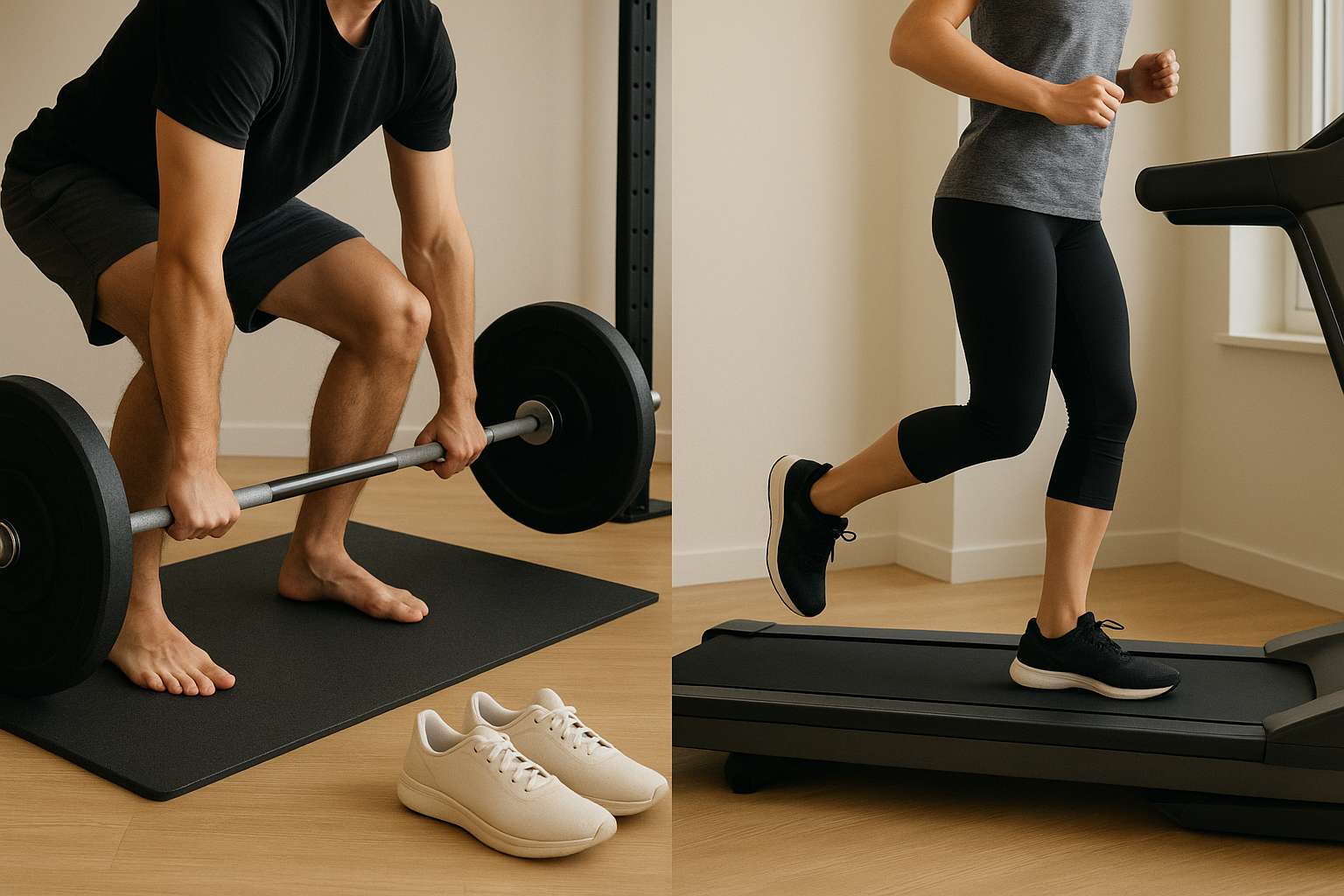
Exercising barefoot at home can improve proprioception (your sense of where your body is in space), strengthen the smaller muscles of the feet and ankles, and give you a rock-solid connection to the floor. For slow, controlled strength training like squats, deadlifts or glute bridges, bare feet often offer the best stability, especially on a firm surface such as rubber tiles or parquet. However, barefoot work is not ideal for everyone: if you have a history of plantar fasciitis, very hard floors, or need extra arch support, you may want a compromise rather than going completely barefoot. Always progress gradually so your feet can adapt to the extra load.
Minimalist shoes for strength and functional training
When you want a barefoot-like feel but still need some protection, minimalist training shoes can be a smart choice for home strength workouts, kettlebell sessions and functional training. A good minimalist shoe combines a thin, flexible sole, a relatively low stack height and a wide toe box so your toes can splay naturally, while still shielding you from cold, dirt and small impacts. Compared with heavily cushioned trainers, they help you push more evenly through the floor during squats and lunges, and make balancing exercises – like single-leg Romanian deadlifts or Bulgarian split squats – feel more connected and controlled. They are also a useful middle ground if you train in a shared space and prefer not to be completely barefoot for hygiene reasons.
What to wear for HIIT and plyometric workouts
High-intensity interval training and plyometric workouts at home involve jumping, rapid changes of direction and repeated impacts. Here, full barefoot training is usually too aggressive for most people’s joints and soft tissues, especially on hard floors. A lightly cushioned, stable shoe tends to be the best compromise: look for a trainer with enough shock absorption in the heel and forefoot to blunt the impact of burpees, squat jumps and skaters, but not so soft that you feel wobbly on lateral moves. A lower heel-to-toe drop can help you land more on the midfoot rather than heavily on the heel, while a firm heel counter keeps your ankle from rolling. If you enjoy both strength and HIIT, owning one pair of secure, moderately cushioned cross-trainers will cover most of your fast-paced home sessions.
Dance workouts and cardio: protecting joints while staying light
For dance workouts, aerobics or follow-along cardio classes in your living room, your footwear should balance cushioning, lightness and the right amount of grip. Very grippy rubber outsoles can make pivoting and twisting harder on the knees, while going completely barefoot can be tough on ankles and calves when choreography involves lots of bouncing. A flexible shoe with moderate cushioning and a smoother outsole helps you spin and step without sticking to the floor. If your routine is low-impact – think dance-based toning with minimal jumping – minimalist shoes or even barefoot on a non-slip mat can work. For higher-impact, constantly jumping dance cardio, a cushioned trainer will better absorb repetitive forces and keep the session comfortable and sustainable over time.
Treadmill sessions: when cushioning really matters
Running or power walking on a home treadmill places repeated, predictable stress on your joints, so this is the context where cushioned running shoes are the clear winner. Treadmill belts are slightly forgiving, but not enough to replace proper shock absorption. Choose a shoe with adequate midsole cushioning tuned to your body weight and weekly mileage, and with the right support for your gait – neutral or stability, depending on how much you pronate. Minimalist or barefoot running on a treadmill is best left to advanced runners who have gradually conditioned their feet and calves, as the combination of repetitive motion and relatively hard surface can quickly overload unprepared tissues. For most home athletes, a well-fitted, cushioned trainer will make treadmill sessions safer, quieter and more enjoyable, especially during longer runs or intervals.
In summary, the best footwear for your home workouts depends on the kind of session you are doing and your individual needs. Barefoot or minimalist shoes shine for strength and control-focused training, while cushioned, stable trainers are better for HIIT, dance cardio and treadmill running. Consider your history of injuries, your flooring and how each option feels over a full workout, and don’t be afraid to rotate between different setups to get the ideal blend of performance, comfort and long-term joint health.