
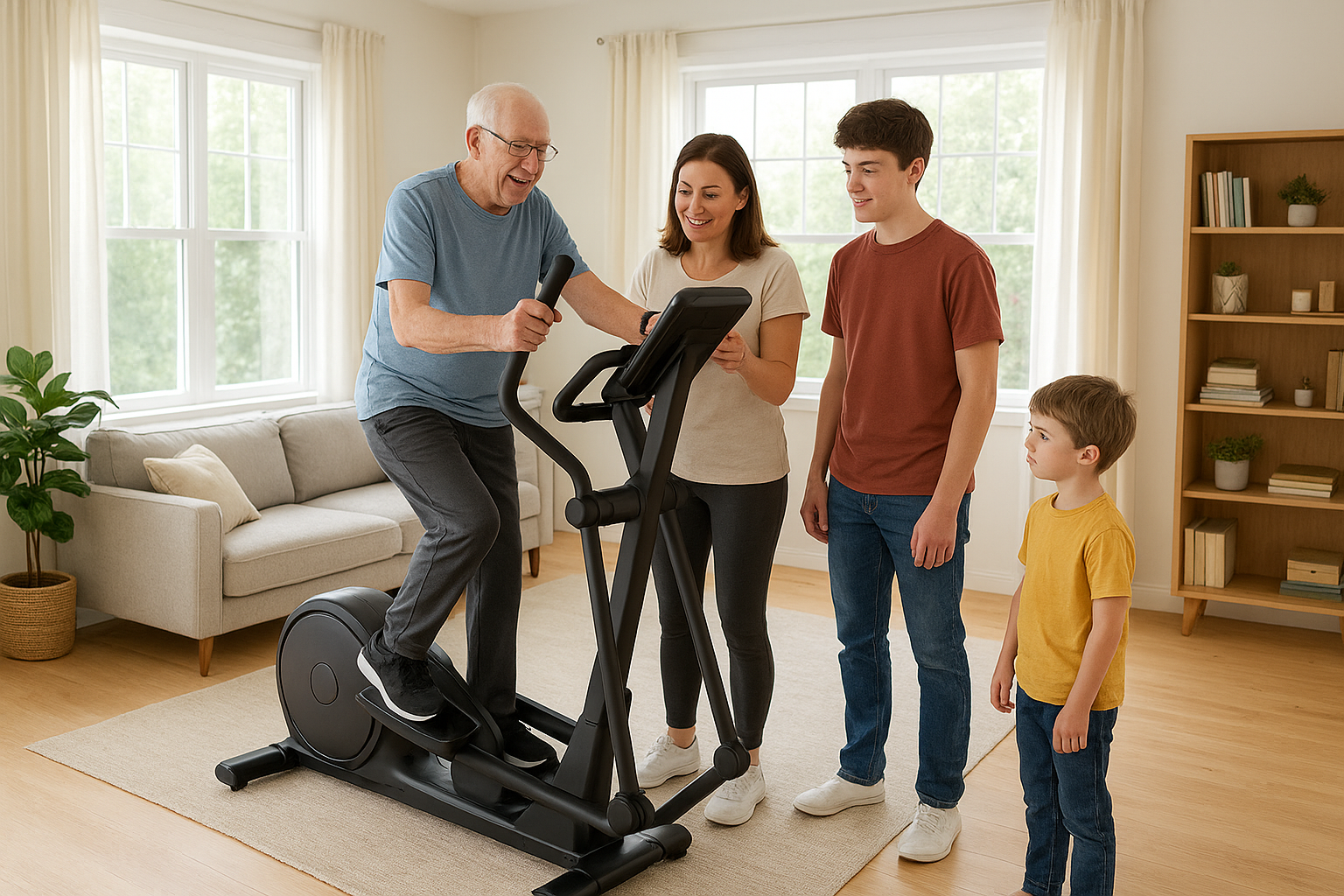
Creating a home gym that truly works for the whole family can be challenging, especially when everyone has very different fitness levels. The good news is that a single, well-chosen cardio machine can serve parents, kids and grandparents safely and effectively. By focusing on adjustability, safety and smart use of user profiles, you can turn one device into a flexible training hub for every age.
Choosing the right family-friendly cardio machine
For mixed-age households, a versatile and low-impact device is usually the best choice. A solid option is an adjustable cross trainer or exercise bike, which is easier on joints than a treadmill and suits both beginners and fitter users. When you evaluate products on Amazon, look for models with multiple resistance levels, clear consoles and stable frames. For example, a mid‑range cross trainer that offers several pre-set programmes and smooth magnetic resistance can adapt from gentle rehab-style sessions to tougher interval workouts, simply by changing the settings rather than the machine itself.
Key adjustability features for different fitness levels
To share one cardio machine comfortably, adjustability is crucial. Prioritise a wide resistance range so that grandparents can train at light intensity while stronger users still have enough challenge. Adjustable seat height, handlebar position and stride length (where available) help users of different heights maintain joint-friendly posture. A console that allows you to tweak speed, resistance and programme intensity in small increments makes it easier to progress steadily without big jumps. These features ensure that the same machine can be used for gentle daily movement, structured cardio training and even sport-specific conditioning.
Safety features for kids, adults and seniors
When a cardio machine is shared by children and older adults, safety becomes non‑negotiable. Look for a clearly visible emergency stop button on treadmills and sturdy, non‑slip pedals with safety lips on bikes and cross trainers. Handrails or support handles should be easy to grip for those with reduced balance. A stable, wide base helps prevent wobble during use. It is also wise to choose machines with intuitive controls so no one accidentally starts at high speed or heavy resistance. At home, position the device with clear space around it, set ground rules for supervised use by kids, and encourage seniors to begin with low intensity while holding the handles until confidence improves.
Making the most of user profiles and tracking
Many modern cardio machines include digital user profiles that can store age, weight and preferred training settings for each person. Using these profiles properly turns one device into several personalised setups. Parents can save interval workouts, grandparents can store gentle heart‑health programmes and teenagers can log short performance‑oriented sessions. Even simple consoles that track time, distance, speed and calories help users see progress and stay motivated. Consider pairing the machine with fitness apps or wearables so each family member can monitor heart rate, weekly volume and recovery, making training safer and more engaging across all fitness levels.
Workout ideas for every age and goal
Once the machine is set up, plan simple, age‑appropriate routines. For grandparents, start with 10–15 minutes at very low resistance, focusing on smooth movement and steady breathing, and gradually increase duration. Parents can try 20–30 minutes of moderate intensity or short interval training, alternating easy and harder periods for time‑efficient fitness. Teenagers might enjoy performance challenges, such as distance targets or timed efforts, as long as technique and safety are supervised. To keep things fun, create a family schedule and rotate music playlists or mini‑challenges (like step count or distance goals) so everyone feels included and the machine becomes part of a healthy daily routine.
Sharing one cardio machine among family members with very different fitness levels is entirely possible with careful selection and setup. Focus on wide adjustability, strong safety features and smart use of user profiles so each person has a tailored experience. By designing simple, appropriate workouts for kids, adults and seniors, your home device can support long‑term health, encourage regular movement and turn your home gym into an inclusive space where everyone can train confidently.









