
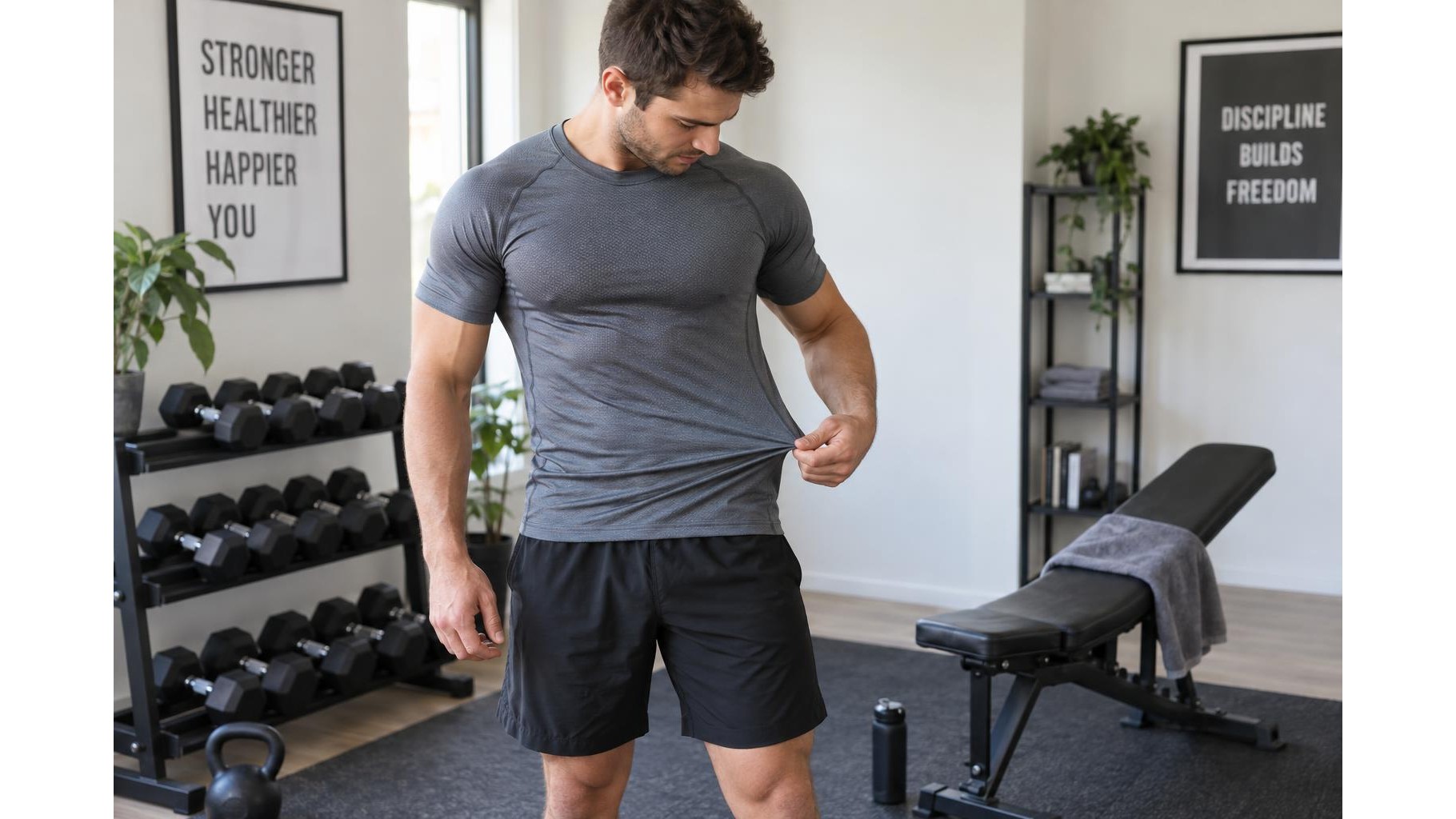
A compression shirt can make a useful base layer for home training, but close-fitting does not automatically mean supportive or comfortable. The right choice depends on how the fabric feels during movement, how well the shirt manages heat, and whether its fit suits your workout. Use the checks below to assess compression shirts for lifting, circuits and indoor cardio without assuming that tighter is always better.
Choose a comfortable level of compression
Compression should feel snug and even, not restrictive. A suitable shirt follows your torso without digging into your shoulders, ribs or waist, and you should be able to take a full breath, brace your abdomen and raise your arms freely. For lifting, a close fit can keep fabric from bunching beneath a bar or bench. For circuits, moderate compression may feel secure through repeated changes of direction. Avoid sizing down to chase a stronger sensation: excessive tightness can distract you, limit movement and make the garment unpleasant as your body warms up. Check the brand’s size chart and use your measurements rather than relying only on your usual T-shirt size.
Look for breathable, moisture-managing fabric
Most training compression shirts use synthetic blends, often polyester with elastane, to combine stretch with shape retention. Read the fabric description and consider the room where you train. In a warm home gym or during indoor cardio, a lightweight, quick-drying knit with breathable panels may feel more comfortable than a thick, heavy fabric. A little elastane helps the shirt move with you, but fabric composition alone does not guarantee comfort: knit density, finish and construction matter too. If you tend to overheat, prioritise ventilation and a light feel. For cooler rooms or slower strength sessions, a slightly more substantial layer may be welcome.
Inspect seams and construction
Seams can affect comfort as much as the fabric. Flat or low-profile seams are less likely to rub under the arms, across the shoulders or along the sides during repeated repetitions. Check that stitching looks secure and that there are no rough labels or bulky joins where a bench, backpack or equipment might press against the skin. A shirt with stretch panels or a gusseted underarm can allow a fuller range of motion, but the cut should still feel stable when you reach overhead or rotate your torso. If you can try it on, move through a few squats, presses and arm raises before deciding.
Assess fit in the movements you train
A good fit is close without pulling. The hem should stay in place when you hinge or reach, while the sleeves should not twist or pinch as you bend your arms. Check for tension lines across the chest, shoulders or back; these can signal that the shirt is too small or the cut does not suit your proportions. Equally, excess fabric at the waist may bunch beneath a lifting belt or ride up during burpees. Remember that compression garments are often designed to fit more closely than everyday shirts, so follow the maker’s guidance and assess comfort across your whole range of motion.
Match the shirt to your home workout
For barbell or dumbbell lifting, choose a smooth, close-fitting layer that will not bunch under equipment and lets you brace comfortably. Circuit training often calls for a balance of stretch, secure coverage and quick drying, since effort and body temperature can rise quickly. For indoor cardio, prioritise breathability, lightness and seams that stay comfortable through repeated arm movement. A compression shirt is optional: it can reduce loose fabric and provide a contained feel, but it does not replace appropriate training technique, a suitable warm-up or recovery clothing. Wash and care for it according to its label to help preserve stretch and fit.
Make comfort the deciding factor
Choose a compression shirt that feels supportive while allowing full breathing and unrestricted movement. Compare the size chart, fabric weight, ventilation, seam placement and fit during exercises similar to your own. The best option is not necessarily the tightest or most technical-looking; it is the one you can wear comfortably for the session you actually do. If a close-fitting layer causes discomfort, overheating or distraction, a regular athletic shirt may be the better choice for your home workouts.









