
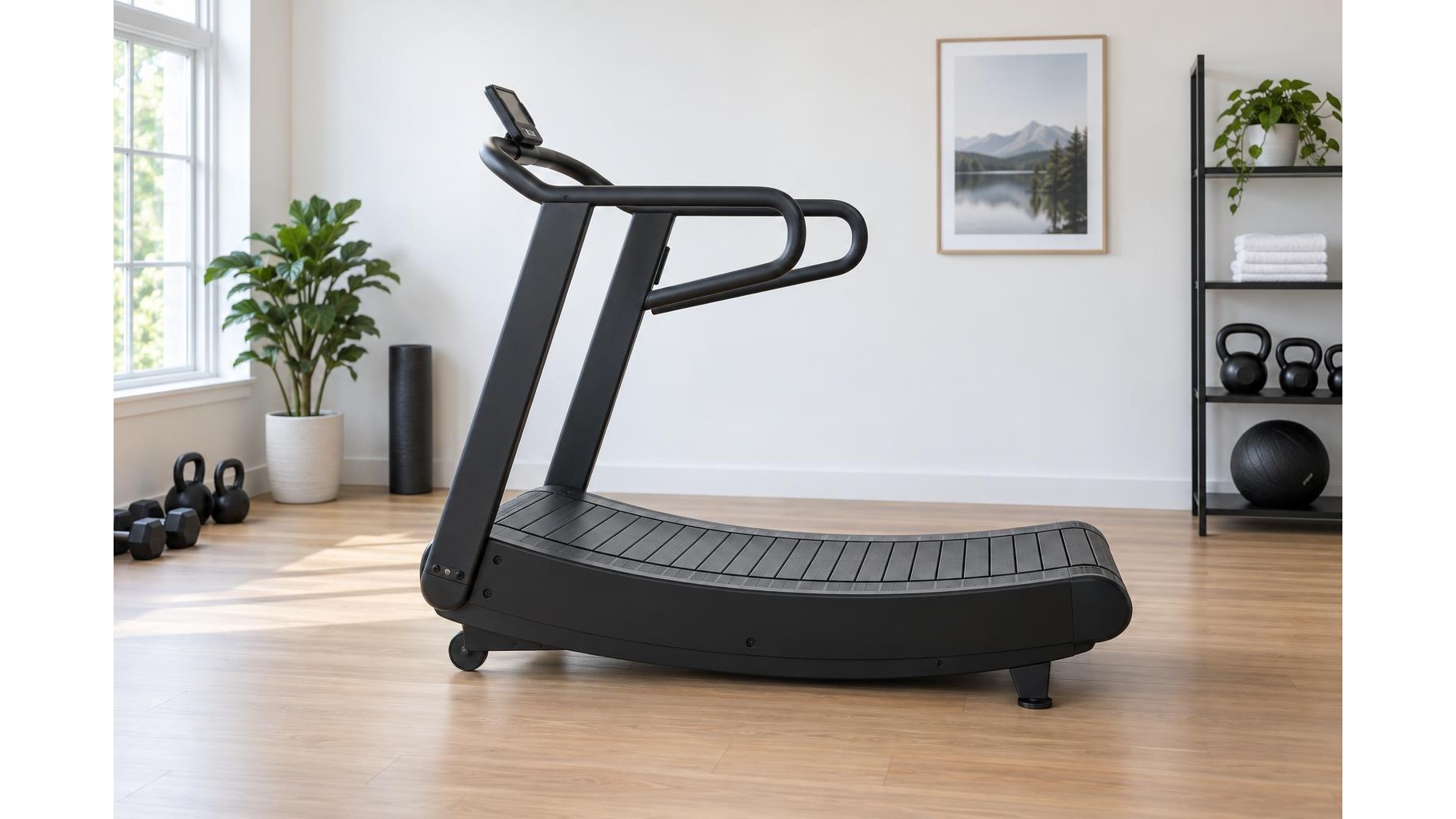
A compact curved treadmill can look like a space-saving way to bring running indoors, but its distinctive shape is only part of the decision. Most curved-deck models are non-motorized: the runner supplies the force that moves the belt, so the experience differs from jogging on a conventional powered treadmill. Before buying, consider how that effort affects your training, whether the running surface suits your stride, and what the machine will demand of your room and maintenance routine.
Understand the extra effort
On a manual curved treadmill, your foot placement helps drive the belt. This can make it feel more demanding than walking or running at the same apparent pace on a motorized machine. That responsiveness may suit short intervals, varied speeds and workouts where you want to control the belt directly. It may be less appealing if your priority is relaxed, steady cardio with minimal effort to maintain a pace. Try one in person if possible, and check whether walking, jogging and faster efforts all feel comfortable. Ask how the model handles resistance and whether its controls let you track the metrics you care about. Do not assume that a curved deck automatically makes a workout better; the right choice depends on your goals and how you prefer to train.
Check the deck against your stride
Curved decks vary in length, width and shape, so the word “compact” does not tell you whether a treadmill will fit your natural gait. A shorter or narrower belt may feel restrictive, particularly when you run quickly or take longer strides. If you can test the machine, walk and run at your usual pace, staying in a natural position rather than deliberately shortening your steps. At home, compare the manufacturer’s usable belt dimensions with your stride and the space you need to step on and off safely. Also check handrail placement, step-up height and the position of any display. These details affect everyday comfort as much as the curve itself.
Measure the whole footprint
Look beyond the advertised frame dimensions. Measure the intended floor area, then allow room around the treadmill for mounting, dismounting and safe use. Check the machine’s weight, delivery access and whether it can be moved or stored upright; do not presume that a compact model folds. A heavy frame can be difficult to reposition, while a light one may need a suitable, stable floor. Consider ceiling clearance if you plan to run, and protect flooring against pressure marks and vibration. Confirm the assembled dimensions and storage instructions in the product manual before ordering.
Review features and running data
Manual models can differ substantially in console features. Check whether the display shows time, speed, distance and other metrics you value, and find out how those figures are measured on a self-powered belt. Some machines include preset workout options or connected-app support; others keep things simple. Confirm what is included, whether batteries or a power source are needed, and whether a phone or tablet holder is provided. Treat stated maximum user weight and warranty terms as essential buying checks, not optional fine print. Choose useful, clearly explained features over a long specification list you are unlikely to use.
Plan for care and ongoing costs
With no drive motor, a manual treadmill avoids some motor-related components, but it is not maintenance-free. Follow the maker’s instructions for cleaning the belt and frame, checking fasteners, inspecting moving parts and lubricating components if required. Ask whether belt tension or tracking needs adjustment and whether servicing should be carried out by a technician. Confirm spare-part availability, warranty coverage and return arrangements before purchase. Regularly remove dust and sweat, and stop using the machine if you notice unusual noise, belt movement or damage. Simple upkeep can help preserve a smooth, predictable running feel.
A curved home treadmill may suit you if you want self-paced workouts, can accommodate its footprint and enjoy a more active role in driving the belt. It may be a poor match if you need motor-assisted pacing, a particularly long running surface or easy storage. Compare real dimensions, test the stride if possible, and check support and maintenance requirements before committing. Those practical checks matter more than the curve alone when deciding whether the machine belongs in your home cardio routine.









