
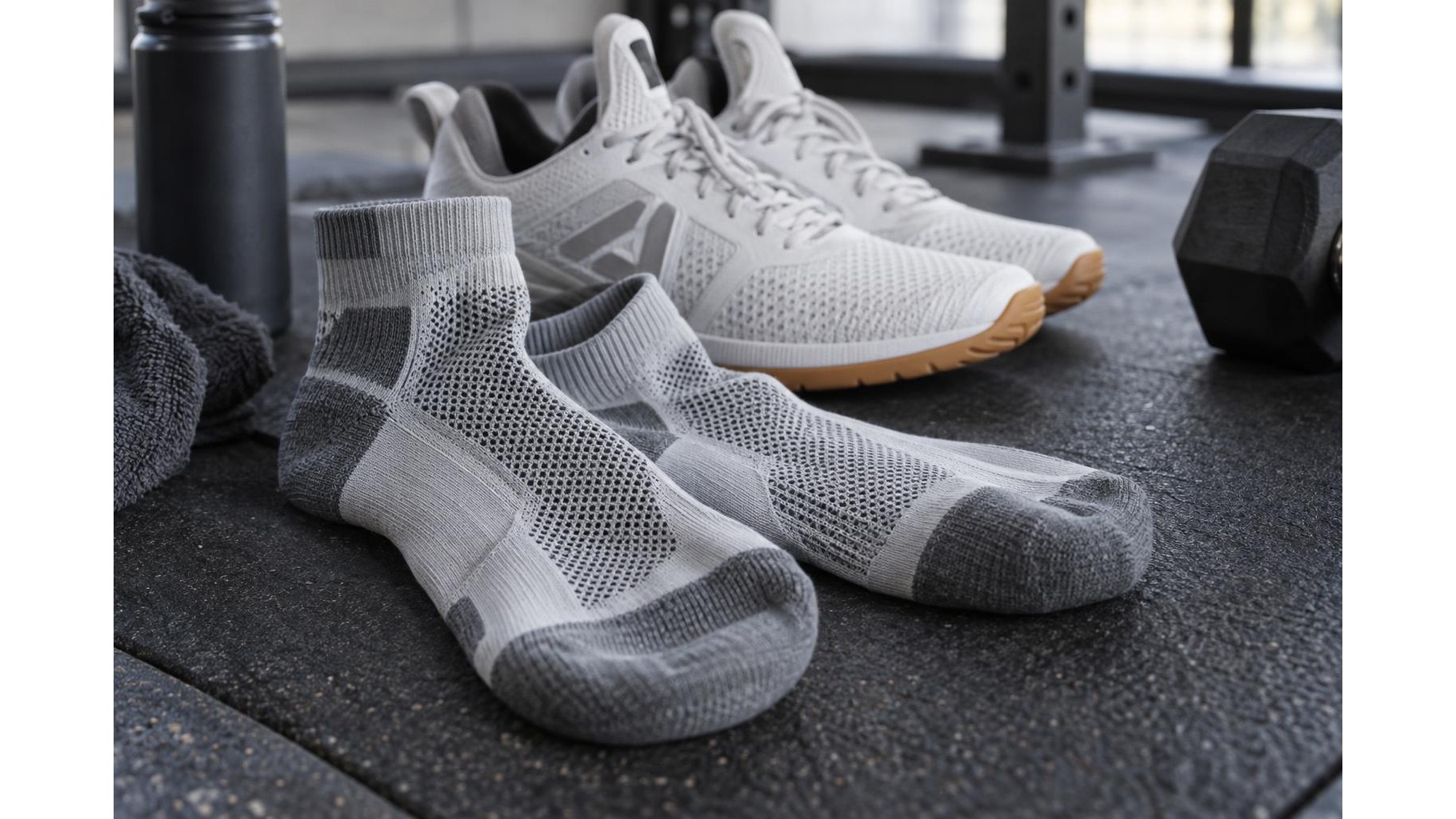
Hot rooms, hard floors and repeated effort can leave feet damp long before a workout ends. The right breathable workout socks help move moisture away from the skin, reduce friction and stay put inside your shoes. Choosing well is not simply a matter of picking the thinnest pair: fabric, fit, cushioning and construction all affect comfort during strength training, cycling and floor-based sessions.
Choose fibres that handle moisture
Look for technical blends made with synthetic fibres such as polyester or nylon, often combined with elastane for stretch. These materials can wick sweat towards the sock’s outer surface and dry more quickly than cotton, which tends to hold moisture against the foot. Merino wool blends can also manage humidity and odour, though they may feel warmer or cost more. Check the fibre composition rather than relying on labels such as “performance” alone. For frequent indoor training, a lightweight, quick-drying blend is usually a practical starting point. Avoid assuming that a high percentage of any one fibre guarantees comfort: yarn quality and knit structure matter too.
Match cushioning to the workout
Cushioning should support your activity without taking up so much room that the shoe feels tight. Light cushioning under the heel and forefoot can make lifting or circuit training more comfortable, while a thinner profile may suit cycling shoes, where a close fit and efficient pedal feel matter. For mat work, Pilates or mobility sessions, moderate cushioning can soften contact with the floor, but excessive padding may reduce stability during balance exercises. Think about the fit of your actual footwear: a sock that is comfortable in roomy trainers may feel cramped in a snug cycling shoe.
Look for ventilation where feet heat up
Mesh panels across the top of the foot can improve airflow, especially during indoor intervals when heat builds quickly. A thinner knit over the instep may also help, while a denser sole can preserve durability and comfort. Ventilation works best when the shoe itself allows some airflow; socks cannot compensate for footwear that traps heat. If your feet sweat heavily, consider a spare pair for longer sessions and change promptly afterwards. Wash socks after each workout and follow the care label, since detergent residue or fabric softener can affect the performance and feel of technical fibres.
Get the fit and seams right
A sock should sit smoothly against the foot, with a heel pocket that aligns with your heel and enough stretch to prevent sagging. Heel and arch support zones can help limit movement, but the fit should feel secure rather than compressive. Check for a flat toe seam or seamless toe construction: a raised seam can rub during repeated squats, cycling or floor transitions. Too much fabric at the toes can bunch and create pressure points; a sock that is too short may pull down. Use the size chart and assess the fit while standing, not just when holding the sock in your hands.
Consider height and construction for each session
Low-cut socks can work well in warm indoor spaces, but make sure they do not slip below the heel. Ankle or crew styles provide more coverage and may reduce rubbing from shoe collars or contact with equipment. For strength work, prioritise a stable fit and durable sole. For cycling, choose a thin, close-fitting design that does not crowd the shoe. For floor workouts, seek a smooth, flexible sock that stays in place through changes of direction. Grippers are useful only when the session and surface call for extra traction; they are not a substitute for a secure fit or suitable footwear.
In summary, choose quick-drying fibres, targeted ventilation and cushioning suited to your shoes and training style. A well-sized sock with a stable heel, smooth toe seam and no excess fabric can help keep sweaty indoor sessions more comfortable. If possible, test a pair during a typical workout and notice whether it stays dry enough, avoids hot spots and remains in place.









