
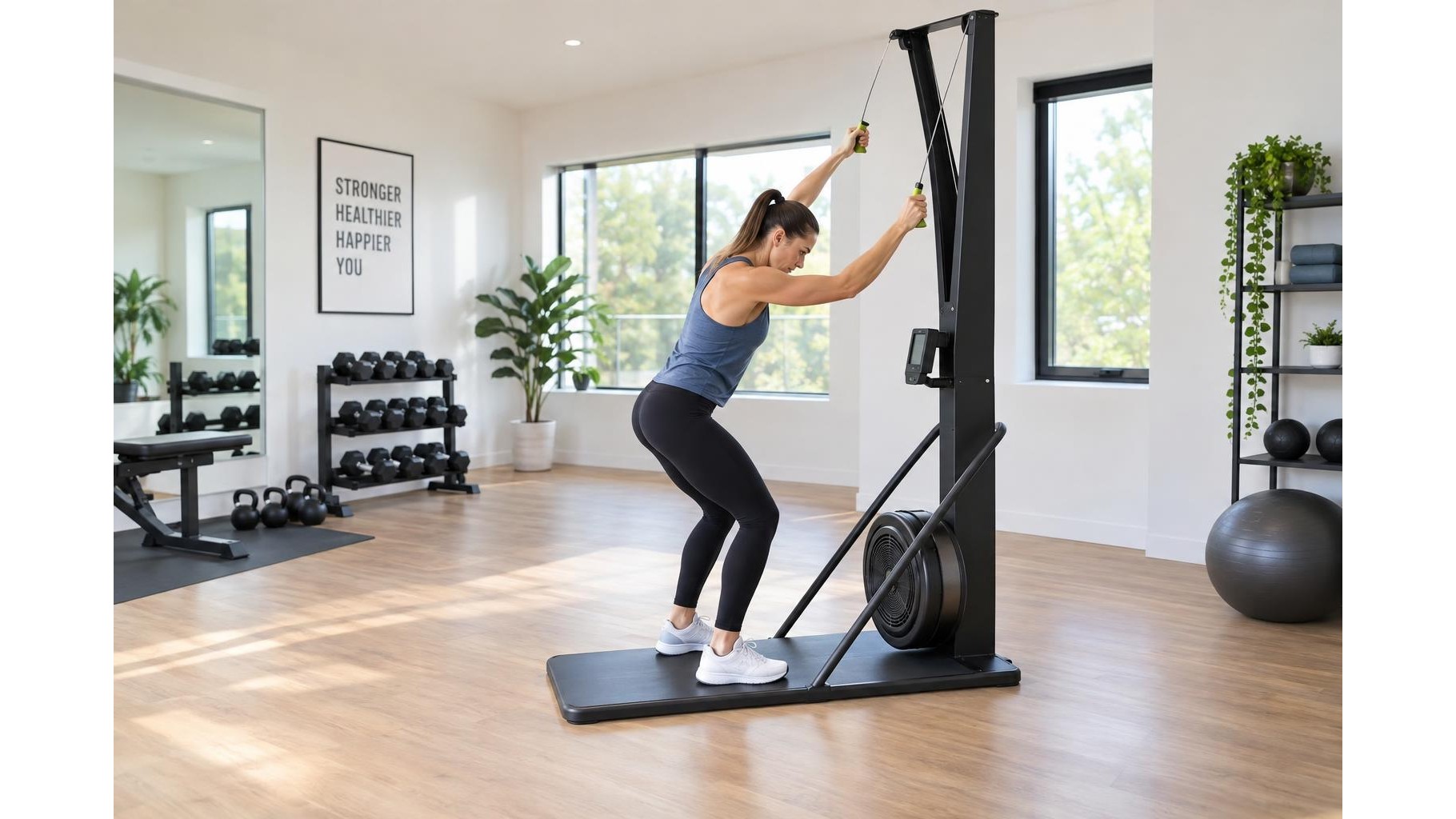
A compact ski trainer can bring a demanding, low-impact cardio session into a spare room, garage or corner of a home gym. The right choice depends on more than how small the machine looks in a product photo: movement quality, resistance, stability and clearance all affect whether it suits your training. Compare those practical details before buying, and consider how the trainer will fit into your routine as well as your room.
Start with the movement you want
Ski trainers use pulling handles to reproduce aspects of Nordic skiing, but the feel varies. Some encourage alternating arm strokes, while others allow a double-pole action with both arms working together. Look for a smooth cable return and a useful range of motion, so you can train with relaxed shoulders and a controlled finish rather than jerking the handles. For full-body cardio, you should also be able to bend at the hips and knees, brace your trunk and coordinate your legs without the machine forcing an awkward stance. If possible, try the movement in person or check demonstrations from several angles. Handle travel and stroke feel matter more than a long list of preset workouts.
Match resistance to your training
Resistance may come from air, magnets, or a combination of systems. Air resistance typically responds to how hard and fast you pull, which can suit intervals and self-paced sessions. Magnetic resistance often offers selectable levels and may feel quieter, although the sensation depends on the model. Check whether adjustment is simple while standing, and whether the lightest setting is genuinely manageable for warm-ups. A digital display can help track time, distance, pace or calories, but the metrics are estimates; a clear, readable screen and straightforward controls are more useful than complicated menus. Choose resistance that supports both steady aerobic work and short, harder efforts.
Measure the real footprint
Compare the machine’s dimensions in use, not only its storage measurements. The frame may be narrow, yet the handles and your arms need room to travel freely. Measure the intended position, then leave clearance around the sides and in front so you can step in, step out and move naturally. Check ceiling height too, especially if the trainer is mounted high on a wall. A floor-standing frame can be easier to relocate, but may occupy more space; a wall-mounted design can conserve floor area while requiring a suitable fixing surface. Include room for a mat, nearby accessories and safe access when deciding whether a compact model is truly a realistic fit.
Check stability and installation
Stable use depends on the base, the floor and, for wall-mounted trainers, the quality of the installation. Look for a rigid frame that does not rock during strong pulls, and check the manufacturer’s stated user-weight limit and mounting requirements. Wall fixings must suit the wall material; plasterboard alone may not provide the support needed. Confirm whether the package includes suitable hardware, and whether assembly needs two people or specialist tools. On a floor model, a level, non-slip surface can reduce movement. If you rent or cannot drill into walls, prioritise a freestanding design and check its assembled weight before purchase.
Prioritise comfort and upkeep
Handles should feel secure without forcing a tight grip. Consider their shape, surface texture and spacing, particularly if you plan longer sessions or have smaller hands. A smooth cable path, quiet return and easy-to-clean contact points can make regular use more pleasant. Review warranty coverage, replacement-part availability and the maintenance schedule, including any instructions for the cord or flywheel. Also check how the display is powered and whether a phone or tablet can be positioned safely without interfering with your stroke. Small usability details often determine whether a trainer becomes a dependable part of your home routine.
In summary, choose a compact ski trainer by balancing natural movement, appropriate resistance and a footprint that includes working clearance. Verify stability, mounting needs and handle comfort before committing, then compare ongoing upkeep and the metrics you will actually use. A carefully measured, well-installed machine can support effective full-body cardio without overwhelming your training space.









