
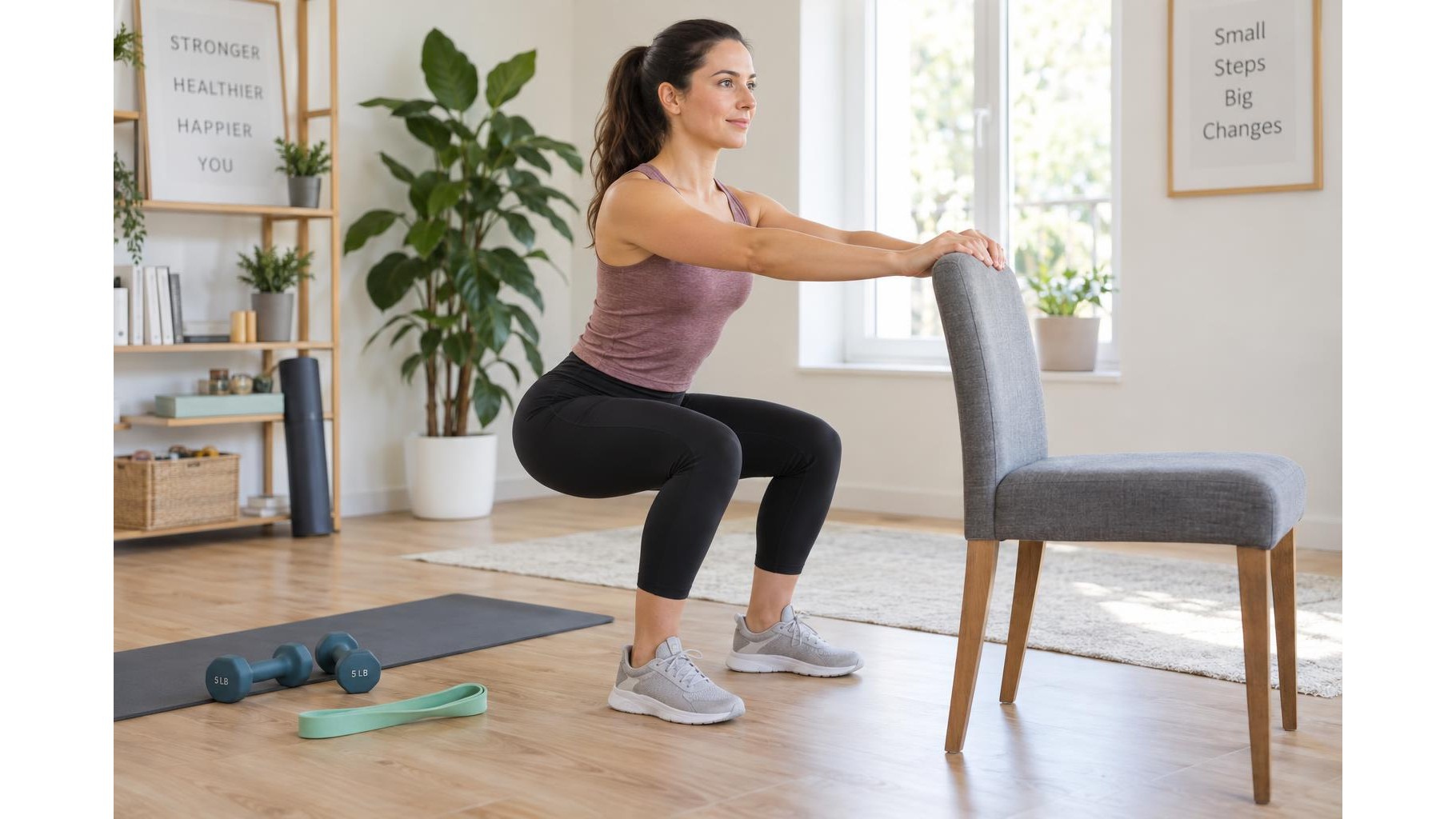
A strength session does not need jumping, complicated equipment, or repeated trips to the floor. This 30-minute low-impact standing strength workout uses controlled movement to train your legs, hips, balance, and upper body at home. Work at a comfortable pace, keep a stable chair or wall nearby for support, and choose bodyweight or light resistance. Adjust each movement’s range to suit your comfort and ability; the goal is steady, confident effort rather than pushing through discomfort.
Set up and warm up
Wear supportive footwear and clear enough space to step in every direction. Place a sturdy chair against a wall, or stand near a wall you can touch lightly. Begin with five minutes of easy marching in place, gentle shoulder rolls, and small hip hinges. Keep your steps quiet and your breathing relaxed. Before each exercise, find a comfortable stance and check that you can move without pain. If balance feels uncertain, keep one hand on the chair throughout.
Build strength with controlled squats
For about six minutes, practise chair-assisted squats. Stand with your feet around hip- to shoulder-width apart and the chair behind you. Send your hips back as you bend your knees, lowering only as far as feels comfortable; lightly touch the chair if useful, then press through your feet to stand. Try two sets of eight to ten repetitions, resting as needed. Keep your chest lifted and knees tracking in line with your toes. To make the movement easier, use a shallower range or hold the chair. To add challenge, pause briefly near the bottom without dropping into the seat.
Train the hips with gentle hinges
Spend five minutes on hip hinges to work the back of your body. Stand tall with soft knees and hands resting on your thighs or hips. Push your hips backward while keeping your back long, then squeeze your glutes gently to return to standing. Move slowly for two sets of eight to ten repetitions. The movement comes from the hips, not from rounding your back. Keep the range small if your hamstrings feel tight. If you want a little resistance, hold a light object close to your body, but bodyweight is plenty for practising good control.
Add supported balance and leg work
For six minutes, alternate supported side leg raises and heel raises. Hold the chair or wall with one hand, stand tall, and lift one leg a short distance out to the side without leaning your torso. Lower with control and repeat six to eight times per side. Then bring your feet parallel and rise onto your toes, lowering slowly for ten repetitions. These balance exercises should feel steady, not wobbly or rushed. Keep a firm support within reach, use a smaller lift if needed, and place both feet down between movements whenever you want to reset.
Strengthen the upper body
Use the final six minutes for standing upper-body movements. With light bands or small weights—or no equipment—complete eight to twelve rows, drawing your elbows back while keeping your shoulders relaxed. Follow with eight to twelve wall push-ups: place your hands on the wall, bend your elbows to bring your chest closer, then press away. Finish with slow overhead reaches if they feel comfortable, stopping below any painful range. Take short rests between sets and avoid holding your breath. Keep your wrists comfortable and use lighter resistance or fewer repetitions whenever your form starts to change.
Close with an easy reset
Use the last two minutes to slow your pace. March gently or stand with your hands supported while taking several relaxed breaths. Notice how your legs and shoulders feel, and allow your breathing to return toward normal before you finish. A successful home strength workout is one you can repeat safely. Record which movements felt comfortable and adjust the support, range, or resistance next time. Stop if you feel sharp pain, dizziness, or unusual shortness of breath, and choose a version that lets you stay in control.
This standing-only plan brings together squats, hip hinges, supported balance work, and upper-body strength without floor transitions. Keep movements smooth, use a chair or wall whenever helpful, and scale the session to your needs. With light resistance or bodyweight and a comfortable range of motion, you can build a consistent low-impact routine at home.









