
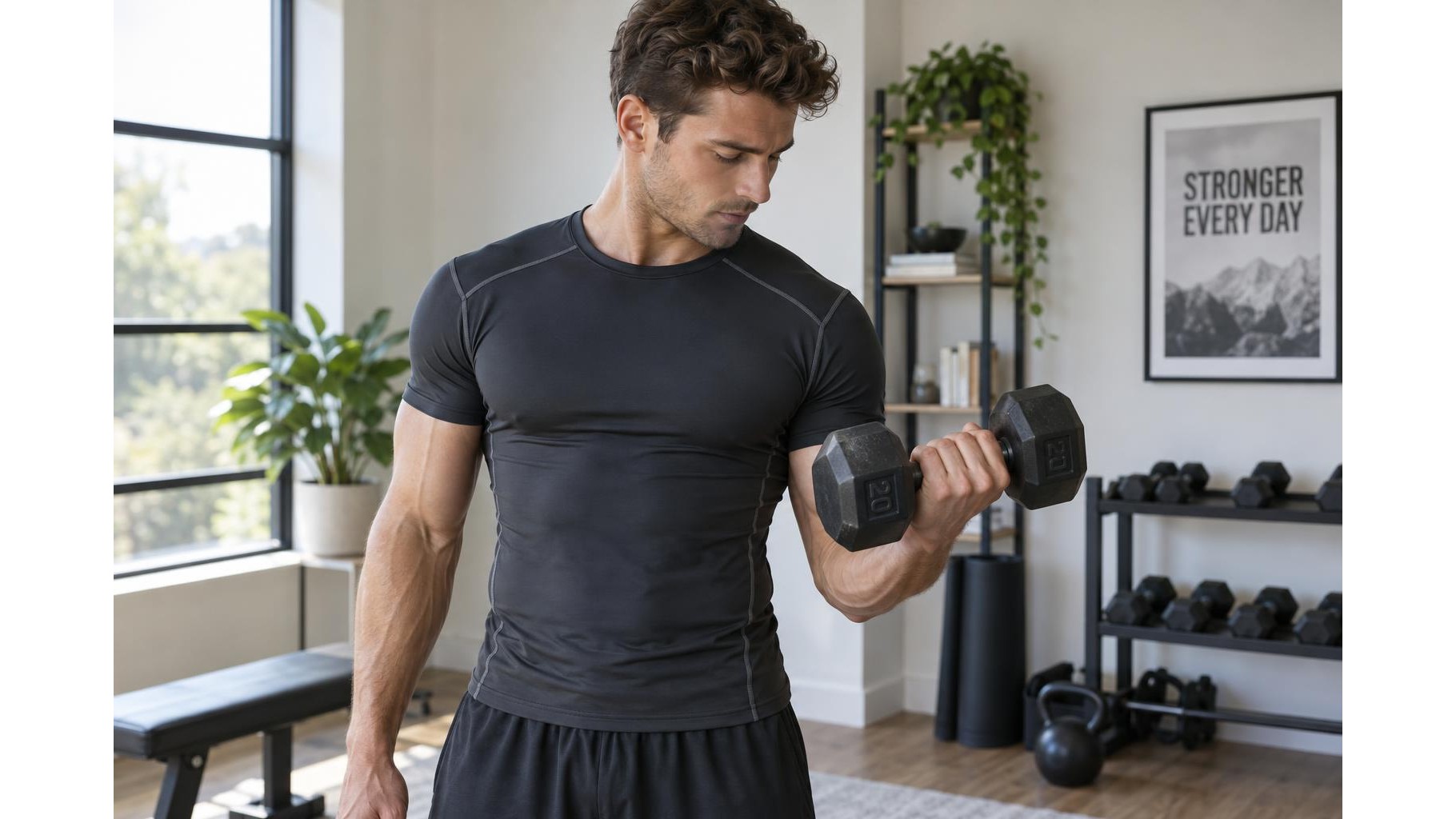
A good compression top should feel supportive without distracting you from the lift. At home, you may move from presses and squats to floor work in the same session, so comfort depends on more than a snug fit. Fabric weight, stretch, seams and neckline all influence how a top feels as you brace, reach and change position. Use the checks below to find a balance between close support and unrestricted movement.
Choose fabric weight for your training space
Fabric weight affects coverage, warmth and how a top feels against your skin. Lightweight, breathable fabric can suit warm rooms and higher-effort circuits, while a denser knit may offer more coverage and feel reassuring during slower strength sessions. Neither option is automatically better: consider room temperature, how much you sweat and whether you want to wear the top on its own. Look for a smooth, stretchy fabric that recovers its shape after being pulled. If possible, check that it is not see-through when stretched or bent over. A top that feels comfortable standing still should also remain comfortable when you hinge, squat and reach overhead.
Find compression that supports, not squeezes
Compression should feel close and even, not painfully tight. The fabric should stay in place when you raise your arms, yet allow a full breath and a comfortable brace. Excessive pressure around the ribs or shoulders can become especially noticeable during lifting, when you need to breathe deeply and position your upper body. Check the brand’s size chart and use the measurements it requests rather than choosing a smaller size for extra compression. If you are between sizes, consider your preferred feel and the garment’s stretch. A supportive top should not roll up, dig into your skin or restrict your range of motion.
Check seams where the body moves
Seams can cause rubbing under the arms, across the chest or along the sides, particularly during repeated reps. Flat or low-profile seams may reduce friction, while carefully placed panels can help the garment follow your shape. Run your fingers along the inside of the top to check for rough edges, bulky joins or labels that may irritate you. Then test a few movements: perform an arm circle, a bodyweight squat and a plank. Notice whether the fabric pulls across your shoulders or bunches at your waist. Smooth construction matters on the floor, where pressure against a mat can make a raised seam more noticeable.
Choose a neckline that stays comfortable
A neckline should sit securely without pressing on your throat or shifting as you move. A crew neck offers more coverage, while a lower neckline may feel cooler and less restrictive for some lifters. The right choice comes down to personal preference and how the collar behaves during exercise. Reach overhead, look down and lie on your back to check whether it rides up, gapes or rubs. Also consider how the neckline works with your training setup: straps, a lifting belt or other layers should not create uncomfortable pressure. A collar that feels unobtrusive in several positions is more likely to suit varied home workouts.
Use movement and care checks before committing
Try the top through the motions you actually train: brace and breathe, hinge at the hips, squat deeply, raise your arms and hold a plank. Check that the hem stays put, the shoulders do not bind and the fabric does not become transparent under tension. Follow the care label to help preserve stretch and fit. Washing after sweaty sessions, using a suitable cool or low-temperature cycle and avoiding high heat can help protect elastic fibres. Do not rely on a top that has become loose, distorted or uncomfortable to provide the same close fit over time.
Make comfort the final measure
The best compression top is the one that supports your chosen movements without demanding your attention. Match fabric weight to your room and training intensity, choose moderate compression, look for smooth seams and test the neckline in standing and floor positions. Use sizing guidance, then judge the fit through realistic movement rather than appearance alone. With a comfortable fit and sensible care, your top can be a useful layer for home strength training, from the first warm-up to the final set.









