Choose comfort that supports your training
A good training singlet should feel secure without restricting your shoulders, cling uncomfortably when you sweat, or distract you during a set. For home workouts, one top may need to handle presses, squats, circuits and warm-ups in a changing room temperature. Assess fabric weight, armhole shape, stretch, length and ventilation together: no single feature guarantees a comfortable fit. Use the checks below when comparing options, and judge the garment by how it moves on your body rather than by its appearance on a model.
Balance fabric weight and coverage
Fabric weight affects how a singlet hangs, feels and manages moisture. A very light knit can feel airy for conditioning, but may cling when damp or feel less substantial under a barbell. A heavier fabric can offer more coverage and a steadier feel, though it may retain more warmth. Look for a close, even knit that is not transparent when stretched, and check whether the care label gives clear washing instructions. If you train in a warm room, prioritise a breathable, quick-drying blend; if you prefer more coverage, choose a denser fabric that still moves freely.
Check the armholes and shoulder movement
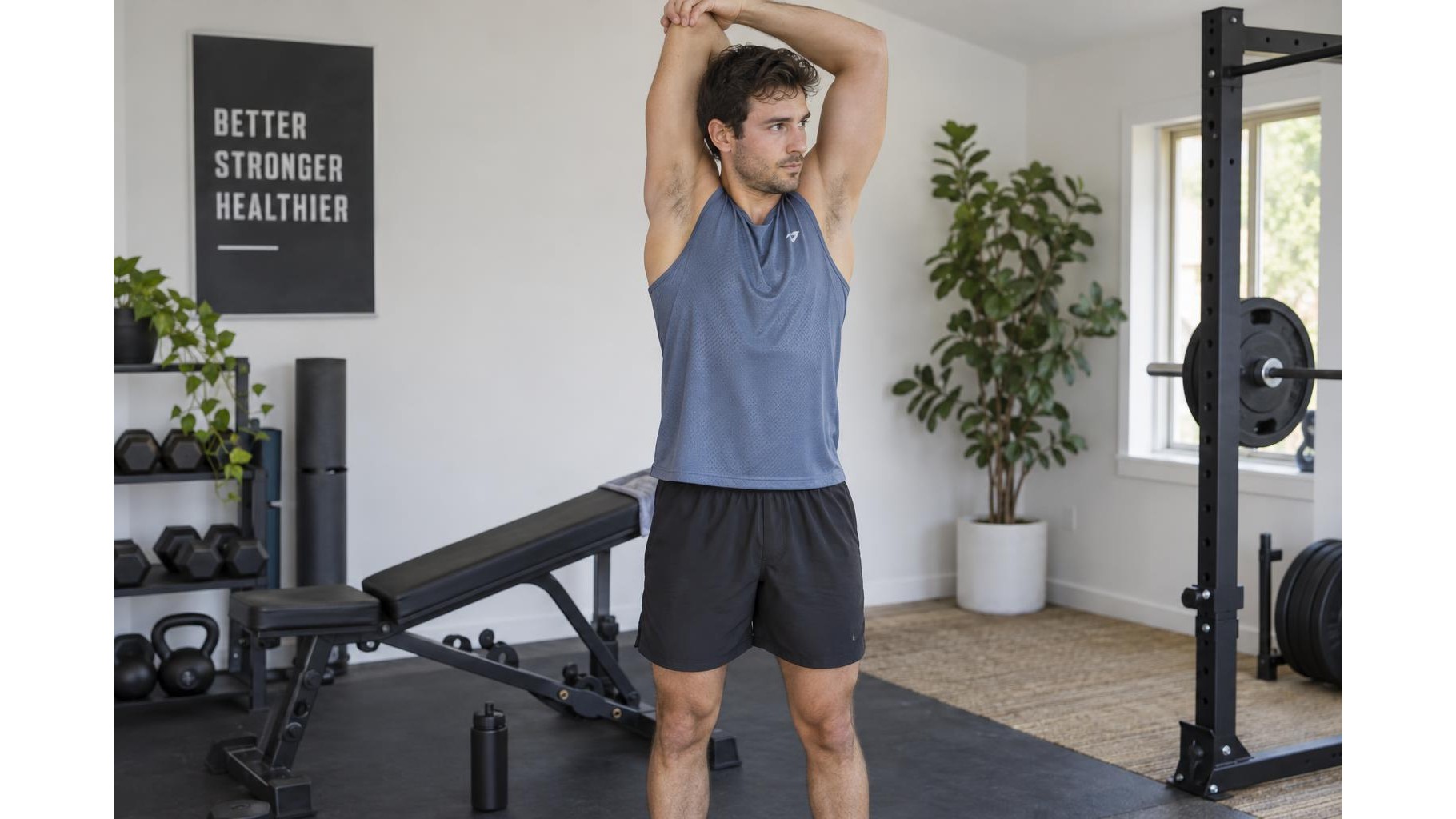
The armhole cut is central to support and freedom of movement. A low, wide opening can improve airflow and leave the shoulders free, but excessive exposure may let the garment shift during floor work or show more than you want when bending. A higher cut provides coverage, although it can rub near the armpit or restrict overhead reaches if the edge is tight. Try a few slow overhead presses, arm circles and push-up positions. The shoulder straps should stay in place, the seams should not dig in, and the fabric should not pull sharply across your chest or upper back.
Assess stretch without relying on size alone
A supportive singlet should stretch with a deep breath and a full reach, then recover rather than staying bagged out. Check the product’s size chart against your chest measurement, and compare garment measurements where available. Bodies with broad shoulders may need extra room across the upper back even when the waist size appears correct. If you have a fuller chest or midsection, look for a cut that does not strain at the seams or ride up when you bend. A slim build may benefit from a closer cut that does not flap, but it should still allow a full range of motion. When between sizes, consider your preferred fit and the fabric’s stated stretch.
Find a length that stays put
Length matters most when you hinge, squat or lie on the floor. A singlet that is too short can expose the lower back or ride up; an overly long hem may bunch beneath a waistband or catch during movement. Check the listed garment length and, if possible, compare it with a top you already find comfortable. Test the hem with a hip hinge and a deep squat. It should offer enough coverage without gathering awkwardly. A shaped hem or a slightly longer back can help maintain coverage, but the right choice depends on your torso length and how you wear your shorts.
Look for ventilation and signs of durability
Breathable panels or an open-knit construction can help heat escape, especially during intervals, but extra panels add seams that should lie flat and feel smooth against the skin. Before buying, inspect close-up photos for even stitching, reinforced stress points and tidy seam finishes. Read recent reviews for recurring comments about shrinking, fading, loose threads or fabric losing its shape after washing. A clear care label and practical washing instructions are useful signs that the garment is designed for repeat wear. Avoid judging quality by fabric thickness alone: a well-finished lightweight knit may outlast a bulky top with weak seams.
Choose the singlet you will reach for
The best supportive training singlet combines comfortable coverage with secure armholes, useful stretch, a stable hem and enough ventilation for your workout. Match the cut to your body shape and training preferences, then perform simple movement checks before removing tags. Compare fabric and construction details, consult the size chart, and consider how the top will feel after repeated washing. A thoughtful fit should stay comfortable through both lifting and conditioning without demanding constant adjustment.