
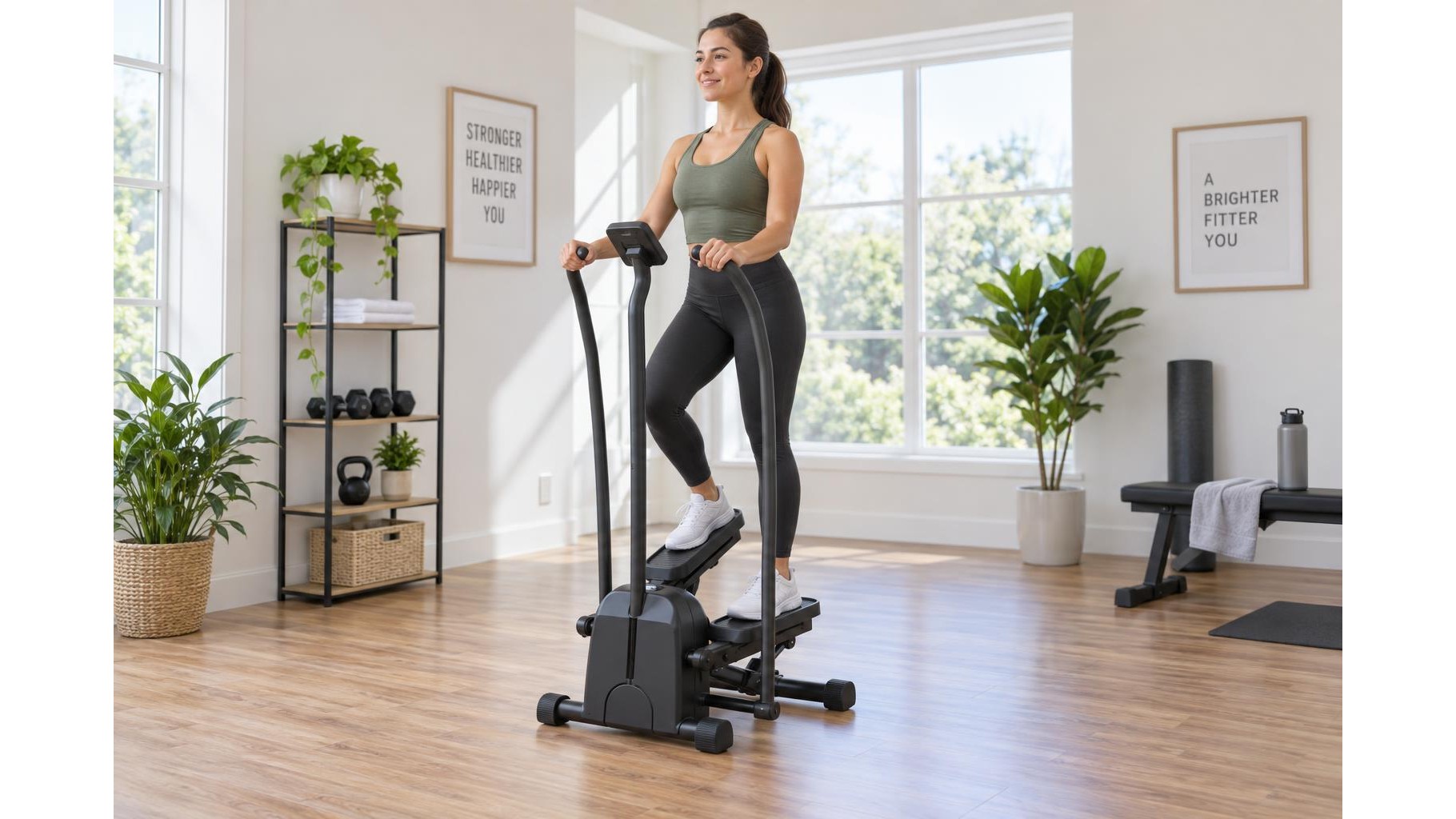
A compact stair climber can bring low-impact cardio into a small home, but machines with independent pedals do not all feel alike. Before buying, compare the pedal path, resistance controls, frame stability, operating noise and maximum user limits. A careful footprint check—and a brief movement test where possible—can help you choose a model that fits both your room and your routine.
Understand the pedal motion
On an independent-pedal stair climber, each foot moves separately rather than being locked into a single linked step. That can make the rhythm feel more natural, but the range of motion varies. Look for a smooth, controlled descent and enough pedal travel to create a comfortable stepping action without forcing you to lift your knees excessively. A very short stroke may feel more like rapid marching than climbing; an overly deep stroke can be tiring or awkward for shorter users. If you can test a machine, start slowly and notice whether both pedals move evenly, whether your heels stay supported and whether you can maintain a relaxed posture.
Check how resistance is adjusted
Compact models often use hydraulic cylinders or another resistance mechanism. Find out whether resistance is adjustable, how it is changed and whether adjustments affect both pedals consistently. Do not assume that a larger resistance setting automatically means a better workout: the key is being able to select a smooth level that lets you sustain a steady pace. Check the product information for any guidance on cooling or rest periods, particularly if the machine is intended for short intervals rather than long sessions. A display may track time, steps or calories, but these figures are best treated as workout prompts rather than precise measurements.
Assess stability and construction
Stability matters because alternating steps shift your weight from side to side. Examine the base width, frame design, pedal grip and any stabilising feet. On a hard floor, confirm that the machine sits flat and does not rock; on a mat, make sure the mat does not compress unevenly or slide. The frame should feel secure at the pace you intend to use, not just during a slow demonstration. Also check whether the pedals have enough surface area for your shoe size and whether the frame provides a safe place to hold on, if a hand support is included. Keep the climber on a level surface and leave clearance around it.
Compare noise and maintenance needs
Noise can affect where and when you train, especially in a flat or shared home. User reviews and product details may mention squeaks, clicking or hydraulic sounds, but a test is more useful if available: listen at both a gentle pace and a quicker cadence. Ask whether the manufacturer recommends tightening bolts or lubricating moving parts, and whether replacement components are available. A quiet machine that stays smooth with basic maintenance is more likely to suit regular home use than one that needs frequent adjustment.
Verify user limits and fit
Check the stated maximum user weight and follow the manufacturer’s guidance; do not choose a machine that only just meets your needs. Consider user height as well, since pedal travel and stride comfort can vary between builds. Measure the machine’s assembled length, width and height, then mark that footprint on the floor. Include room for stepping on and off, safe movement and storage access. Foldable designs may save space, but confirm how they lock and where they can be stored securely.
Test comfort for steady sessions
Before committing, try several minutes at an easy pace if a demonstration is possible. Notice whether the motion remains smooth, your knees track comfortably and your hips stay level. You should be able to keep a controlled rhythm without bouncing, gripping too tightly or leaning heavily on a support. If discomfort appears, stop and reassess the fit rather than pushing through it. For online shopping, compare dimensions, return terms and detailed owner feedback, paying particular attention to comments from people of a similar height and intended training style.
Choose for your room and routine
The right compact stair climber balances a comfortable independent pedal path with dependable stability, manageable noise and suitable resistance. Verify user limits, measure the complete workout space and consider storage before ordering. Most importantly, assess whether the movement feels controlled enough for the steady sessions you plan to do. A well-matched machine is one you can use comfortably and consistently, not simply the smallest or most feature-packed option.









