
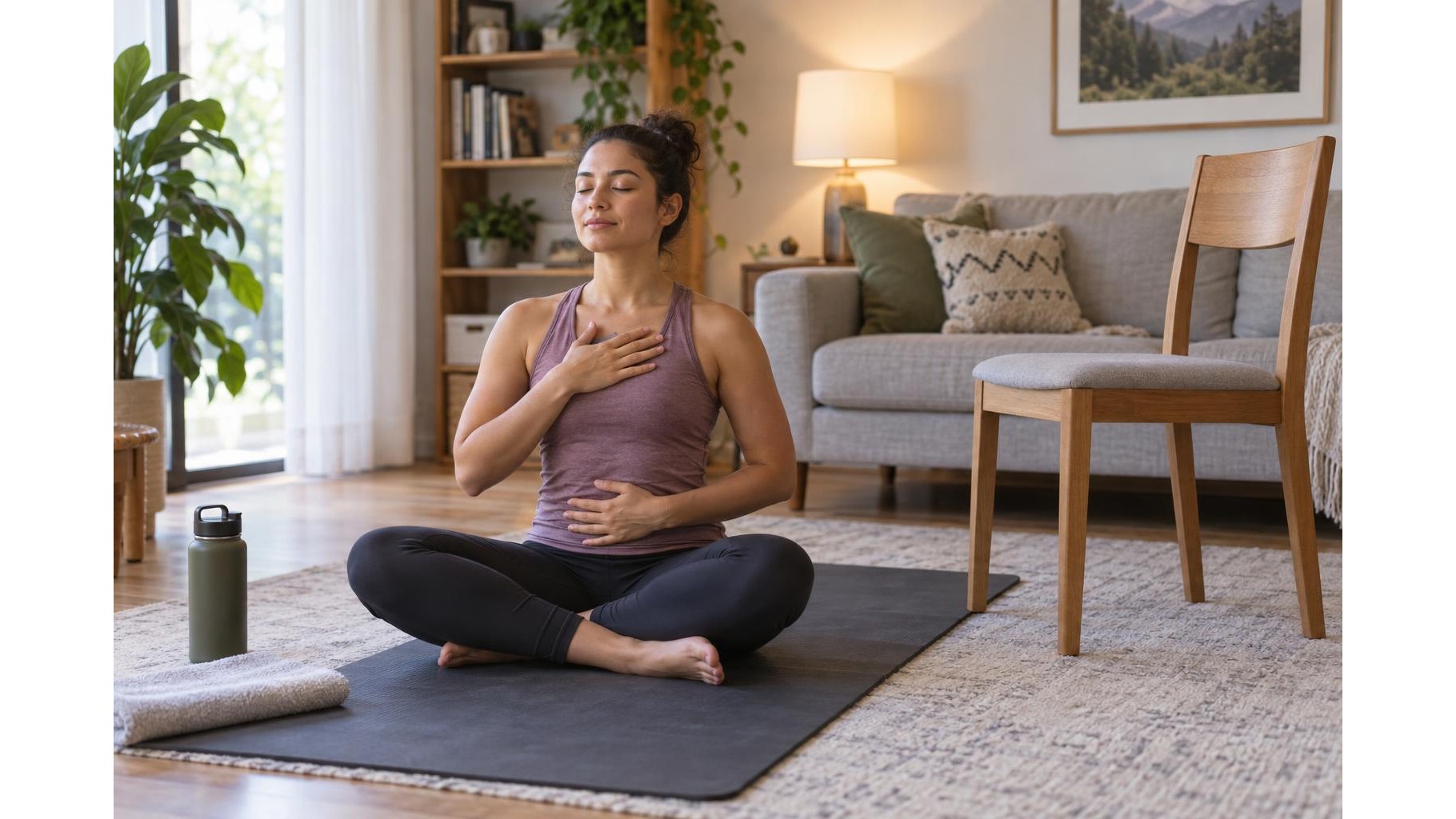
After a demanding day, you may want to move without turning recovery into another workout. This gentle reset combines comfortable breathing with easy mobility to help you shift out of stress and notice how your body feels. You need only a little floor space; a chair is optional. Keep every movement pain-free and unhurried, and remember that resting is a valid choice.
Settle in and find an easy breath
Choose a quiet spot where you can sit or lie down comfortably. Let your shoulders soften and your jaw unclench. Breathe naturally through your nose if that feels comfortable, noticing the movement of your ribs or belly. There is no need to take unusually deep breaths or hold them. If it feels pleasant, allow the exhale to be slightly longer than the inhale, without forcing it. Continue for about one or two minutes, returning to normal breathing whenever you wish.
Wake up the neck and shoulders gently
Remain seated or stand with your feet comfortably apart. Slowly turn your head a small amount to look right, then left, staying within an easy range. Return to centre between sides. Next, lift your shoulders a little toward your ears and let them drop; repeat several times without squeezing or straining. Try a few slow shoulder rolls, moving only as far as feels smooth. Keep your gaze level and avoid pushing your head or arms into a stretch.
Move the upper back with small rotations
Sit on a chair or stand tall, with your arms relaxed or loosely folded across your chest. Turn your chest slightly to one side while keeping your hips facing forward, then return to the middle and repeat on the other side. Let the movement come from your comfortable range rather than pulling with your arms. Follow with a few gentle arm reaches: raise one hand only as high as feels easy, lower it, and change sides. Reduce the range or skip any movement that feels uncomfortable.
Ease the hips and ankles
Use a stable chair or wall for support if balance is uncertain. Shift your weight gently from one foot to the other, keeping both feet grounded. If comfortable, lift one heel and lower it, then repeat with the other foot. Seated, you can also slide one foot a short distance forward and back to explore a mild hip movement. Keep the pace slow and the range modest. There is no target stretch to reach, and you do not need to match both sides exactly.
Adapt the reset and respect symptoms
In a small room, perform the whole routine seated, using only the space around your chair. You can shorten it to two minutes or choose just the breathing and one movement. Keep effort light enough that you can speak comfortably; avoid bouncing, breath-holding, and forcing flexibility. Stop if pain, dizziness, unusual breathlessness, numbness, or other symptoms appear or worsen. Sit or lie safely and allow your breathing to settle. Seek appropriate medical advice for concerning, persistent, or severe symptoms rather than trying to push through them.
A calming reset is about feeling more at ease, not achieving a perfect stretch or completing every step. Choose comfortable breathing, small pain-free movements, and a pace that suits your energy today. Make the routine shorter, use a chair, or rest whenever needed. With no equipment or large space required, this can be a simple transition between a stressful day and your evening—provided it feels comfortable for you.









